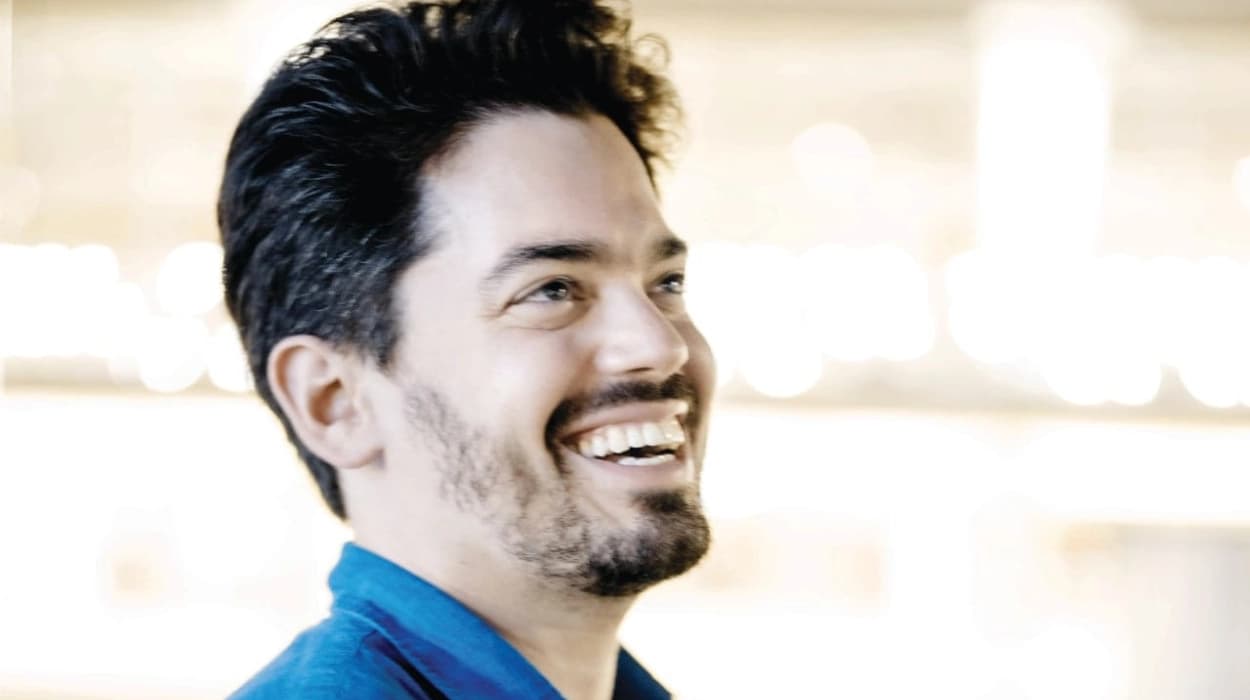
Berlin’s Konzerthaus hosted Israeli conductor Lahav Shani after a Belgian festival rescinded his invitation due to tensions over the Gaza conflict.
Shani was scheduled to lead his new orchestra, the Munich Philharmonic, in Ghent the next week, but the Flanders Festival announced that they had postponed it due to his present position as Chief Conductor of the Israel Philharmonic.
"Lahav Shani has spoken out in favor of peace and reconciliation several times in the past,"
the festival said in a statement.
"But in the light of his role as the chief conductor of the Israel Philharmonic Orchestra we are unable to provide sufficient clarity about his attitude to the genocidal regime in Tel Aviv."
Israel has strongly denied claims that it is carrying out genocide in Gaza.
German politicians condemned the Belgian festival's decision. Germany's claim that it owes Israel a special duty because of its role in the Holocaust of Europe's Jews in the 1940s has come under increasing pressure as European concern about the fighting in Gaza, where around 64,000 Palestinians have been killed, has grown.
"The rescinding of the invitation to the Munich Philharmonic and Lahav Shani is unacceptable,"
wrote German
Foreign Minister Johann Wadephul.
"Jews living here must never be exploited for the purpose of criticizing the Israeli government."
Shani will now conduct the orchestra in a performance of Beethoven's Concerto for Violin and Orchestra and extracts from Richard Wagner's opera Tristan and Isolde at the Konzerthaus on Monday.
"We believe boycotting artists is always the wrong approach,"
said Matthias Pees, head of the Berliner Festspiele, who invited Shani.
"Shani is a wonderful person and musician. He studied here ... He has worked intensively for peace and reconciliation."
Senior Belgian politicians, including the prime minister of the Belgian region of Flanders, also criticized the Flanders Festival's decision.
What reasons did the Flanders Festival give for rescinding the invitation?
The festival reiterated its belief that music should create bonds and reconciliation, and that Shani's status as chief conductor of the Israel Philharmonic was counter to that when adding the Gaza conflict in the mix.
They said they could not get a definitive position from Shani distancing himself from the actions of the Israeli state and especially accusations of genocide.
The organizers thought that Shani was closely tied to the Israeli regime's soft power, which they felt was problematic given the ongoing violence. The festival thought it was an issue that a foreign conflict was being imported into the cultural space and they stated the decision was designed to prevent them from being politicized or polarized.