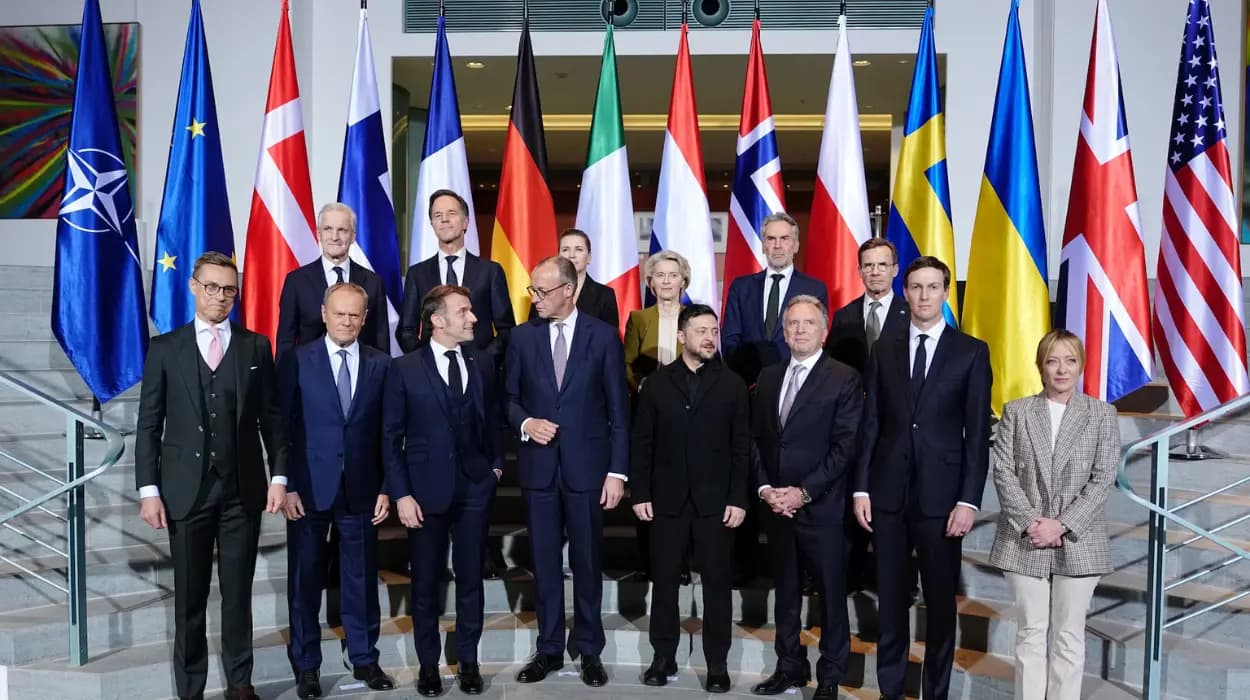
Brussels (The Palestine Telegraph Newspaper) 22 January 2026 – European Union leaders convened in Brussels to discuss the 'new reality' in relations with the United States under President Donald Trump. The summit addressed trade, security cooperation, and diplomatic alignment following Trump's inauguration. Participants emphasised unity while preparing for potential shifts in transatlantic partnership dynamics.
EU heads of state and government gathered for an extraordinary summit in Brussels on 21 January 2026 to confront what leaders termed the 'new reality' of relations with the United States. The meeting followed US President Donald Trump's inauguration and early policy signals from Washington. European Council President António Costa convened the session at the Europa building, attended by 26 national leaders representing EU member states.
The summit focused on recalibrating EU approaches to trade tariffs, NATO commitments, and energy security amid anticipated US policy changes. Discussions lasted eight hours, concluding with a joint statement affirming European strategic autonomy. No formal decisions emerged, but working groups received mandates for contingency planning.
Summit Agenda and Opening Statements
 Credit: FREDERICK FLORIN/AFP
European Commission President Ursula von der Leyen opened proceedings by outlining priorities shaped by recent US election outcomes. She stated,
"We face a new reality requiring European unity and preparedness,"
according to the official transcript. German Chancellor Olaf Scholz echoed the sentiment, stressing defence spending targets and industrial competitiveness.
French President Emmanuel Macron advocated 'European sovereignty' in security matters, referencing Trump's Davos remarks on burden-sharing. Italian Prime Minister Giorgia Meloni highlighted migration and energy diversification needs. The agenda allocated two hours to transatlantic trade, three to security cooperation, and remaining time to diplomatic strategy.
Council conclusions identified US tariffs on steel and aluminium as immediate concerns, alongside potential withdrawal from climate accords. Leaders instructed trade commissioner to prepare retaliatory measures compliant with WTO rules.
Transatlantic Trade Relations Discussions
 Credit: AP Photo
Participants reviewed 2025 US-EU trade volume exceeding €1.2 trillion, with deficits favouring Europe at €156 billion. Projections incorporated Trump's proposed 20 per cent universal tariffs, potentially adding €100 billion to EU export costs annually. Dutch Prime Minister Dick Schoof presented chamber of commerce data showing 750,000 jobs at risk in automotive sectors.
Irish Taoiseach Micheál Martin raised Big Tech regulation alignment, citing Apple's €14 billion tax settlement. Spanish President Pedro Sánchez flagged agricultural exports facing new duties. Commission services tabled diversification strategies targeting Indo-Pacific markets.
No tariff quotas altered during deliberations. Instead, leaders endorsed negotiation mandates for March 2026 talks with US counterparts. Sweden's Ulf Kristersson proposed energy import quotas from US LNG as leverage.
Security and Defence Cooperation Framework
NATO-related topics dominated afternoon sessions, with Poland's Donald Tusk pressing 2.5 per cent GDP defence spending by 2027. Baltic leaders cited Russian border threats amplified by US retrenchment signals. Von der Leyen detailed European Defence Fund allocation of €150 billion through 2030.
UK Prime Minister Keir Starmer participated as guest, committing £5 billion annual defence increases. Hungary's Viktor Orbán urged caution against provoking Moscow. Final communiqué reaffirmed Article 42.7 mutual defence clause activation readiness.
Cybersecurity protocols updated to counter hybrid threats, incorporating US intelligence-sharing precedents. Leaders tasked High Representative with quarterly US policy monitoring reports.
Energy Security and Economic Diversification
Discussions addressed US LNG constituting 45 per cent of EU imports post-Ukraine crisis. Norwegian Prime Minister Jonas Gahr Støre confirmed supply stability at current volumes. Algerian Energy Minister Mohamed Arkab attended virtually, pledging pipeline expansions.
Renewables targets accelerated to 50 per cent by 2030, backed by €500 billion Just Transition Fund. Greek Prime Minister Kyriakos Mitsotakis highlighted Mediterranean gas hub development. Carbon Border Adjustment Mechanism implementation confirmed for 1 January 2027.
Leaders endorsed critical raw materials act securing lithium and cobalt supplies from Australia and Canada. Economic affairs council scheduled for 28 January to refine industrial policy.
Diplomatic Strategy Towards Washington
Foreign policy chief Kaja Kallas presented scenarios ranging from cooperation to confrontation. Macron proposed 'strategic dialogue' format mirroring Yalta precedents. Portuguese PM Luís Montenegro suggested annual EU-US summits resuming June 2026.
Sanctions coordination on Russia and China figured prominently, with consensus on maintaining unity. Leaders rejected unilateral overtures to Washington, mandating collective positioning. Outreach to US Congress planned via transatlantic parliamentary assembly.
Ukraine support reaffirmed at €100 billion through 2027, conditional on reform benchmarks. Middle East peace process alignment discussed, referencing Trump's 'Board of Peace' initiative.
National Positions and Compromises Reached
 Credit: nato.int
Eastern European leaders prioritised NATO Article 5 guarantees, securing eastern flank battlegroup expansions. Mediterranean states focused migration pacts, gaining Frontex deployment boosts. Nordics emphasised Arctic security monitoring.
Austria and Ireland secured opt-outs from defence procurement pooling. Consensus emerged on 'open strategic autonomy' balancing cooperation with self-reliance. Budgetary provisions increased cohesion funds by 5 per cent for affected regions.
Summit declaration avoided confrontation language, framing approach as 'partnership renewal'. Implementation timeline set quarterly reviews starting April 2026.
Institutional Follow-Up Mechanisms
Coreper tasked with drafting negotiation directives by 15 February. Eurogroup prepares fiscal contingency for tariff impacts. Foreign affairs council convenes 30 January on diplomatic instructions.
Von der Leyen embarks on US capital tour meeting Senate leadership week of 26 January. Costa schedules bilateral calls with Trump administration principals. Progress reports due European Parliament plenary 12 February.
Digital platforms established for real-time US policy tracking. Crisis response cell activates under Commission lead.
Historical Context of EU-US Relations Shifts
Post-Cold War transatlantic framework evolved through 2003 Iraq divergences and 2018 tariff wars. Biden-era cooperation peaked at 2021 Cornwall summit yielding Tech Council. Trump's first term saw steel tariffs costing EU €6 billion annually.
2024 US election realigned congressional majorities, amplifying isolationist voices. EU Global Strategy 2016 anticipated autonomy needs, now operationalised. Previous Brussels summits in 2018 and 2020 yielded trade truces.
International Observers and Reactions
NATO Secretary-General Mark Rutte welcomed defence commitments via statement. US State Department acknowledged meeting without comment. UK Foreign Secretary David Lammy pledged alignment on China policy.
China's foreign ministry noted discussions neutrally. Russia's Maria Zakharova criticised 'anti-Russian' undertones.
Media Coverage and Public Communications
Summit received wall-to-wall coverage across member states. Euronews live-streamed plenary sessions. National broadcasters aired leader interviews post-deliberations.
Public opinion polls showed 68 per cent support for strategic autonomy per Eurobarometer January flash survey. Social media campaigns launched under #EuropeUnited hashtag.