Brussels (The Palestine Telegraph Newspaper) - 23 January 2026 – European agriculture has resurfaced as the principal impediment to finalising the EU-Mercosur trade deal after years of negotiations. Farmers across France, Poland, and Italy staged protests against provisions allowing increased South American imports. EU Commission officials acknowledged the concerns while defending the agreement's economic benefits for consumers.
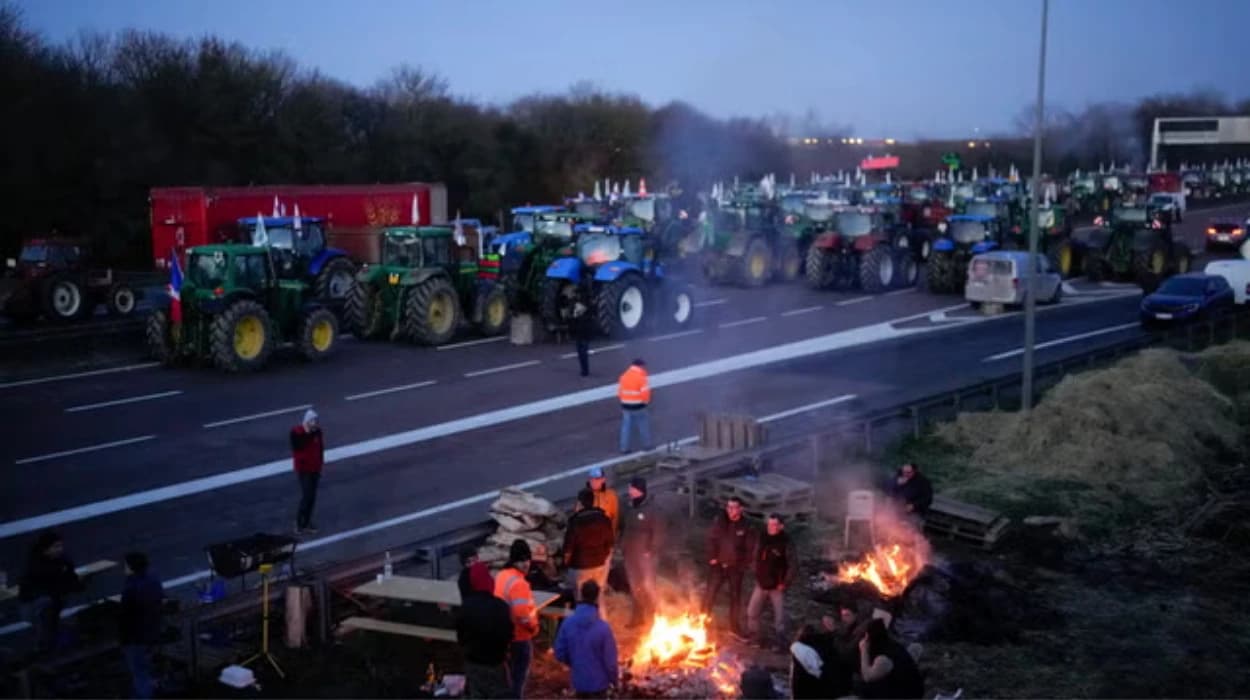
Farmers' organisations renewed opposition to the EU-Mercosur trade agreement on 22 January 2026, citing threats to local production from tariff reductions on beef, poultry, and sugar. Demonstrations blocked roads near EU institutions, with tractors displaying banners reading "No to Mercosur Dumping." The protests followed leaked documents revealing final compromises reached in December 2025.
French Farming Confederation President Arnaud Rousseau stated during a Paris rally that the deal would flood markets with hormone-treated meat, undercutting EU standards. Polish Agrarian Union representatives echoed demands for safeguards, reporting 15,000 tractors mobilised nationwide. Italian Coldiretti federation organised market occupations, halting sales in 20 cities.
EU Trade Commissioner Maroš Šefčovič addressed the European Parliament, confirming agriculture chapters remained unresolved despite political agreement on 90% of text. He outlined proposed safeguards including quotas and sustainability clauses, pending member state ratification. No timeline emerged for signature amid mounting pressure.
Details of Current Farmers' Protests Across Europe

Credit: bing.com
French farmers poured manure outside prefectures in 50 departments, coinciding with harvest preparations. Blockades targeted import depots in Bordeaux and Marseille, where Brazilian beef shipments awaited clearance. Gendarmerie reported 200 arrests for minor disturbances, with no injuries recorded.
Poland saw 300 road occupations linking Warsaw, Kraków, and Gdansk. Union leaders delivered petitions to Prime Minister Donald Tusk, demanding veto power over agricultural concessions. Italian protesters dumped imported fruit at wholesale markets in Rome and Milan, claiming 30% price suppression from Mercosur soy.
Spain's ASAJA coordinated with Portuguese counterparts, staging vigils at Lisbon ports. German Bauernverband scheduled Berlin demonstrations for 25 January, projecting 10,000 participants. Belgian farmers blocked Antwerp harbour, Europe's largest, delaying 5,000 tonnes of Argentine grain.
Core Agricultural Concerns Raised by Protesters
Opponents highlighted beef import quotas rising from 99,000 to 225,000 tonnes annually by 2035, equating to 10% of EU consumption. Poultry allowances reach 180,000 tonnes, sugar 190,000 tonnes yearly. French producers calculated 100,000 job losses, citing lower South American production costs.
Environmental standards form another flashpoint. EU regulations prohibit growth hormones and restrict antibiotics, absent in Mercosur practices. Deforestation links to Amazon clearance for pasture expansion drew ire from organic farmers. Carbon footprint calculations showed transatlantic shipping adding 20% emissions per kilo.
Safeguard mechanisms include tariff triggers activating at 150% quota fills and sustainability reviews every five years. Critics dismissed these as insufficient, pointing to 2025 WTO rulings favouring Mercosur complaints. Repayments for non-compliant imports totalled €450 million last year.
Statements from EU Institutions and Member States

Credit: AP Photo/Andrew Medichini
European Commission President Ursula von der Leyen affirmed commitment to "fair trade" during Strasbourg plenary. She referenced impact studies projecting €4 billion annual consumer savings from lower food prices. Agriculture Commissioner Janusz Wojciechowski proposed €2 billion transitional aid for affected sectors.
France summoned Mercosur ambassadors, with Foreign Minister Jean-Noël Barrot stating "non-negotiable red lines" on food safety. Germany's Agriculture Minister Cem Özdemir supported renegotiation, while Netherlands prioritised export gains for dairy and chemicals. Italy's Giorgia Meloni convened farmers for direct consultations.
Mercosur bloc responded via Brazilian Foreign Ministry, confirming compliance with EU sanitary rules verified by joint audits. Argentine Economy Minister Luis Caputo noted 20% tariff cuts on industrial goods as reciprocal benefit, projecting €70 billion GDP boost over decade.
Negotiation History Leading to Current Impasse
Talks commenced in 1999, suspending in 2004 over agricultural disputes, resuming in 2010. Political framework emerged in June 2019, stalled by COVID-19 and farmer unrest. Legal scrubbing completed December 2025, covering 20 chapters on services, investment, and procurement.
Provisional deal excludes fisheries, preserving EU fleets. Digital trade provisions align with 2025 WTO e-commerce rules. Ratification requires approval from 27 national parliaments plus regional assemblies in Belgium, Italy, and others. Timeline targeted mid-2026 before expiry.
Previous concessions addressed French ethanol demands, capping biofuel imports at 650,000 tonnes. Spanish citrus secured seasonal protections. Portuguese wine gained labelling exemptions. Outstanding issues centre on enforcement mechanisms and dispute resolution.
Economic Impact Assessments from Official Reports
European Commission models predict 0.1% GDP growth annually post-ratification, with industry gaining €26 billion exports. Agriculture faces 0.5% revenue decline, offset by diversification grants. Consumer prices drop 1.5% on meat, benefiting low-income households.
Mercosur projections show 2.3% GDP uplift, led by Brazil's soy and beef sectors. EU car exports to Brazil rise 90%, chemicals 50%. Airbus secures offsets for 100 A320 orders from LATAM carriers.
Competitiveness reports highlight EU ethanol vulnerabilities, supplying 60% biofuel market. Poultry producers face 15% margin erosion without quotas. Dairy remains protected under existing TRQs.
Previous Protest Waves and Government Responses
2024 demonstrations forced insertion of "Brussels clause" allowing national parliaments to reject farm elements. Ireland legislated opt-outs for beef. Walloon region's 2016 veto delayed talks three years.
French government disbursed €400 million crisis fund in 2025, buying surplus milk and grain. Poland subsidised 50,000 farms for soil conservation. Spain enacted import levies on Brazilian poultry pending deal scrutiny.
National Farmers Unions federated under COPA-COGECA issued continent-wide strike threat if talks advance without veto rights. Membership spans 11 million holdings across 23 states.
Mercosur Countries' Positions and Concessions Offered
Brazilian President Lula da Silva ratified domestic approval in October 2025, emphasising poverty reduction via export revenues. Paraguay ratified focusing on electricity trade. Uruguay advanced parliamentary vote, targeting April 2026.
Concessions included zero-tariff ethanol from sugarcane waste only, verified by blockchain tracing. Beef hormone bans upheld with third-party audits. Poultry chlorinated washing prohibited. Soy deforestation moratorium extended to 2030.
Argentina proposed ethanol-for-cars barter, exchanging 500,000 tonnes biofuel for Fiat vehicles. Allocations prioritise EU geographical indications for wine, cheese, olive oil.
International Trade Context Influencing Negotiations

Credit: japantimes.co.jp
US-China trade frictions accelerated EU diversification from Asian markets. CPTPP accession stalled, pushing Mercosur priority. UK post-Brexit deal signed 2024, serving as template with 95% compatibility.
WTO Appellate Body paralysis since 2019 favoured bilateral solutions. EU anti-coercion instrument invoked against Chinese EV subsidies influenced Mercosur sustainability demands.
Global food price volatility from Ukraine war underscored import security. EU strategic autonomy doctrine balanced openness with protectionism.
Parliamentary and Legal Pathways Ahead
European Parliament Trade Committee schedules hearings 29 January, inviting 50 stakeholders. Plenary vote projected June 2026. Council qualified majority requires 15 states representing 65% population.
Belgium's regional parliaments hold de facto veto. Italian Senate agriculture panel tabled amendments. French Assemblée Nationale debate set 5 February.
Court of Justice preliminary rulings pending on WTO compatibility. Advocate General opinions due March. Implementation legislation pre-adopted by Commission.
Ongoing Dialogue Mechanisms Between Stakeholders
Commission convened Farm-to-Fork platform 22 January, including 200 representatives. Tripartite talks scheduled weekly until Easter. Mercosur civil society forum activated under chapter 25.
Digital consultation portal logged 450,000 responses since November 2025. Ombudsman investigation examines transparency claims. Petitions committee received 127 farmer submissions.
No signatures planned before Easter recess. Monitoring continues across capitals. Positions hold firm as scheduled meetings approach.