The EU warned it may retaliate after the US barred five Europeans accused of pressuring tech firms to censor American political viewpoints.
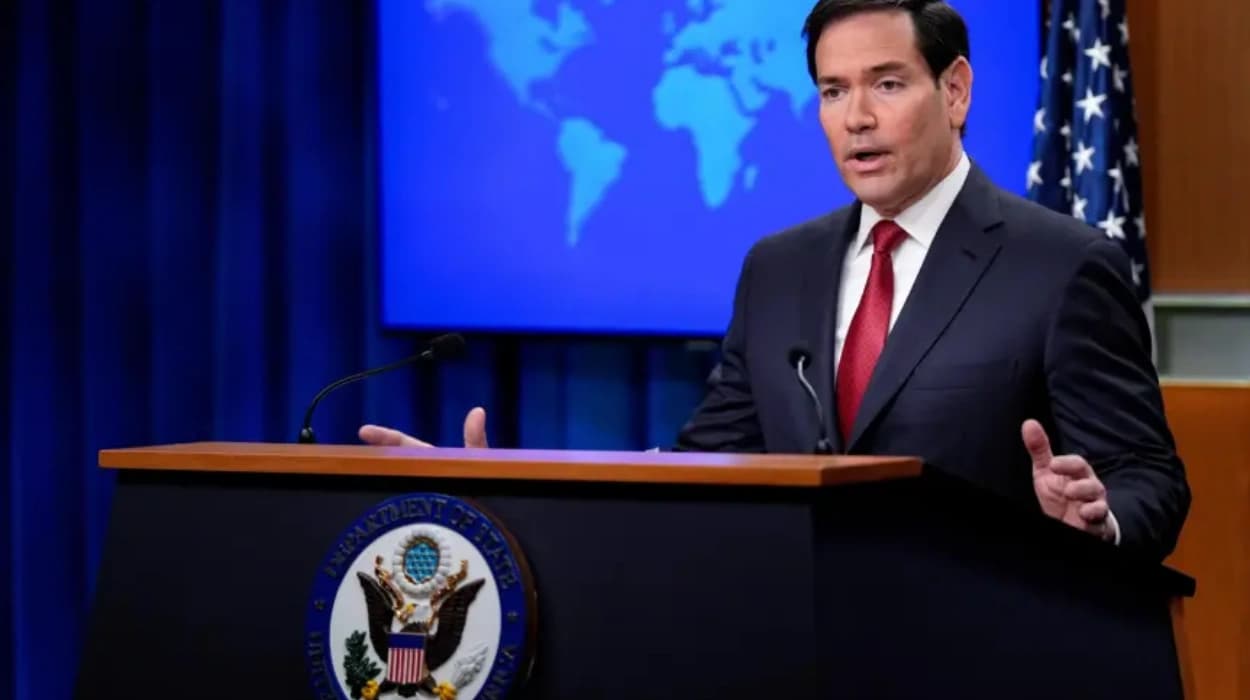
U.S. Secretary of State Marco Rubio described the Europeans as "weaponized" nonprofit organizations and "radical" campaigners. Among them is Thierry Breton, the former EU commissioner in charge of overseeing social media regulations.
In the months preceding the U.S. election, Breton, a businessman and former French finance minister, got into a social media feud with internet billionaire Elon Musk last year over airing an online interview with Donald Trump.
The European Commission, which oversees tech legislation in Europe and is the EU's powerful executive department, stated that it "strongly condemns the U.S. decision to impose travel restrictions" and that it has asked for further information regarding the action. Emmanuel Macron, the president of France, denounced it as well.
“If needed, we will respond swiftly and decisively to defend our regulatory autonomy against unjustified measures,”
the commission said in a statement, without elaborating.
"For far too long, ideologues in Europe have led organized efforts to coerce American platforms to punish American viewpoints they oppose,"
Rubio wrote in an X post on Tuesday.
"The EU is an open, rules-based single market, with the sovereign right to regulate economic activity in line with our democratic values and international commitments,"
the European Commission retorted.
Macron wrote on X that the visa restrictions "amount to intimidation and coercion aimed at undermining European digital sovereignty."
According to Macron, all member nations and the European Parliament participated in "a democratic and sovereign process" that resulted in the adoption of the EU's digital regulations. According to him, the regulations "ensure fair competition among platforms, without targeting any third country."
"The rules governing the European Union's digital space are not meant to be determined outside of Europe," he emphasized.
Breton and the group of Europeans were targeted by a new visa policy that was introduced in May and limited entry for foreigners who were thought to be in charge of censoring protected speech in the UnitedStates.
The other four are Clare Melford, who oversees the Global Disinformation Index; Josephine Ballon and Anna-Lena von Hodenberg, heads of the German nonprofit HateAid; and Imran Ahmed, CEO of the Center for Countering Digital Hate.
Rubio claimed that the five had promoted censorship campaigns by foreign governments against Americans and American businesses, which had "potentially serious adverse foreign policy consequences" for the United States.
Using immigration law rather than platform rules or sanctions, the Trump administration's battle against foreign control over internet speech includes the move to prevent them from entering the US.
The U.S. under secretary of state for public diplomacy, Sarah Rogers, referred to Breton as the "mastermind" of the EU's Digital Services Act, which sets stringent regulations intended to keep internet users safe online, in a post on X on Tuesday. This includes reporting offensive or unlawful content, such as hate speech.
In response, Breton noted on X that the Digital Services Act was approved by all 27 EU members in 2022.
“To our American friends: ‘Censorship isn’t where you think it is,’”
he wrote.
What specific actions can the EU take in response to US visa bans?
The European Commission has not specified concrete retaliatory conduct beyond a general pledge of" nippy and decisive" responses to cover nonsupervisory autonomy, but implicit measures could include political demurrers, trade countermeasures under the DSA/ DMA, or complementary visa/ trip restrictions on U.S. officers.
Brussels could escalate via formal demarches to the U.S. State Department, WTO complaints professing demarcation against EU citizens, or enhanced DSA forfeitures on U.S. tech enterprises for non-compliance, framing bans as hindrance in internal request rules.
France and Germany back tougher stations like targeted asset freezes or barring U.S. controllers, though full trade war remains doubtful given transatlantic profitable ties; Macron labeled it" intimidation," motioning coordinated EU- 27 pushback.