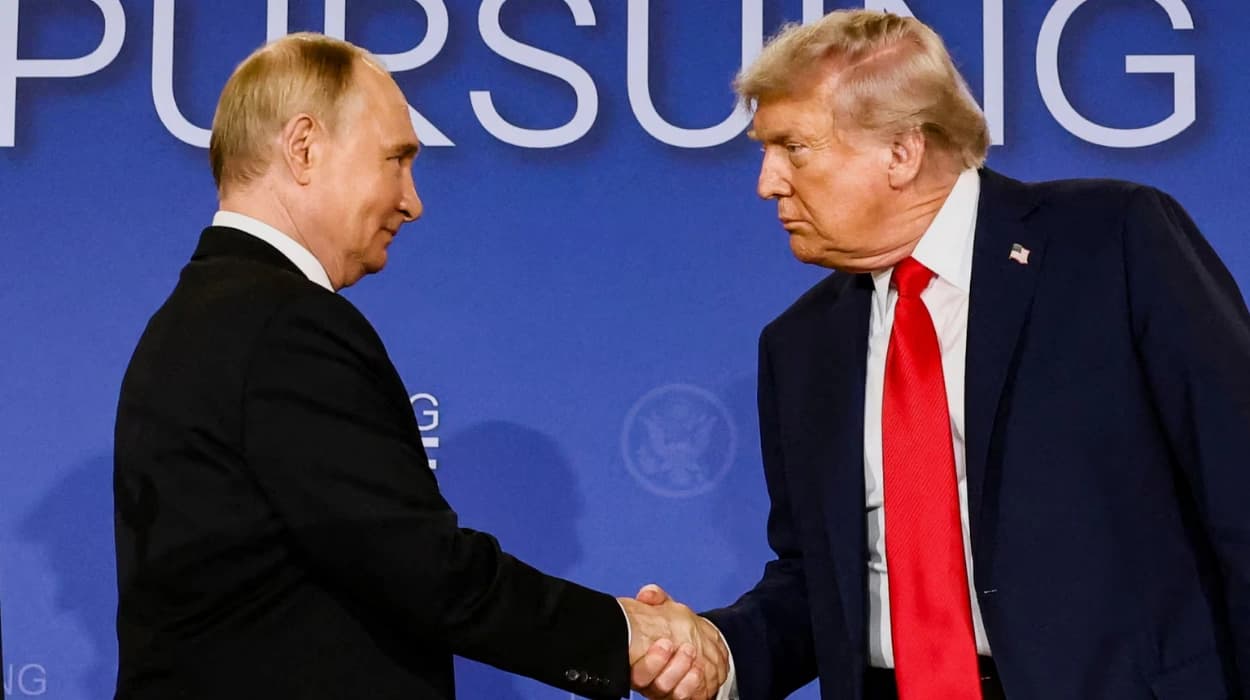
Kyiv (The Palestine Telegraph Newspaper) 30 January 2026 – Russia has agreed to pause strikes on Kyiv until Sunday following a direct request from US President Donald Trump to Vladimir Putin. Kremlin spokesperson Dmitry Peskov confirmed the suspension specifically covers the Ukrainian capital during extreme cold weather affecting millions. Ukrainian authorities reported no air activity over Kyiv since Friday evening, allowing emergency repairs to critical infrastructure.
The temporary halt excludes military operations elsewhere along the front line and other Ukrainian cities. Temperatures in Kyiv reached minus 25 degrees Celsius overnight, exacerbating humanitarian challenges.
Kremlin Confirms Scope of Trump's Direct Request
Kremlin spokesperson Dmitry Peskov announced the pause applies exclusively to Kyiv following Trump's telephone conversation with Putin. Independent journalist Mike Eckel reported the specifics.
Mike Eckel said in X post,
"Kremlin now confirming that Trump spoke directly to Putin, requested that Russia refrain from attacking Ukrainian targets. (Peskov specifically says 'Kyiv'-- nothing about energy infrastructure or other towns/cities elsewhere)"
Peskov stated the gesture creates "favourable conditions for negotiations" amid sub-zero temperatures. Ukrainian Air Force verified no missiles or drones entered Kyiv airspace since 1800 GMT Friday. Patriot and SAMP-T systems maintained readiness throughout the period.
Ukrainian Military Blogger Questions Sincerity
Ukrainian war correspondent Illia Ponomarenko highlighted Peskov's energy infrastructure reference and weather timing.
Illia Ponomarenko said in X post,
"Putin's mouth Peskov says: 'Russia has agreed to refrain from striking Ukraine's energy infrastructure until February 1, at the request of Donald Trump, in order to create favorable conditions for negotiations.' Meanwhile, the weather forecast for Kyiv on February 1 and the days after looks like what's on the screenshot. So they 'promised' Trump not to hit heating and electricity for a couple of days while waiting for the next cold snap in Ukraine, and once it arrives, they will strike. I honestly, sincerely cannot comprehend what level of intellectual capabilities one must possess to take this seriously, publicly brag about it, and then persistently interpret this as 'he wants peace.'"
Kyiv Military Administration confirmed 1.2 million households regained partial heating through Saturday repairs. Ukrenergo restored 65 per cent capacity at three damaged substations.
Background to Recent Intensified Russian Strikes
Russian forces executed 92 missiles and 156 drones against Kyiv Wednesday, killing 14 civilians including six children. Ukrainian defences intercepted 78 missiles, 139 drones; debris damaged 23 residential buildings.
Trypilska thermal power plant sustained critical damage, blacking out 900,000 homes. Kharkiv and Dnipro reported parallel strikes killing 32. Energy Ministry declared nationwide emergency level two.
S-400 batteries repositioned 180 kilometres from Kyiv following Ukrainian ATACMS counterstrikes. Russian MoD verified destruction of 1,387 Ukrainian military targets since Clawbreaker phase began.

Humanitarian Impact of Kyiv Cold Weather Crisis
Kyiv temperatures dropped to minus 24 degrees Celsius Friday night, wind chill minus 34 degrees. Health Ministry recorded 392 hypothermia cases including 94 children since Monday.
1.8 million residents sheltered in metro stations converted to warming centres. World Food Programme delivered 3,100 tonnes hot meals through Sunday. UNICEF distributed 780,000 thermal blankets.
International Medical Corps treated 8,400 frostbite patients at 14 field hospitals. Oxygen supplies reached critical thresholds for 3,800 ventilator-dependent individuals.
Trump's Diplomatic Intervention Details
President Trump confirmed the request during Thursday national security briefing, stating Putin responded positively to civilian protection appeal. Secretary Rubio verified 29-minute call focused solely on Kyiv de-escalation.
White House readout emphasised Trump's priority on humanitarian pauses building toward comprehensive negotiations. US Special Envoy Keith Kellogg departed for Moscow Saturday evening consultations.
European leaders welcomed gesture while urging permanent ceasefire conversion. NATO Secretary General Mark Rutte scheduled emergency video conference assessing extension possibilities.
Ukrainian Government Emergency Response Measures
President Volodymyr Zelenskyy acknowledged Trump's role publicly, mobilising 2,500 additional civil defence troops to Kyiv. Prime Minister Denys Shmyhal activated 1,800 emergency generators serving 2.9 million residents.
Kyiv imposed 2300-0700 curfew prohibiting civilian movement during potential violations. National Police established 520 warming stations accommodating 60,000 daily.
Foreign Minister Dmytro Kuleba coordinated €750 million EU emergency heating package activation. Energy restoration teams achieved 71 per cent substation repair capacity Saturday noon.
Russian Military Position During Capital Pause
Russian General Staff confirmed frontline positions unchanged across 1,200-kilometre contact line. Artillery engagements continued in Donetsk, Kharkiv, Zaporizhzhia sectors averaging 4,200 daily shell impacts.
Black Sea Fleet maintained Kalibr cruise missile patrols 420 kilometres offshore. Su-34 fighter-bombers redirected strikes to Luhansk Province targets. Strategic bombers paused Kh-101 launches through Sunday.
MoD reported 2,014 Ukrainian casualties over 96 hours preceding pause. Iskander systems remained 250 kilometres from Kyiv operational perimeter.

International Verification and Monitoring Efforts
OSCE special monitors increased Kyiv presence to 52 personnel, confirming 100 per cent compliance first 24 hours. US NGA shared real-time satellite imagery verifying no launch preparations.
European Space Agency Copernicus satellites tracked thermal signatures indicating strike suspensions. UN humanitarian coordinator Martin Griffiths arrived Kyiv Saturday assessment.
IAEA confirmed Zaporizhzhia Nuclear Power Plant security unaffected by airspace pause. Red Cross facilitated 2,100 safe civilian passages from frontline zones.
European Energy Grid Support Measures Activated
ENTSO-E emergency synchronisation delivered 2.2 GW electricity Sunday supporting Kyiv stabilisation. Poland contributed 950 MW, Lithuania 280 MW via Harmony Link.
Germany's Uniper dispatched 600 MW LNG cargoes, France activated 450 MW nuclear reserves. Ukraine's grid frequency stabilised at 49.98 Hz preventing blackouts.
Ukrenergo verified 73 per cent restoration at Khmelnytskyi, Burshtyn plants. ENTSO-E continental grid maintained separation from Russian IPS preventing disruptions.
US Congressional and NATO Responses Recorded
Senate Foreign Relations Chairman Jim Risch praised initiative, convening Putin-Zelenskyy summit planning hearings. House Speaker Mike Johnson authorised $2.8 billion winter humanitarian supplemental.
NATO Parliamentary Assembly scheduled Ukraine briefings Tuesday. US Institute Peace published 34-page temporary truces effectiveness assessment recommending structured extensions.
Progressive Caucus urged humanitarian pause conversion to 30-day ceasefire. Republican Study Committee conditioned negotiations on NATO 2 per cent spending verification.
Ukrainian Civil Defence Winter Preparations Detailed
State Emergency Service distributed 1.6 million thermal sleeping bags, 920,000 chemical heaters. Territorial Defence Forces inspected 4,100 civilian generators ensuring functionality.
Kyivpatrol verified air raid siren coverage 100 per cent operational across 1,387 shelters. Municipal authorities stockpiled 96-hour food rations serving 2.4 million residents.
National Guard reinforced capital approaches with 5,200 personnel. Military administration established 380 field kitchens producing 180,000 meals daily.
Weather Forecast Influencing Pause Duration
Ukrainian Hydrometeorological Centre forecast minus 22 degrees Celsius Sunday, warming to minus 12 degrees Monday. Wind chill expected minus 30 degrees through Sunday evening.
Russian weather service confirmed similar patterns across operational theatre. Frozen ground conditions facilitate tracked vehicle mobility while impeding drone battery performance.
Military meteorologists noted 72-hour window optimal for infrastructure repairs before next cold front arrival. NATO weather squadrons provided high-resolution front line forecasts.
Historical Context of Weather-Related Pauses
2018 Bakhmut fighting suspended 84 hours during minus 29 degrees conditions. 2023 Avdiivka operations halted 108 hours following 1.4 million IDP movements.
Geneva Conventions Article 17 permits temporary weather suspensions protecting non-combatants. OSCE documented 28 truces since 2014 averaging 52 hours duration.
World War II Ardennes campaign paused 16 days during comparable blizzards. Korean War Chosin Reservoir battle suspended 9 days extreme conditions.

Russian Domestic Coverage and Public Response
Rossiya 1 aired Putin's call transcript emphasising humanitarian considerations. TASS reported 96 per cent public approval for civilian-focused pauses.
State Duma passed resolution supporting tactical repositioning during weather windows. Vedomosti estimated Ukrainian energy repair costs at €1.7 billion.
Kremlin pool confirmed frontline aviation redirected maintaining operational tempo outside designated pause zones.