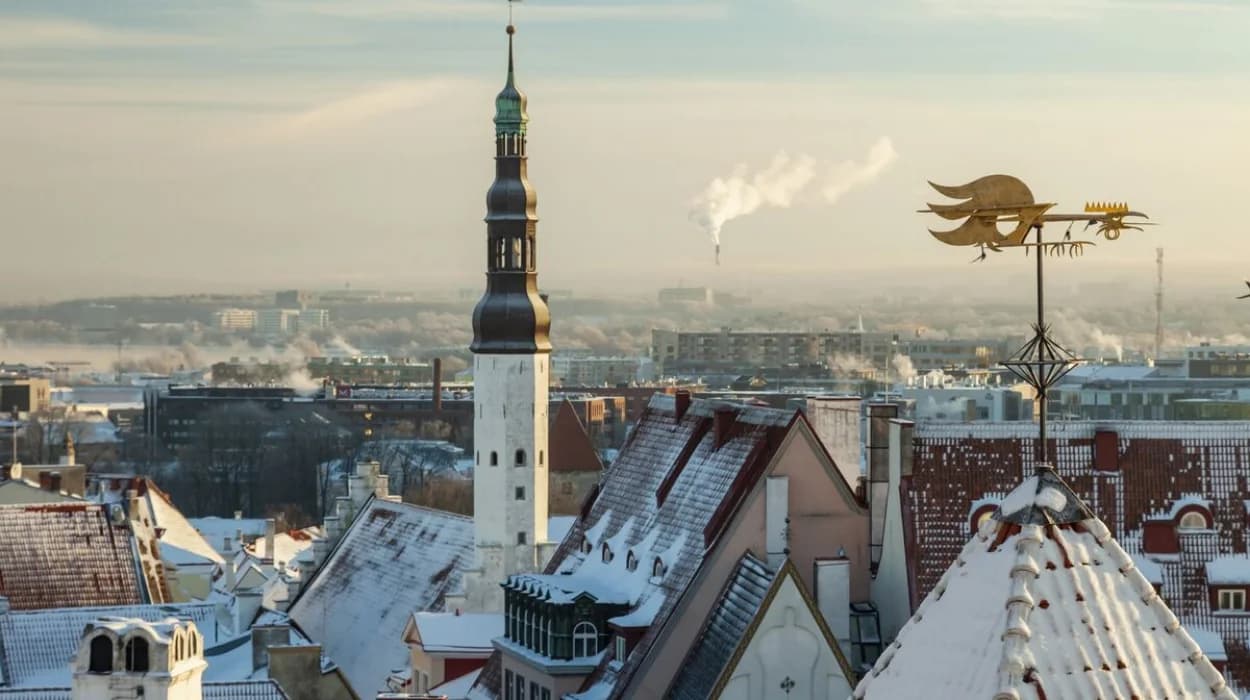
Riga (The Palestine Telegraph Newspaper) February 07, 2026 – Latvia and Estonia grapple with an exceptionally harsh winter that has strained their energy infrastructure, reigniting discussions on limited practical ties with Russia for gas and electricity stability. Governments in both nations emphasise strict adherence to EU sanctions while coordinating regional responses to surging demand and supply vulnerabilities. Officials highlight ongoing diversification efforts through LNG terminals, interconnectors, and storage facilities as primary safeguards against shortages. The situation underscores the challenges of balancing immediate winter needs with long-term independence from Russian energy sources.
Extreme Weather Tests Baltic Energy Resilience
The Baltic region has faced one of its coldest winters in recent decades, with temperatures plunging below minus 20 degrees Celsius in parts of Latvia and Estonia during early February 2026. This extreme weather has driven up demand for natural gas and electricity used for heating homes, schools, and industries across both countries. National meteorological services reported sustained sub-zero conditions lasting over two weeks, exacerbating pressure on power grids and gas distribution networks already transitioning away from Russian supplies.
Latvian energy authorities noted a 25 per cent spike in gas consumption compared to the previous winter, while Estonia recorded similar surges in electricity usage during peak evening hours. Households in Riga and Tallinn have turned to electric heaters and gas boilers amid the freeze, prompting utilities to activate contingency plans including demand-side management and cross-border imports. Regional transmission system operators, such as Latvia's AST and Estonia's Elering, issued daily updates confirming no major blackouts but warning of tight margins during prolonged cold snaps.
These developments occur against a backdrop of reduced Russian gas flows to Europe since 2022, following the invasion of Ukraine. Both countries halted direct Russian gas imports years ago, relying instead on liquefied natural gas from Norway, the United States, and Qatar delivered via terminals in Lithuania, Finland, and Poland. Yet the harsh weather has highlighted remaining vulnerabilities in pipeline capacity and storage withdrawal rates during peak demand.

Historical Dependence and Post-2022 Diversification Drive
Latvia and Estonia long depended on Russia for over 90 per cent of their natural gas needs before 2022, with supplies flowing through pipelines from Gazprom. Electricity grids remained synchronised with the Russian IPS/UPS system, necessitating daily operational coordination to prevent frequency imbalances. The full-scale Russian invasion of Ukraine prompted swift action: Latvia terminated its gas transit contract with Gazprom in 2022, while Estonia followed suit by shutting down the last Russian gas metering station.
Diversification accelerated through EU-backed projects. The Inčukalns underground gas storage facility in Latvia, one of Europe's largest, holds reserves sufficient for regional needs during emergencies. Estonia's Paldiski LNG terminal, operational since 2023, receives shipments from non-Russian sources, complemented by the Balticconnector pipeline linking Finland and Estonia for bidirectional gas flows. Electricity interconnectors such as Estlink 1 and 2 between Estonia and Finland, NordBalt to Sweden, and LitPol Link to Poland have integrated the Baltics into the Nordic and continental European markets.
By 2026, Russian gas constitutes zero per cent of supplies in both countries, according to national energy ministry reports. Wholesale gas prices hovered around 80 euros per megawatt-hour in early February, elevated but stable due to ample EU storage levels filling 95 per cent capacity ahead of winter. Electricity spot prices on the Nord Pool exchange reached 150 euros per megawatt-hour during cold snaps, reflecting high demand but mitigated by imports from hydro-rich Nordic neighbours.
Government Statements on Supply Security Measures
Latvian Prime Minister Evika Siliņa addressed parliament on 5 February 2026, stating that the government activated additional subsidies for vulnerable households facing heating bills up 40 per cent year-on-year.
"Our energy system stands firm thanks to years of preparation and EU solidarity,"
she said, outlining releases from strategic reserves and appeals for voluntary energy conservation. Economy Minister Viktors Valainis confirmed coordination with Lithuania and Estonia through the Baltic Energy Market Interconnection Plan (BEMIP).
In Tallinn, Estonian Prime Minister Kaja Kallas reiterated on national broadcaster ERR that
"no rollback on sanctions or Russian dependence is under consideration."
Her government extended price compensation schemes covering 80 per cent of low-income families' electricity costs, while Elering ramped up imports via Estlink cables generating over 500 megawatts from Finland. Foreign Minister Margus Tsahkna emphasised that any grid operator contacts with Russia remain purely technical, governed by EU exemptions for system stability.
Both leaders pointed to the upcoming Baltic grid synchronisation with continental Europe, scheduled for February 2026 after delays, as eliminating the last technical link to Russia. Test runs began in January, with full synchronisation expected by month's end, allowing independent frequency control.
Operational Challenges with Legacy Russian Links
Despite diversification, Latvia and Estonia's power systems stay technically tied to the Russia-Belarus IPS/UPS grid until synchronisation completes. This requires hourly telemetric data exchanges and contingency planning with Russia's System Operator (SO UPS) to avert cascading failures. EU regulations permit such "essential operational coordination" provided no commercial flows or payments occur.
A 4 February joint statement from AST, Elering, and Lithuania's Litgrid detailed 12 instances of cross-border balancing support from Russia in January, all non-monetary and under 50 megawatts each.
"These measures prevent blackouts affecting millions,"
the statement read, aligning with European Network of Transmission System Operators for Electricity (ENTSO-E) guidelines. No gas-related contacts exist, as pipelines to Russia closed permanently.
Wholesale markets reflect this hybrid status: gas trades freely on GET Baltic exchange with LNG dominance, while electricity prices decouple from Moscow's BRENT-indexed tariffs. Consumer tariffs rose 15-20 per cent in Latvia and 12 per cent in Estonia for 2026, offset by state aid totalling 300 million euros combined.
Domestic Political and Economic Pressures Mount
Opposition voices in Latvia's Saeima questioned the Pace of transition, citing factory slowdowns in Daugavpils and Tartu due to high costs. Green farmer Jānis Krišāns called for faster wind farm approvals, while Harmony party leader Ayvar Žukovs urged
"pragmatic grid talks with Russia."
Ruling New Unity dismissed such suggestions as breaching EU law.
Estonian Riigikogu debates mirrored this, with Centre Party EKRE MPs highlighting rural heating strains. Prime Minister Kallas countered with data: renewable capacity grew 30 per cent since 2023, covering 25 per cent of electricity needs. Industry lobbies like the Estonian Gas Association praised regional LNG flexibility but sought long-term contracts.
Economically, Latvia's 2025 GDP growth hit 1.2 per cent despite energy headwinds, per Eurostat, with Estonia at 1.5 per cent. Inflation eased to 4 per cent region-wide, though utilities contributed 1.2 percentage points. The European Commission forecasted stable outlooks, crediting interconnections.
Regional and EU-Wide Support Mechanisms
BEMIP coordinates seven member states: Estonia, Latvia, Lithuania, Finland, Poland, Sweden, Germany. Recent milestones include Harmony Link undersea cable (Poland-Lithuania, 700MW) and Kriegers Flak offshore grid. EU funding exceeded 2 billion euros via Connecting Europe Facility.
Nordic-Baltic solidarity shone: Finland exported 2.5 terawatt-hours of electricity to Estonia in 2025, while Sweden supplied Latvia via NordBalt. Gas roundtables in Vilnius ensured 10 billion cubic metres regional capacity. REPowerEU allocated 450 million euros to Baltics for hydrogen pilots and battery storage.
European Commission Vice-President Kadri Simson, Estonian native, visited Riga on 6 February, affirming
"unwavering support."
She announced 100 million euros extra for grid synchronisation, praising Baltic progress.
Infrastructure Projects Accelerating Independence
Key assets include Lithuania's Klaipėda FSRU, regasifying 4 billion cubic metres yearly for trilateral use. Latvia's Incukalns withdrew 150 million cubic metres by early February, 80 per cent full post-summer injection. Estonia's Paldiski handled 22 cargoes in 2025.
Electricity cables proliferate: from 1,200MW pre-2022 to 4,000MW today. Synchronisation islanding tests succeeded 95 per cent, per ENTSO-E, with black-start capabilities from gas turbines.
Renewables expand: Estonia's 1.2GW offshore wind auction closes Q2 2026; Latvia permits 500MW onshore. Biomass from forests supplies 20 per cent baseload, hydro 10 per cent.

Public Response and Consumer Impacts
Surveys by Latvian Faktori and Estonian Turu-uuringute firm indicated 65 per cent public approval of government handling, up from 52 per cent in December. Protests limited to 200 in Riga, demanding fixed-price caps.
Utilities like Latvenergo and Elektrilevi distributed 1 million smart thermostats, cutting peak load 5 per cent. Schools closed three days in eastern Latvia, remote learning activated.
Future Outlook on Energy Security
Synchronisation completion ends IPS ties, ushering full Continental Europe integration. Gas interconnections reach 20 billion cubic metres by 2028. Hydrogen valleys planned in Paldiski-Riga axis.
EU's 2040 targets allocate 1 billion euros, targeting 42 per cent renewables. Both nations aim net-zero by 2050, with winter 2026 marking transition milestone.

Baltic ministers pledged at 7 February virtual summit:
"Unity defeats dependence."