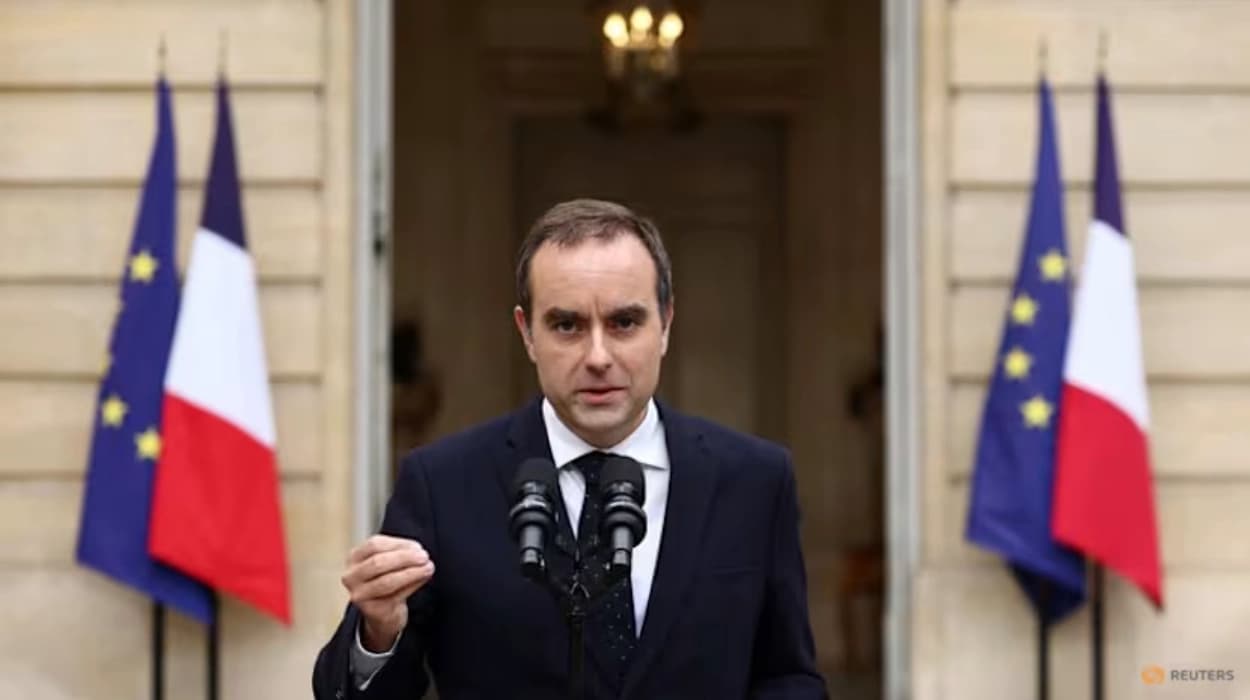
French President Emmanuel Macron has given Prime Minister Sébastien Lecornu two days to rescue his government after his abrupt resignation.
Just 14 hours after announcing his government lineup earlier on Monday, Lecornu resigned.
According to the president's office, Macron spoke with Lecornu in the evening and given him until late Wednesday to develop a strategy for "the stability of the country."
Lecornu stated on X that he will report back to Macron after agreeing "to hold final discussions with the political forces" in order to achieve this.
The presidential official stated that Macron is prepared to "assume his responsibilities" in the event of failure, which may be seen as a call for fresh legislative elections.
The choice of former finance minister Bruno Le Maire as defense minister in Lecornu's new ministry caused a stir among politicians of all stripes.
The developments have sparked criticism from within Macron's own ranks.
Gabriel Attal, a former prime minister who leads the president's centrist party, told France's evening news:
"I no longer understand his decisions."
"The president has tried the same thing three times in a year,"
he added, of Macron naming new premiers.
"I think it's time to try something else."
He said, however, that he would take part in the talks Lecornu has been tasked with.
Lecornu's resignation compounds a political crisis that has rocked France for over a year, after Macron called legislative elections in mid-2024, which ended in a hung parliament.
The Paris stock market slipped after the announcement of Lecornu's exit, with the CAC 40 index of blue-chip stocks down around 1.4 per cent.
Who could Macron appoint next to stabilize the government?
Macron could turn to a loyalist he trusts, and who has experience working across the political spectrum. Lecornu was perceived as a close ally of Macron, who had dinner with far-right leader Marine Le Pen, suggesting Macron might try to find someone like Lecornu, pragmatically minded to help build fragile coalitions.
Given the fractured parliament and political turmoil, Macron may seek out a technically minded politically neutral technocrat who could work out the budget and run public administration without as much party loyalty.
Macron might reach ever-so-slightly towards the center-left or moderate politicians, for there could be an interest in broadening support with any future votes in parliament. As Macron has stayed away from snap elections and has attempted to sidestep a deadlock by negotiating alliances.