Summary
- Groups urge delay prosecuting Palestine Action supporters.
- Legal challenge to UK ban underway.
- Ban imposed under UK anti-terrorism law.
- Over 200 supporters have been arrested so far.
- Concerns over freedom of expression restrictions.
Friends of the Earth, Global Witness, and the Quakers have signed a letter to Richard Hermer KC stating that it would be morally and legally problematic to move on with charges or trials prior to the judicial review, which is scheduled to take place in November.
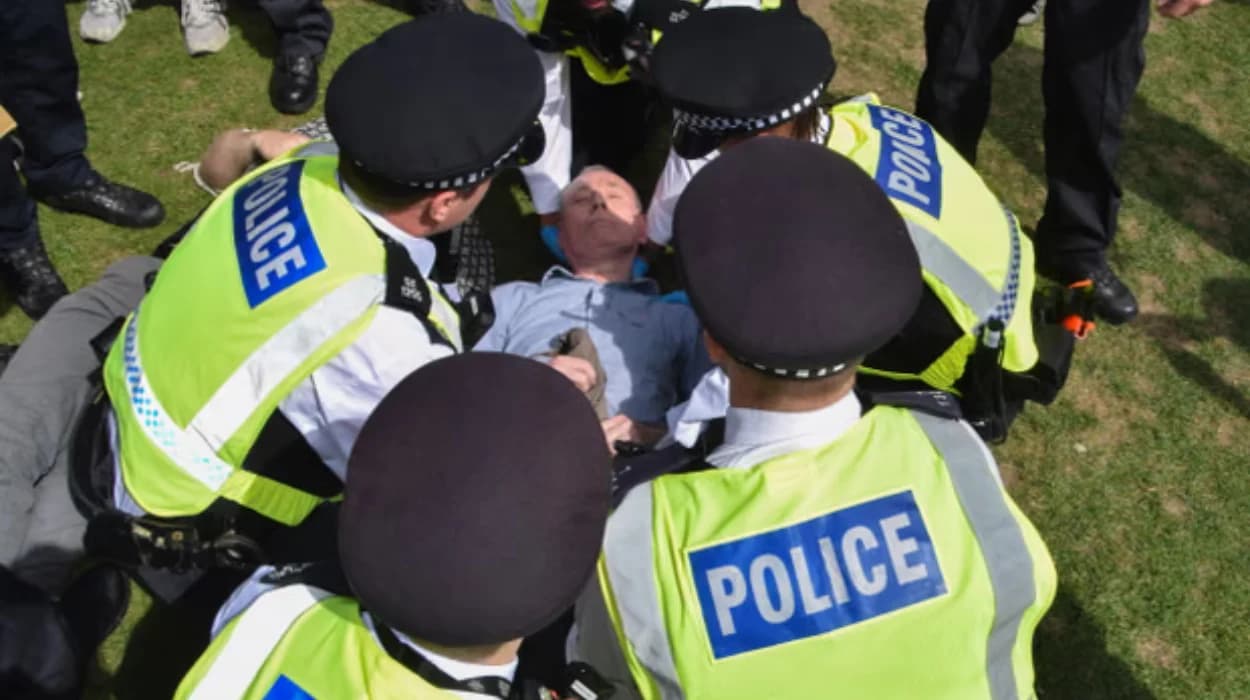
During a demonstration in Parliament Square this weekend, 522 people—half of them were over 60—were arrested under section 13 of the Terrorism Act for carrying signs that read,
"I oppose genocide, I support Palestine Action."
As a result of the detentions, there have been over 700 arrests under the legislation since the banned group was outlawed last month.
The letter says the attorney general makes the decision on how cases should proceed under the Terrorism Act, rather than the Crown Prosecution Service, and urges him to act “in the public interest”.
Areeba Hamid, a co-executive director of Greenpeace UK, said:
“Hundreds of people are facing potential prison sentences for sitting quietly holding placards. It isn’t difficult to see why this could be a disproportionate restriction on people’s freedom of expression, and why so many legal experts have expressed their concern at the government’s decision to extend their definition of terrorism in this way.
We urge the attorney general to approach the matter with care and some caution, and not prejudge the outcome of a judicial review which could fundamentally change the legal position of these protesters.”
Mr. Justice Chamberlain cited the possibility that individuals accused of crimes under the act may attempt to contest the validity of the proscription order on an individual basis at trial as one of the justifications for allowing the high court to conduct a judicial review of the proscription. He claimed that disparate rulings from criminal courts could result in "a recipe for chaos."
At least ten people have been charged, however the majority of those who were apprehended were released on bond. No one else should be charged, according to the five organizations, and those who have already been charged shouldn't face charges prior to the judicial review, which might result in the ban being lifted.
“Prosecuting individuals for offences connected to that proscription before the court has determined its legality raises significant legal and moral questions,”
the letter states.
“In particular, one of the grounds which the judge held had merit was that the proscription of Palestine Action was a disproportionate interference with human rights.
We therefore respectfully request that you exercise your constitutional role in the public interest by delaying any decisions to prosecute individuals arrested under terrorism legislation in connection with Palestine Action until the conclusion of the judicial review process.”
In a letter to Jonathan Hall KC, Lisa Smart, the party’s home affairs spokesperson said:
“While we recognise the serious nature of this group’s activities, including criminal offences, such as vandalism of military equipment and RAF aircraft, aggravated burglary and violent disorder, and some cases awaiting the conclusion of trials, we are deeply concerned about the use of terrorism powers against peaceful protesters in this context.”
The attorney general’s office has been approached for comment.
What are the legal implications for protesters supporting Palestine Action before the court ruling?
Since Palestine Action was proscribed as a terrorist organization under the Terrorism Act 2000, any support or membership can constitute a criminal offense punishable by up to 14 years in prison.
Over 700 people have been arrested so far, mostly for displaying placards or otherwise showing support for Palestine Action. Many have been released on bail, but a number face pending prosecution.
There is concern that prosecutions and arrests infringe on rights to freedom of expression and peaceful assembly protected under Articles 10 and 11 of the European Convention on Human Rights (ECHR). The High Court has allowed Palestine Action to challenge the ban on these grounds.