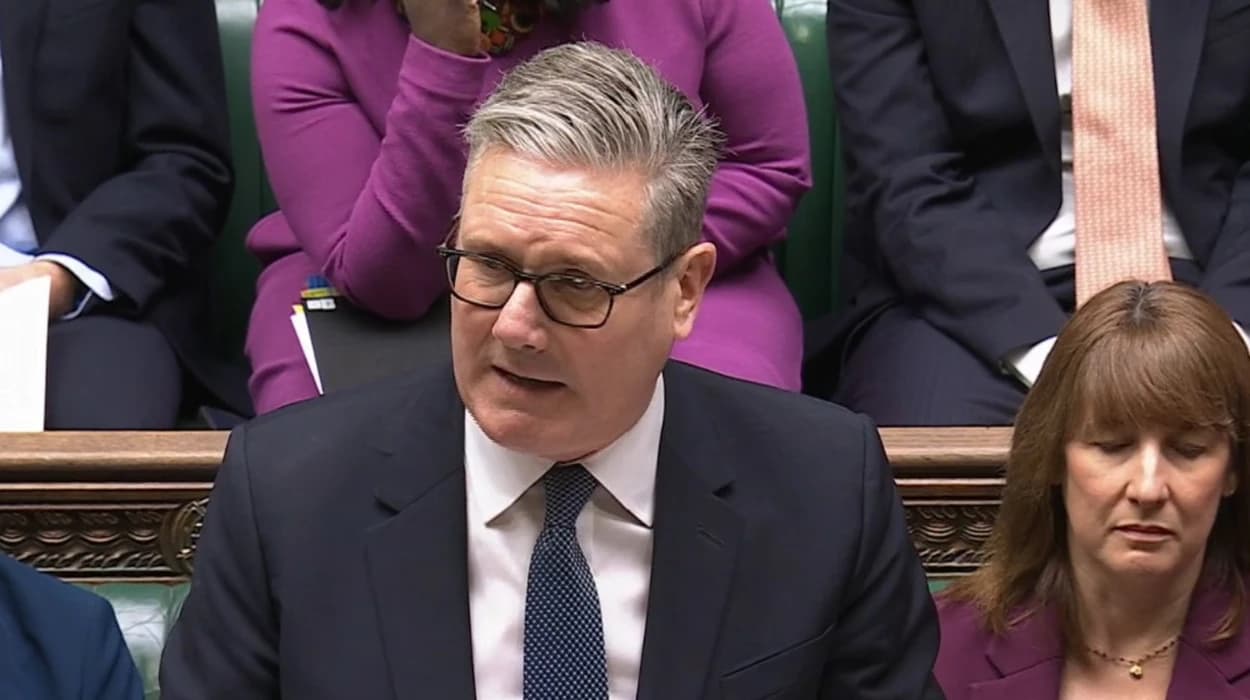
MPs will debate and vote before any UK troops are deployed on peacekeeping duties in Ukraine, Keir Starmer said.
Following talks at a larger conference in Paris, Starmer was questioned by Conservative leader Kemi Badenoch about why he was not making a full Commons statement after Britain and France declared they would be prepared to send soldiers if there was a peace agreement.
In response, Starmer stated that the discussion and vote would take place if troops were being sent, at which point specifics on the number of troops would be known.
“Yesterday, I stood side by side with our European and American allies and President Zelenskyy at the coalition of the willing meeting in Paris,”
Starmer said in introductory remarks.
“We made real progress on security guarantees, which are vital for securing a just and lasting peace. Along with President Macron and President Zelenskyy, we agreed a declaration of intent on the deployment of forces in the event of a peace deal.
We will set out the details in a statement at the earliest opportunity. I will keep the house updated as the situation develops and were troops to be deployed under the declaration signed, I would put that matter to the house for a vote.”
Badenoch responded by saying it was "astonishing that the prime minister is not making a full statement to parliament today," while praising Starmer's work on Ukraine and a joint European declaration regarding US threats to grab Greenland.
She added:
“No prime minister, Labour or Conservative, has failed to make a statement to the house in person after committing to the deployment of British troops. His comments about making a statement in due course, quite frankly, are not good enough.”
Starmer responded that since the troop choice was a political announcement that "sits under" pre-existing military arrangements created months ago, a statement was not necessary.
He stated that only after a truce would troops be deployed to "conduct deterrent operations and to construct and protect military hubs."
Starmer added:
“The number will be determined in accordance with our
military plans, which we are drawing up and looking to other members to
support. So the number I will put before the house before we were to deploy.
But I’ll do more than that. If we went as far as a legal instrument to deploy, which would be necessary, I would then have a debate in this house so all members could know exactly what we’re doing, make their points of view, and then we would have a vote in this house on the issue, which is the proper procedure in a situation such as this.”
In other questions, Badenoch encouraged the prime minister to organize a conference of NATO leaders over Greenland and described Starmer's continued lack of communication with Donald Trump four days after the US military involvement in Venezuela as "concerning."
In response, Starmer said that Badenoch had chastised him for skipping PMQs to attend the main NATO summit in June.
What legal powers govern UK peacekeeper deployments abroad?
UK militarist deployments abroad fall under the royal appanage , granting the superintendent( Prime Minister and Cabinet) primary legal authority without a statutory demand for administrative blessing.
The monarch, via ministers, holds essential power to emplace fortified forces for peacekeeping, defence, or philanthropic purposes, as affirmed in precedents like the 2003 Iraq irruption; no fixed legal frame authorizations votes, though conventions have evolvedpost-2011 Libya for" significant" combat operations.
Starmer's pledge aligns with a 2018- 2024 convention for previous Commons votes onnon-routine deployments, but peacekeeping operations like UNPROFOR Bosnia( 1990s) progressed without; judicial review remains limited, with courts postponing to administrative war powers absent immoderation.