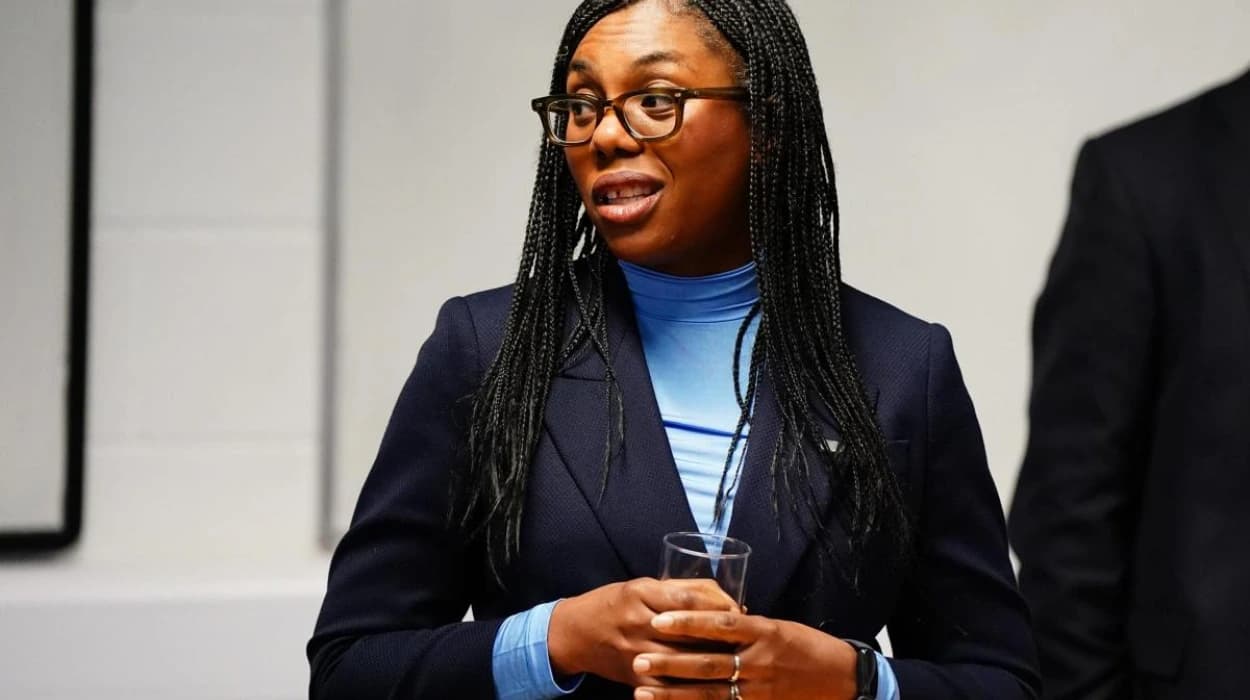
Kemi Badenoch accused Labour of abandoning fiscal discipline, calling Rachel Reeves’s tax-rise speech “one long waffle bomb” in a sharp political attack.
Business executives and investors were left "confused" by Ms. Reeves' "masterclass in managed decline," according to Mrs. Badenoch, because "Labour doesn't have a plan to get Britain working."
Giving her own speech in central London on Tuesday, the Tory leader said:
“The chancellor’s speech was one long waffle bomb, a laundry list of excuses.
She blamed everybody else for her own choices, her own decisions, her own failures.”
She said that the government under Sir Keir Starmer was no longer making an effort to "live within its means," arguing that doing so "is not austerity, it is respect for taxpayers."
Earlier, Ms. Reeves refused to reiterate Labour's pledges in the manifesto to keep income tax, national insurance, and VAT unchanged, stating that "we will all have to contribute."
She added:
“They talk about working people while making life harder and harder for people who actually work, and worst of all, they pretend that what they’re doing is all necessary.
They pretend that they don’t have a choice. The reality is that they have given up trying to change anything.
They have given up trying to get the government to live within its means, and they have given up on not raising tax.
That’s what Rachel Reeves was telling us this morning, and a government that refuses to live within its means, while telling everyone else to tighten their belts, isn’t being fair, that government is being hypocritical.
Getting the government to live within its means is not austerity, it is respect. It is respect for taxpayers.”
She attributed the "hard choices" she will have to make to both domestic and international challenges, such as the tariff war that US President Donald Trump started and the budget watchdog's anticipated downgrade of economic productivity.
It is anticipated that the Office for Budget Responsibility will lower its earlier productivity projections for the years while the Conservatives held power.
The Tory leader again declined to commit to reversing any income tax rises Labour may impose if the Tories came back into government.
“Things could actually get worse and worse,”
she told LBC Radio.
“We do have to wait and see where the economy is going before we know how we will fix it.”
Mrs Badenoch said in her speech that graduate jobs were down by a third since Labour took office, adding that is “not AI’s fault”.
“You can draw a direct line between what Rachel Reeves did in the budget last year and the dire prospects”
faced by many graduates, she said.
Additionally, Mrs. Badenoch asserted that Labour had "given up" on reducing the disability benefits bill after a review of personal independent payments, which began last week, was directed to work within the Office for Budget Responsibility's current welfare spending projections rather than looking for cost savings.
“The Conservatives oversaw a £114bn hike to the benefits bill, with the shadow chancellor personally overseeing £33bn of that. Kemi Badenoch is treating the public with contempt. The Tories are now pledging billions in unfunded commitments proving they have zero economic credibility and simply can’t be trusted.
Labour is clear that people who can work should work. This Labour government is getting people back into the workplace and out of the doom loop of joblessness that spiralled out of control under the Conservatives. As we renew Britain, that’s the only way we’ll create a fairer future where everyone has the chance to get on in life and succeed.”
How would proposed tax rises affect middle-income households?
According to the BBC, the Resolution Foundation estimates that the new duty and benefit reforms could beget the nethermost half of homes to face an average periodic income reduction of about 0.8, with the top half seeing a 0.6 decline.
New analyses suggest that middle- income homes, generally earning between $50,000 and $150,000, might witness increased effective duty rates due to broader reforms. For case, a report from the Tax Policy Center indicates that middle- class duty increases could be similar to or exceeding those on advanced- income homes, especially if duty classes and deductions are acclimated to fund advanced public spending.
The Urban Institute highlights that high borderline duty rates can produce disincentives for work and earnings increases among families near the poverty line, potentially affecting middle- income families particularly those with secondary earners.