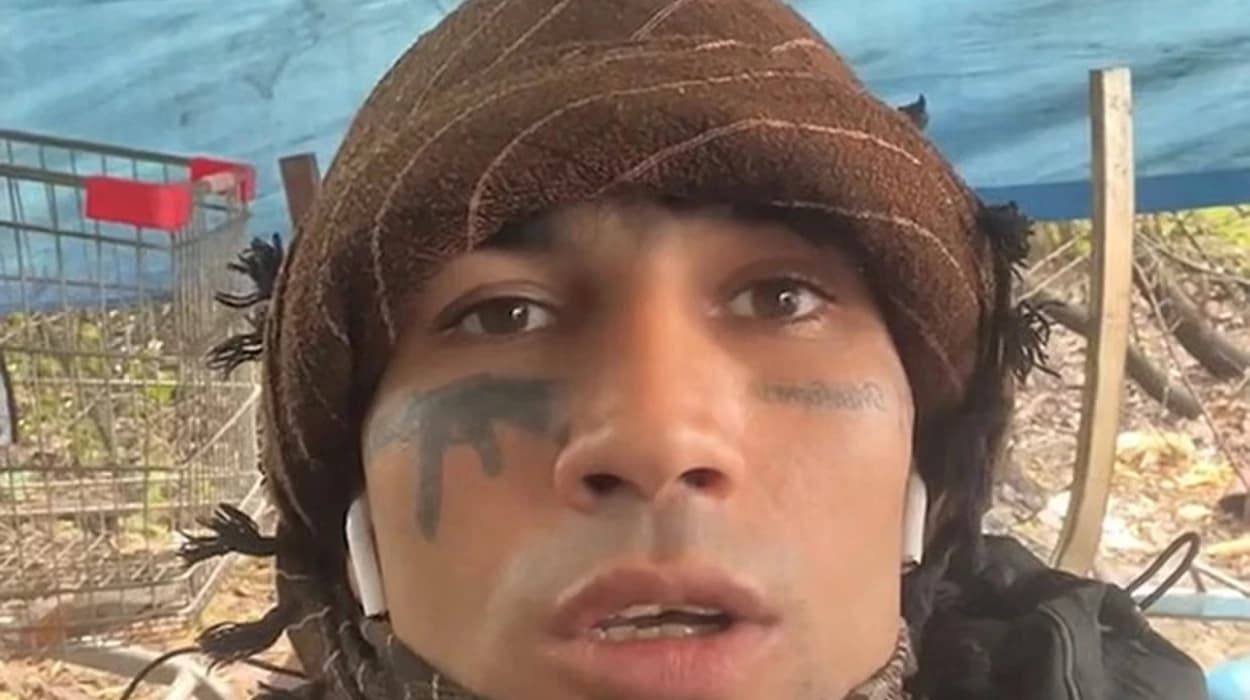
A man who threatened to kill Reform UK leader Nigel Farage in TikTok videos has been sentenced to five years in prison for making online death threats.
The threat was made in a video last October by Afghan national Fayaz Khan, whose true name is thought to be Fayaz Husseini. Farage and a high court judge called the video "pretty chilling."
Following Tuesday's sentencing hearing at Southwark Crown Court, Farage expressed his happiness with the outcome but expressed his "deep, deep concern" that Khan would be released in 18 months.
The politician sat in front of the media and accompanied by security personnel for the sentencing hearing.
Following the hearing, Khan yelled at Farage as he was led to the cells, accusing him of attempting to "use me because you want to be prime minister."
He had already pleaded guilty to trying to enter the UK illegally, but this week he was found guilty after a trial of making threats to kill.
Prior to this, jurors were informed that Farage posted a video to YouTube on October 12 of last year called "The Journey of an Illegal Migrant," which included Khan and made reference to "young males of fighting age coming into our country about whom we know very little."
Two days later, Khan replied in a video that was shown to the jury, according to prosecutor Peter Ratliff, saying,
"Englishman Nigel, don't talk shit about me."
“You not know me. I come to England because I want to marry with your sister. You not know me.
Don’t talk about me more. Delete the video. I’m coming to England. I’m going to pop, pop, pop.”
Ratliff earlier told the court that Khan made "gun gestures with his hand," head-butted the camera, and pointed to an AK-47 tattoo on his face to "emphasize he wasn't joking" while he was saying "pop, pop, pop."
Jurors were informed that Khan had a "very large presence online" because to his TikTok videos, which were seen hundreds of thousands of times under the alias "madapasa."
According to the court, Khan gave the British police the name Fayaz Khan and stated his age as 26, but Swedish authorities thought he was 31 years old and went by the name Fayaz Husseini.
He claimed to have "enemies he did not want to find him," which is why he had supplied a new name to British officials.
According to the judge, he gave a fictitious identity because he had a "criminal record in Sweden" and was serving a six-month prison sentence there.
Charles Royle, his defense attorney, informed the court that Khan had requested that he apologize to Farage "for any offence and upset caused."
Khan told the court that he worked for his father, who was a close associate of the former Afghan president Hamid Karzai, placing him at risk from the Taliban.
What measures are in place to prevent such threats from repeating?
Law enforcement and intelligence services do monitor social media platforms and online forums to identify and assess threats against public figures as quickly as possible to achieve rapid intervention.
There are new laws against threats of violence online, and the penalties for these crimes are considerably more severe now, with courts handing down lengthy prison sentences, in order to deter this behavior. Courts have set powerful precedents about threats made online, stressing how dangerous threats made online can be.
Social media companies, including TikTok, cooperate with law enforcement to remove offending content as quickly as possible and assist in investigations by providing data about the perpetrators.
Campaigns ask the public to assist in identifying threats and violent content online. This increases the detection rate of members of the community engaging in dangerous and violent behavior.