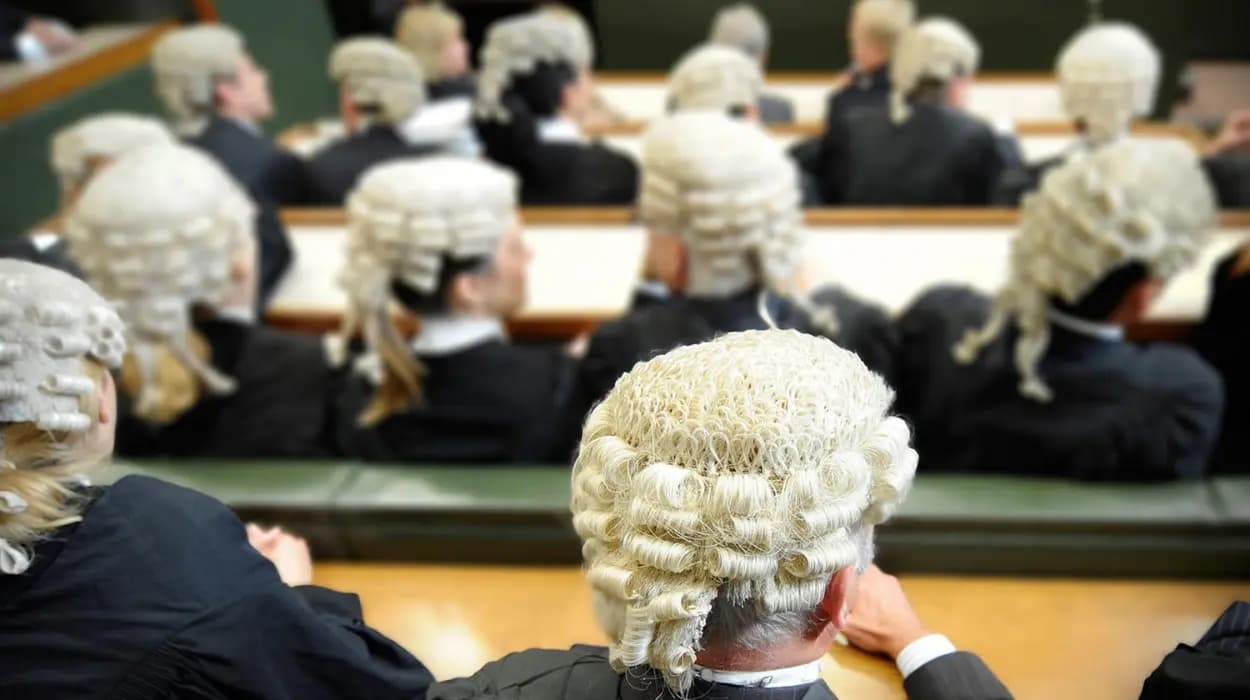
The Ministry of Justice plans to remove jury trials for thousands of cases in a controversial overhaul, raising concerns about due process and judicial fairness.
The courts minister has promised to implement drastic measures to restrict jury trials by the next election in order to prevent criminals from "gaming the system" by selecting a jury trial in order to enhance the likelihood of proceedings collapsing.
Sarah Sackman warned that inactivity would lead to "chaos and ruin" and said that drug traffickers and career criminals were "laughing in the dock" despite the fact that cases can take years to go to trial.
In one of the largest and most contentious overhauls of the legal system in England and Wales in generations, ministers will enact legislation eliminating the right to a jury trial in thousands of cases. They claim that the measures will drastically reduce the backlog in the courts by 2029.
As it moves on with the plans to address a backlog of around 80,000 cases, which will form a proposed new judge-only division of the crown court to hear some cases, the Ministry of Justice is prepared for criticism from the judiciary and barristers.
As she prepared to declare early next month that a large proportion of cases will now be tried by judges and magistrates rather than juries in response to recommendations in a study by Sir Brian Leveson, Sackman stated that the
"stakes are incredibly high."
Speaking at Wood Green Crown Court, Sackman claimed that victims of severe sexual assault were frequently informed that their cases might not be heard for up to four years.
Sackman said she understood why people “fear change” to the justice system.
“Behind these 80,000 odd cases that are waiting in the backlog, there are individual stories and individual lives being put on hold behind each and every one of those cases,” she said.
No one is being served in the case that we saw. Not the accused, who’s currently being remanded in jail, not the victim who’s been waiting since she first reported her crime years ago.
I’ve spoken to victims and survivors who tell me they’ve lost their jobs, they suffered mental breakdown all the while that they were waiting. More victims and witnesses are pulling out of the process because they cannot wait that long. That is compelling illustration of justice delayed being justice denied.”
Sackman stated that she was certain that denying thousands of defendants the option of a jury trial was the proper balance, implying that judges or magistrates would henceforth be in charge of all except the most serious theft cases and complicated fraud cases.
In 40% of instances, defendants have the option of where their case is heard. Just 8% of defendants on trial for either-way offenses chose a jury trial in 2014. This has more than doubled by 2022.
Concerns about the revisions and the judiciary's lack of jury representation have also been voiced by racial equality organizations. That was one of David Lammy's top concerns when he was appointed justice secretary, according to Sackman.
According to judicial diversity data, 12% of judges in England and Wales are members of ethnic minorities, although the percentage of black judges has stayed at 1% for ten years. Charities who support criminal justice have stated that they anticipate more convictions and possible injustices as a result of fewer jury trials.
In a recent report, Cassia Rowland of the Institute for Government stated that many of the problems identified by Leveson would be resolved by increased court productivity; fewer trials are being scheduled, but more are being canceled at the last minute. The government and Leveson's report had so far failed to make the case for the changes.
Which offences would lose the right to a jury trial under the proposals?
All offences carrying a maximum judgment of two times or lower, which would no longer have the option for Crown Court jury trials. Certain" either way" offences( where defendants presently can choose justice or Crown Court trial) would be shifted simply to adjudicators’ courts or a new Crown Court Bench Division with a judge and two adjudicators.
Some violence- related offences similar as assault, religiously exacerbated detriment, importunity, and child hijacking may lose jury trial rights under the reforms. Suspected coitus malefactors and medicine dealers are among orders likely to lose automatic jury trial rights to speed up case processing.
These measures aim to reduce the growing crown court backlog by simplifying trials and reducing their duration but have faced strong review for eroding traditional legal protections. The proffers maintain jury trials for the most serious offences like murder and rape.