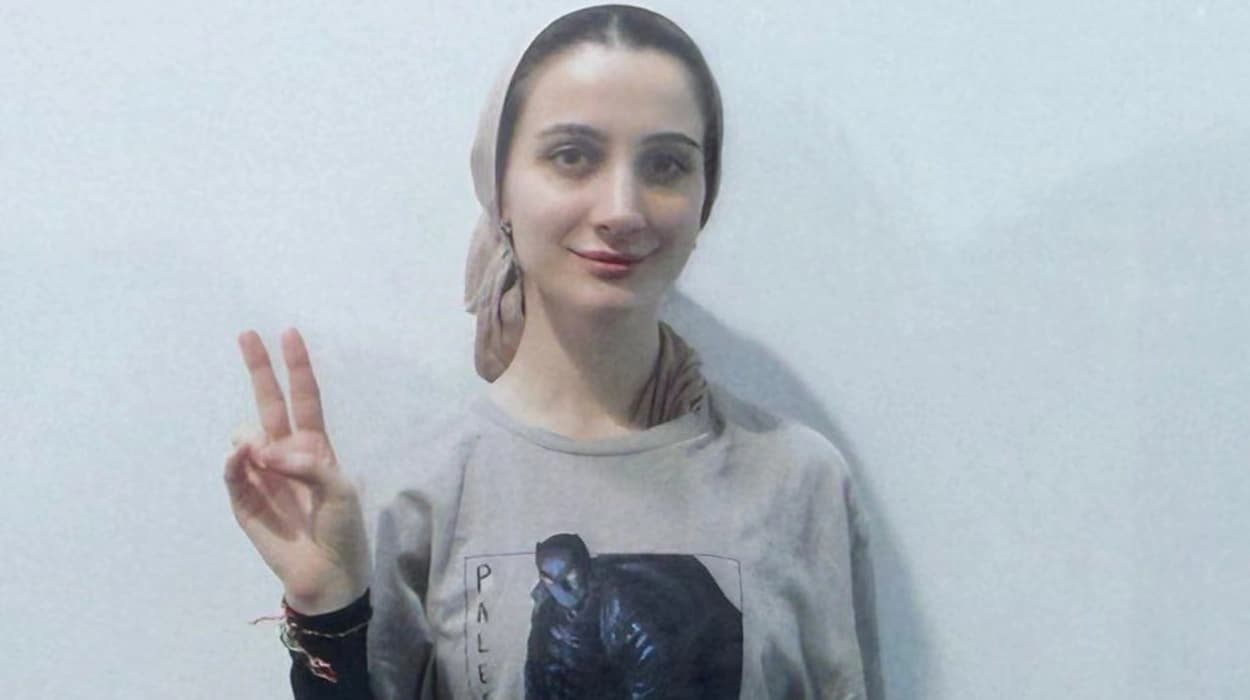
Palestine Action detainees claim harsher treatment since the group’s proscription, including bans on the keffiyeh and removal from prison work.
Although the Crown Prosecution Service has stated that there is a "terrorism connection," none of the inmates have been charged with terrorist Act offenses, and the charges were brought before Palestine Action was outlawed.
However, they claim that since the direct action protest group was categorized with groups like Boko Haram and Islamic State, they have been subject to restrictions.
Teuta Hoxha, 29, was fired from her position as a librarian at HMP Peterborough after being charged with violent disorder, aggravated burglary, and criminal damage in connection with an incident at Elbit Systems in Filton, near Bristol, last year.
When she complained, she received a letter from the prison’s head of female services saying:
“In July 2025, the home secretary proscribed Palestine Action as a terrorist organisation under the Terrorism Act 2000. The offences you are held on remand for are linked to Palestine Action and impact roles that are considered appropriate for you. The library orderly role is not considered appropriate.”
Hoxha, who recently went on hunger strike for four weeks, said she had a striped green, white, red and black scarf she made in knitting class taken away because it was the colours of the Palestinian flag.
Hoxha claimed that once she and two other prisoners detained in connection with Filton were informed that the joint extremism section had classified them as terrorists, her sister was taken off her prisoner call list due to her political beliefs, which were allegedly in line with those of Palestine Action.
Palestine Action was banned based on intelligence assessments, one of which stated that it was "primarily due to its use or threat of action involving serious damage to property." Palestine Action primarily targeted the UK locations of Israeli arms manufacturer Elbit Systems and businesses that do business with it.
Audrey Corno, 23, who is on bail awaiting two trials for alleged Palestine Action protests pre-proscription, said:
“She [Hoxha] was arrested in November 2024, way before proscription so it’s completely banal for them to apply this retrospectively, and it’s completely punitive the way that they’re using this.”
Rogers has been detained since August of last year and is awaiting prosecution for offenses related to PAG, which "has been formally recognized and is now treated under the Terrorism Act 2000," the statement added. Given this, I believed that the decision to withhold the item was appropriate and reasonable under the circumstances.
The keffiyehs of other inmates at HMP Bronzefield were later removed. The headscarf "predates Palestinian Action by centuries," according to Corno.
Although they would not comment on specific cases, a representative for Sodexo, the company that operates HMPs Bronzefield and Peterborough, stated that they managed inmates in accordance with the rules that apply to the entire prison estate, which include
"specialist multi-agency processes to assess individual terrorist risk and security status."
They said:
“The removal of Palestinian keffiyehs has been carried out in accordance with the prisoner property framework, which sets standards on acceptable items of clothing and headwear across the estate.”
A Ministry of Justice spokesperson said all prisoners were subject to the same rules, adding:
“Flags, symbols and other items that might threaten safety, order or security can be confiscated.”
What legal grounds do prisoners have to challenge restrictions on clothing in prison?
Courts have acknowledged that inmates maintain limited liberty interests, including the due process right to contest limitations on clothing. These rights can be reasonably curtailed and limited, however, if they are related to legitimate penological objectives (e.g., safety and security).
Clothing restrictions that impinge upon prisoners' religious clothing or clothing with symbolic significance may be challenged under legislation that protects religious freedom and expression (e.g. the Human Rights Act 1998 in the UK or the First Amendment in the United States) if reasonable accommodation is made.
The denial of appropriate and adequate clothing, or the requirement to wear clothing that is demeaning or humiliating, may be challenged as a violation of the prohibition against cruel or inhuman treatment under human rights law.