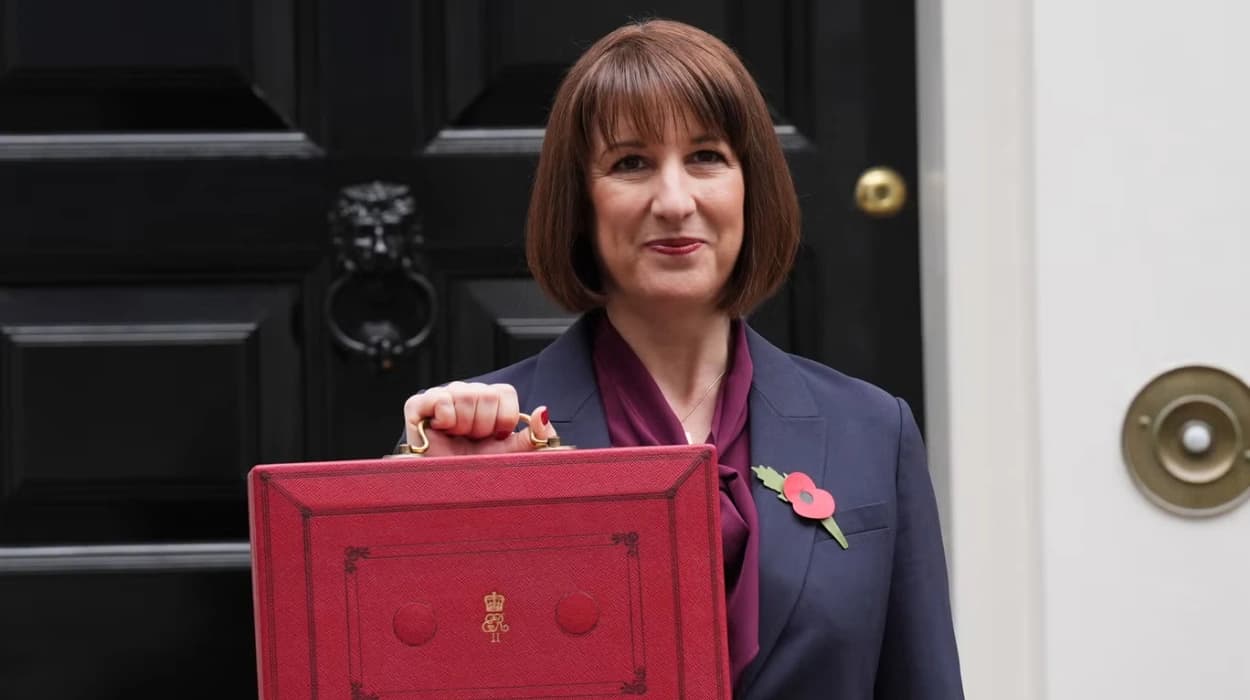
Rachel Reeves faces warnings of an economic “growth emergency” as she finalises her crucial Budget, heightening pressure on the government’s fiscal strategy.
Despite intense attempts by Ms. Reeves to convince the watchdog not to cut its forecasts, the OBR's projections are anticipated to be the most negative since it was established 15 years ago in the wake of the financial crisis.
The numbers are so dire that the chancellor substituted "fairness" and a promise to address the cost of living for the word "growth" in a speech to Labour MPs on Monday night.
Experts have also increased the pressure, cautioning that widely anticipated policies, such as a bank charge and a type of mansion tax on expensive homes, may impede growth even more.
However, he later asserted that there was "a lot of reason for optimism" in the economy, citing the extended "global talent" visa, the post-Brexit reset agreement with the EU, and modifications to the planning system that would, for example, facilitate Heathrow growth.
In her speech, CBI director general Rain Newton-Smith issued a challenge to the government:
“If you really believe in economic growth, prove it.”
She cautioned that firms are facing a "death by a thousand taxes" rather than economic progress.
In the meantime, Ms. Reeves runs the risk of "increasing taxes that are bad for growth," according to Helen Miller, director of the Institute for Fiscal Studies (IFS), who told Times Radio that "investors will be nervous" if they see a list of tax increases.
“The danger is that if you do lots of small things, often our smaller taxes are particularly badly designed and therefore you can end up increasing taxes that are bad for growth. Investors will be nervous if they see a list of tax increases, but don't quite trust how much revenue it will bring in.”
Ed Davey, the leader of the Liberal Democratic Party, urged Labour to mend "our broken relationship with Europe" in the wake of the Budget, saying that the fresh Brexit statistics demonstrated "why we have the highest taxes ever, why we have sky high bills, why we have a cost of living crisis."
In an effort to raise funds to close the budgetary gap, Ms. Reeves is reportedly planning to levy a new mansion tax on over 100,000 high-value residences. In an effort to earn between £400 million and £450 million for the Treasury, she is anticipated to impose a tax on properties valued at more than £2 million.
Ms. Reeves never used the word "growth" in her speech to the Parliamentary Labour Party (PLP) as she provided a rallying call.
She concluded:
“On Wednesday, this will be a fair Budget. It will be a Budget that delivers strong foundations, secures our future and delivers on our promise of change.”
After the chancellor's budget address, the OBR will provide its most recent projections. According to sources who spoke with Sky News, it will reduce its growth projections for 2026 and the remaining years of the current parliament.
As part of a readjustment of earlier inaccurate predictions, the decrease was caused by a decline in predicted productivity in the UK. But Ms. Reeves' own actions, such as raising employer national insurance contributions in what has been called "the jobs tax," will also be held accountable.
The Treasury has stated that it will not comment on leaks and conjecture.
What specific growth forecasts will the OBR publish in the Budget update?
A lower GDP growth cast for 2026, revised down from the former 1.9 to a range closer to 1.2 or conceivably less. Growth vaccinations for each time of the current congress term are anticipated to be downgraded due to sustained lower productivity and profitable challenges.
The OBR’s productivity growth supposition is being reduced to around 1, contributing to the overall weaker growth outlook. The five- time growth outlook will reflect these downcast variations, motioning a prolonged period of restrained profitable expansion.
The report will punctuate the financial counteraccusations of slower growth, including a larger budget deficiency and pressures on public finances that Chancellor Rachel Reeves must address through duty and spending opinions. This update marks a significant adaptation in the UK’s growth prospects and will frame the government's financial strategy in an economically constrained terrain.