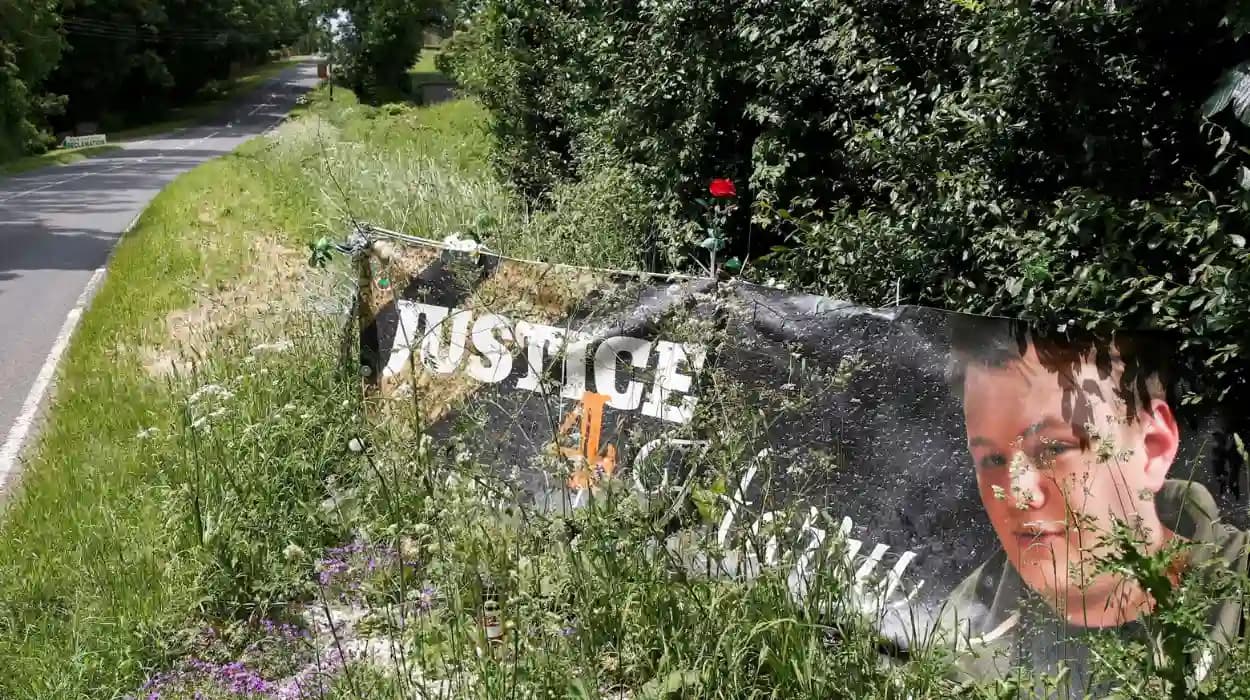
A review finds Foreign Office failures hindered justice for Harry Dunn’s family after his 2019 death near a US airbase, exposing major diplomatic lapses.
Dunn was killed aged 19 when he was hit by a car driven on the wrong side of the road by Anne Sacoolas, the wife of a US state department official based at RAF Croughton. Sacoolas, a US citizen, had been in the country for three weeks, and accepted guilt.
Dame Anne Owers, who led the review, said:
“Ministers and senior officials were not involved early enough, and this meant that opportunities were lost to influence – rather than respond to – events.
Direct communication with the family was late and sporadic, and the Foreign Office was slow to realise that they were allies in achieving justice and securing positive change.”
Within days, Sacoolas was allowed to leave the country under a technicality that she was free from criminal prosecution, even though a 1995 agreement between the US and the UK renounced immunity for all directly employed staff at the site.
Within three days of the accident, the US informed the Foreign Office that the immunity waiver did not apply to the dependents of US diplomats, and Sacoolas followed a month later.
However, Dominic Raab, the UK foreign secretary at the time, was not aware of the immunity argument until the day after Sacoolas fled the country to avoid punishment.
Foreign Office authorities also did not notify the Northamptonshire police force of the concerns about her immunity until the following day. The police did not inform Dunn's family about Sacoolas' departure until September 26, over a month after he died.
Owers report says:
“It is clear that there was shock, frustration and exasperation at the US’s decision to refuse to waive immunity.
It was considered that the US was exploiting a loophole in the Croughton Agreement, in a way that had never been intended by the drafters, and which resulted in the anomaly that Sacoolas, as a dependant, had immunity that her husband, the principal, lacked.”
And it found it unusual that there was such "a significant delay" in elevating the case within the Foreign Office so that serious senior representations might have been made to the US ambassador that the UK disapproved of the US's objectives.
According to Owers, the Foreign Office's decision to advise the US government that they should "feel able" to put state department employee Sacoolas on the next aircraft home "reflected a reluctant recognition of the US's decision, rather than agreement with it".
The review also discovered that the Foreign Office and the police fostered distrust by refusing to take the Dunn family into their confidence early.
"It would have been possible to explain to the family at an early stage that there were complex issues of diplomatic immunity which were still being explored, and the possible outcomes, without destabilising the significant diplomatic efforts being made,"
according to the document.
The 40-page study also noted the Dunn family's terrible first meeting with Raab on October 9th.
It says:
“The meeting ended with some of the family in tears, having interpreted what they had heard as meaning that nothing could or would be done. It is clear that they expected something more concrete and positive to come out of the meeting.
There had been no direct contact between the FCO and the family until five days before the meeting, and therefore no opportunity to build relationships or create trust. Nearly all of those present to whom I have spoken believe that the meeting could have been handled and prepared for better.”
It adds:
“The foreign secretary, having stated the problem including [Sacoolas’s] departure, invited the family to say what else he could have done. This was heard by the family as a statement of defeat, rather than an invitation to discuss options.”
In unprecedented remote procedures in the United States, Sacoolas was ultimately tried and convicted of death by careless driving. She performed some community service in the United States.
Harry's mother, Charlotte Charles, whose conduct is lauded throughout the study, hailed Labour's former foreign secretary David Lammy for initiating the inquiry and his successor, Yvette Cooper, for agreeing to carry out its recommendations. According to Charles, the review "made for incredibly difficult reading".
“We knew we were let down by the FCO when we lost Harry and we knew that we deserved better,”
she said.
What specific failures did the independent review identify at the Foreign Office?
The Foreign Office failed to treat the incident with the soberness and urgency it demanded, performing in missed openings to engage effectively with US authorities beforehand. Critical information, similar to dispatches prompting prompt action or political efforts, was withheld from the Dunn family, causing distrust and confusion.
The review set up the Foreign Office was slow to challenge the US on the issue of political impunity for Anne Sacoolas, the suspect, despite police considering her a suspect beforehand in the case. The Foreign Office’s approach demanded proper collaboration and perceptivity towards the family’s requirements and prospects, weakening their confidence in justice being served.
These shortcomings led to a breakdown in trust between the family and the Foreign Office, risking the loss of justice in the case and calling for advancements in extremity running and victim support.