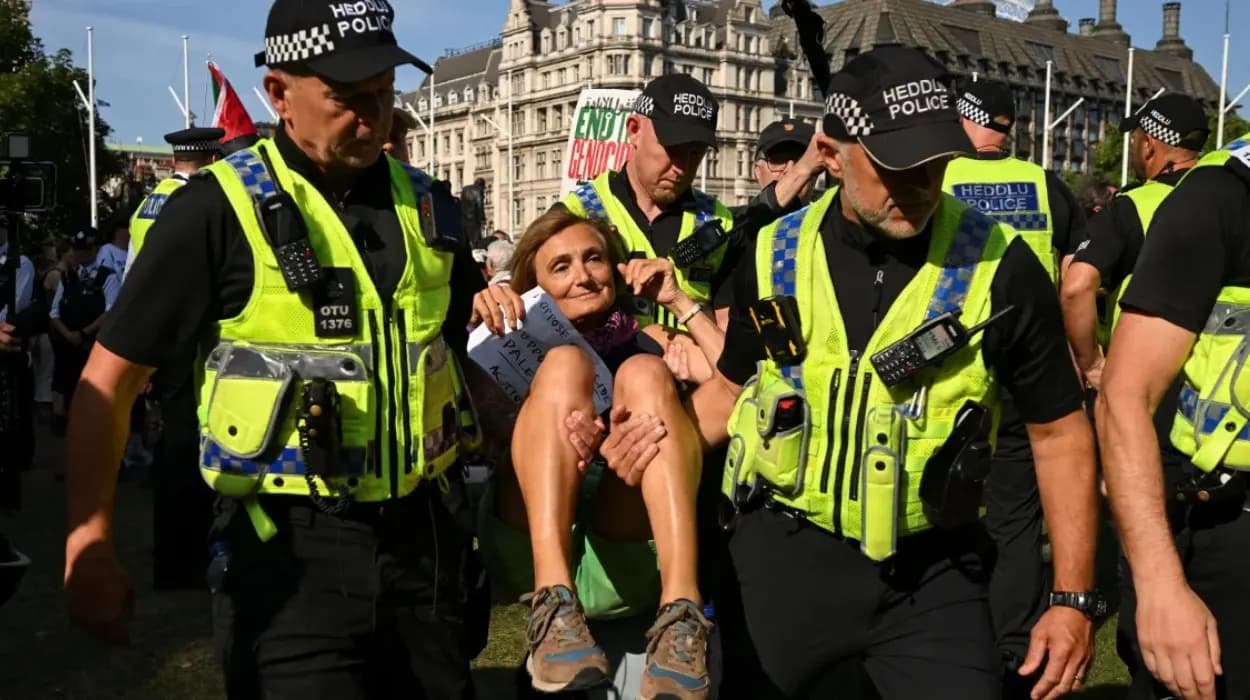
Barristers have warned that the courts are becoming overwhelmed with the large number of arrests related to the Palestine Action protests, raising concerns about the legal system's capacity to handle the cases efficiently. The ongoing enforcement of the ban on Palestine Action has led to widespread arrests, legal challenges, and controversy involving protesters, police, and the government.
Courts Struggle with Palestine Action Arrests
The United Kingdom's legal system faces significant strain as it grapples with the prosecutions of hundreds of individuals arrested during protests linked to Palestine Action, a group recently banned and labelled a terrorist organisation by the government. The mounting number of cases is causing concerns among barristers and legal experts about the courts' ability to manage the volume effectively.
Overview of Palestine Action and Its Proscription
Palestine Action was proscribed in July 2025 following protests and direct actions that included damage to military equipment, specifically targeting assets believed to be linked to the Israeli military. As reported by the Associated Press, this led to the criminalisation of public support for the group under new anti-terrorism legislation. Many supporters deny the group’s designation as terrorism, arguing that their actions were non-violent and motivated by political protest.
Impact on Police and Mass Arrests
Police forces, particularly in London, have arrested over 700 individuals since the ban came into effect. As noted by Tobias Roberts of Novara Media, the arrests often include elderly protesters and those with disabilities, many of whom were peacefully holding signs. Police officers themselves have expressed distress and exhaustion over enforcing the ban, with some describing the work as emotionally and physically unsustainable.
Legal and Judicial Challenges
Barristers involved in the cases warn that the courts risk becoming overloaded with the influx of prosecutions, potentially delaying justice. Raza Husain, a barrister representing Palestine Action co-founder Huda Ammori, described the situation as challenging for the legal system. The judicial review scheduled for November will assess whether the ban is lawful and proportionate, a decision that will influence the future of the group's proscription and ongoing arrests.
Jonathan Hall KC, an independent legal expert overseeing terrorism legislation, indicated that the ban might be legally feasible due to changes in the nature of Palestine Action's activities. Contrastingly, critics including the UN human rights chief Volker Turk argue that the ban violates international law.
Effect on Press Freedom and Public Perception
The proscription has also impacted media coverage, with many journalists exercising caution to avoid legal repercussions. Novara Media’s staff described a chilling effect on press freedom, citing fears of prosecution and unclear legal guidance for reporting on Palestine Action-related matters.
Perspectives from Protest Organisers and Legal Advocates
Defend Our Juries, the group organising protests in support of Palestine Action, criticised the ban and arrests as an infringement on freedom of speech and political protest. Tim Crosland, a co-founder of Defend Our Juries, highlighted that many police officers involved do not support the enforcement of the ban and that public dissatisfaction is growing.
Prospective Judicial Review Outcome
The legal battle around Palestine Action remains active, with substantial implications hinging on the outcome of the forthcoming judicial review. If the ban is lifted, charges against the hundreds arrested may be dropped, but if upheld, enforcement and further prosecutions will continue. The case encapsulates a broader debate about the limits of protest, the definition of terrorism, and the balance between security and civil liberties.
This unfolding situation remains closely watched by legal experts, civil rights groups, law enforcement, and the broader public, reflecting the complexities of enforcing anti-terrorism laws in a contentious political context.