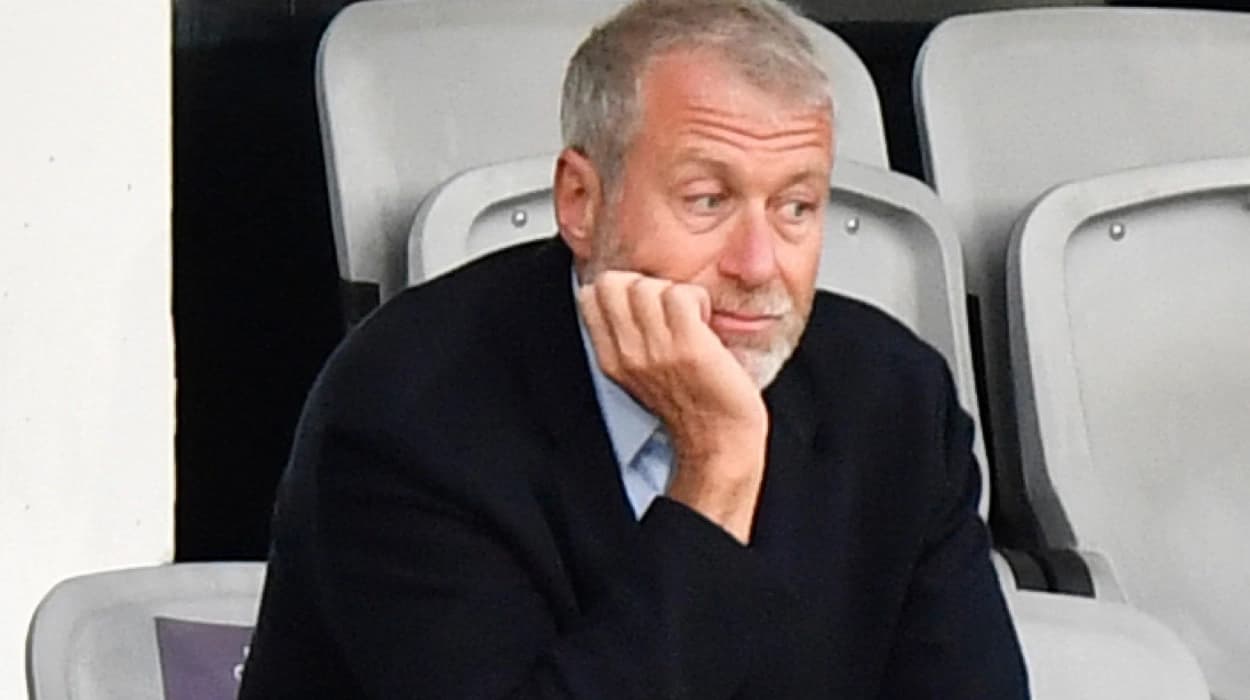
The UK will issue formal orders to release £2.5bn from Roman Abramovich’s Chelsea FC sale for Ukraine aid, warning of court action if funds are blocked.
Keir Starmer informed the House of Commons that the money from the oligarch who is subject to UK sanctions would be transformed into a new foundation for Ukraine and that the granting of a license for the transfer was Abramovich's final opportunity to comply before legal action was launched.
“The clock is ticking on Roman Abramovich to honour the commitment he made when Chelsea FC was sold and transfer the £2.5bn to a humanitarian cause for Ukraine,”
Starmer said.
“This government is prepared to enforce it through the courts so that every penny reaches those whose lives have been torn apart by Putin’s illegal war.”
Following Russia's invasion of Ukraine, the British government put pressure on the Russian oligarch to sell Chelsea in 2022.
The UK government gave Abramovich permission to sell Chelsea, provided that the proceeds were used to aid the victims of the conflict in Ukraine. The money was deposited into a UK bank account that Abramovich's business, Fordstam, controlled.
Since then, the funds have been frozen due to a standoff in talks with Abramovich on whether they should be used only in Ukraine or if they can also be used abroad.
In order to distribute the funds, the government has pledged to set up a foundation led by former Unicef UK director Mike Penrose.
It is "unacceptable that more than £2.5 billion owed to the Ukrainian people can be allowed to remain frozen in a UK bank account," according to chancellor Rachel Reeves. Roman Abramovich needs to make amends. We are willing to take any necessary steps to ensure that the Ukrainian people receive the money if he does nothing.
Ministers emphasized that they had been attempting for years to reach an agreement with Abramovich and secure his participation in the transfer of funds. According to Starmer, the government was willing to sue Abramovich in order to obtain the funds.
In March, the Guardian revealed that ministers thought legal action would probably be necessary in the end. According to the administration, Abramovich's voluntary donation of the money to Ukraine will be taken into consideration in "any proposal."
The license stipulates that income must support humanitarian purposes in Ukraine, but future profits may be used more widely to aid conflict victims around the globe.
Volodymyr Zelenskyy, the president of Ukraine, announced plans to seek a peace agreement with US officials to put an end to Russia's conflict in Ukraine.
After two days of negotiations in Berlin, US officials announced on Monday that they had "90%" of the difficult problems between Russia and Ukraine settled, despite the absence of Russian officials.
European leaders are still in talks this week over a different proposal to finance Ukraine in the upcoming years using frozen Russian assets; a leaders' meeting is expected to start on Thursday. The Euroclear central securities depository in Brussels is home to the majority of the assets, which total €185 billion (£162 billion).
Moscow has threatened to take the property of European private investors in Russia, claiming that using assets would be theft. According to plans under negotiation, the EU would use cash at Euroclear to give Ukraine an initial €90 billion loan, but Russia's claim to the money would not be affected.
What humanitarian projects in Ukraine could receive the funds?
The £2.5 bn could fairly only go to mercenary,non-military support, but within that constraint it could fund a veritably wide range of philanthropic systems in Ukraine. Exigency relief, sanctum repairs, food, clean water, downtime heating and power for displaced families, conducted through UN agencies and large NGOs( e.g. Ukraine Humanitarian Fund, Red Cross, UN OCHA).
Medical and recuperation services for hospitals, trauma care, prosthetics and recuperation for civilians injured in attacks, internal health support, and mobile conventions for frontline communities. casing and original reconstruction for repairing or rebuilding homes, seminaries, conventions and community centres in delivered or heavily damaged areas, distinct from big- ticket structure.
Social services for vulnerable groups for small ‑ entitlement programmes for children, people with disabilities, and families in frontline or enthralled ‑ conterminous communities, spanning being aviators formerly reaching thousands of heirs.