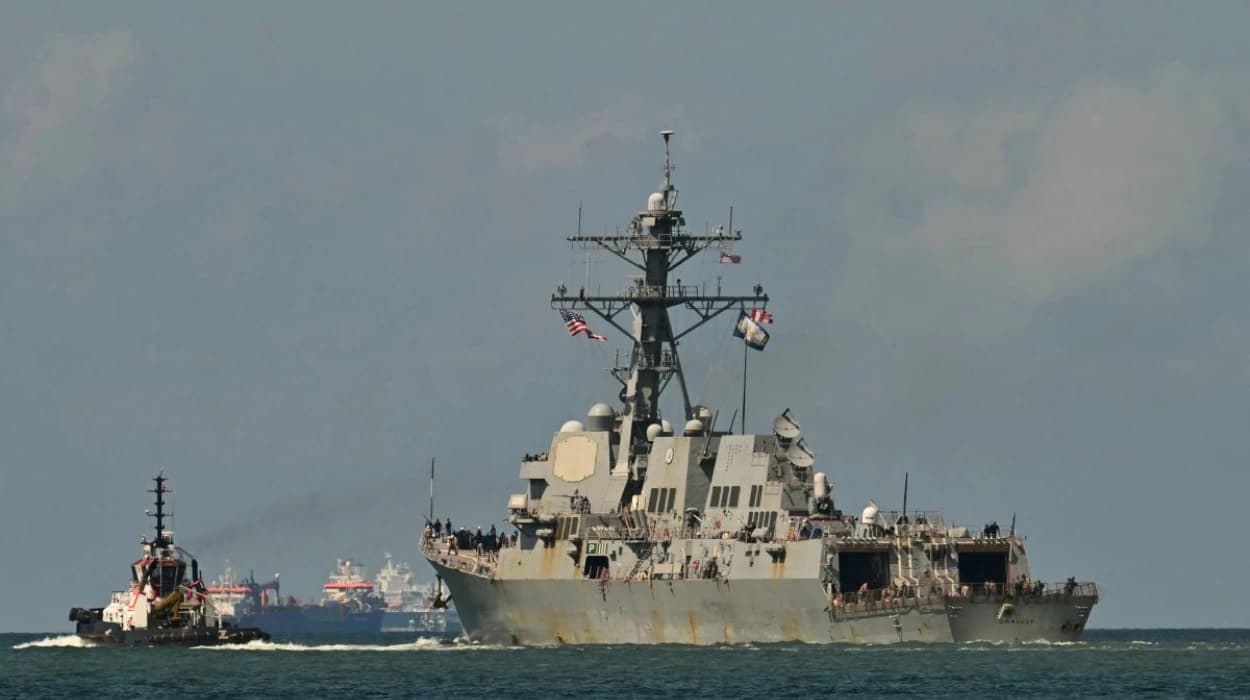
Britain has suspended intelligence sharing with the US on suspected Caribbean drug trafficking vessels amid fears data may enable lethal US strikes.
Such a ruling would show that the UK does not think the Trump administration's contentious practice of sinking boats purportedly used by drug traffickers is lawful. This would be a rare break between the normally close military partners.
The United Kingdom, which maintains control over a number of Caribbean island possessions, has long provided the United States with information regarding the movements of suspicious vessels coming from Latin America so that the US Coast Guard might apprehend them.
However, British information sharing regarding potential drug-related shipments had been suspended soon after the US launched a campaign of deadly strikes in September, according to CNN, which broke the story first.
Responding to the CNN report, a UK government spokesperson said:
“It is our longstanding policy to not comment on intelligence matters.”
However, if the UK had its own legal reservations about how information supplied would ultimately be used in operations, it would not provide intelligence or other military aid to an ally, including the US.
Prior to the US B-2 bombers' June strike on Iran's subterranean nuclear enrichment facility at Fordow, similar concerns were expressed. It was thought that the mission would be launched from the UK military base of Diego Garcia in the Indian Ocean. The bombers ultimately took off from Missouri.
The New York Times stated that FBI chief Kash Patel had personally promised his MI5 counterpart, which is another indication of tensions in the US-UK intelligence cooperation under the Trump administration.
"Armed forces personnel regularly serve on exchange programmes with our key military partners around the world," a Royal Navy official responded when asked about Lt. Cdr. Long's assignment.
According to British naval sources, before a British sailor participated in any US-led "kinetic" activities, a legal examination would typically be carried out.
Echoes of the 1989 Panama invasion are evoked by an armored personnel carrier outside a building and a US military buildup off the coast of Venezuela.
The strikes on boats constituted extrajudicial deaths, according to a number of legal experts, and any unjustified attack on Venezuela would be an even more blatant breach of international law.
According to Oona Hathaway, the incoming president of the American Society of International Law and a former legal advisor for the Pentagon, individuals responsible for the attacks could face criminal charges.
“The extent that the UK is involved in some way, with its personnel or, if it’s providing munitions or components of weapons that are being used as operations, that could have legal implications for the United Kingdom,”
said Brian Finucane, a senior adviser with the US programme at the International Crisis Group.
“There’s no serious argument there is anyone other than civilians on these small boats, despite what the US government says,”
he added.
“So that should be an obvious concern if the UK or other countries who could in some ways be supporting these lethal strikes.”
“Those countries would also need to think about supporting a potential act of aggression against Venezuela. A US invasion or even airstrikes on the country would be a clear violation of international law.”
What legal arguments underlie the UK's claim that the strikes breach international law?
The strikes on suspected medicine trafficking vessels, which frequently do in or near the territorial waters of Caribbean countries or other nations, may violate the principles of state sovereignty under transnational law, particularly when conducted without the unequivocal concurrence of the affected countries.
Under the UN Charter, the use of force in another state's home generally requires either tone- defense defense or unequivocal Security Council blessing. The UK argues these strikes warrant similar legal grounding and may constitute unlawful extrajudicial killings.
Transnational law requires that any use of force must be necessary and commensurate to the trouble. The UK questions whether murderous strikes on vessels suspected of trafficking medicines meet this threshold, suggesting indispensable law enforcement measures live.