Summary
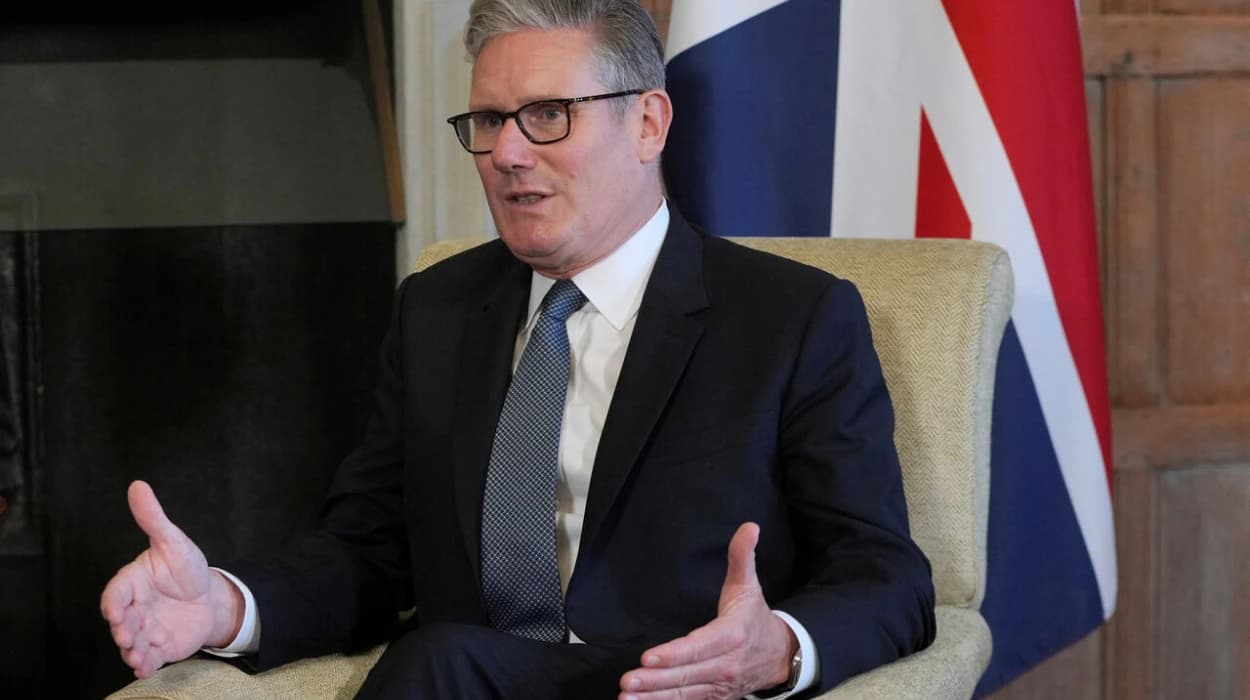
UK Prime Minister Keir Starmer will hold emergency talks with France and Germany on the Gaza crisis.
Starmer condemned the “suffering and starvation” occurring in Gaza as a humanitarian catastrophe.
The leaders aim to explore immediate actions to halt the violence and ensure aid reaches those in need.
Starmer advocates for a ceasefire and progress toward a two-state solution for Israel and Palestine.
The talks are scheduled for this Friday amid growing international concern over Gaza’s situation.
In response to the "suffering and starvation" occurring in Gaza, which he described as "unspeakable and indefensible," the prime minister announced that he will convene emergency discussions with France and Germany.
The situation has been "grave" for a while, but it has "reached new depths," according to Sir Keir Starmer.
It comes after the US announced it was ending truce negotiations and aid organizations issued warnings about famine in the Gaza Strip.
There is also mounting pressure on Sir Keir to keep Labour's pledge to recognize Palestine as a state.
The Prime Minister said: “The suffering and starvation unfolding in Gaza is unspeakable and indefensible.
While the situation has been grave for some time, it has reached new depths and continues to worsen. We are witnessing a humanitarian catastrophe.
I will hold an emergency call with E3 partners tomorrow, where we will discuss what we can do urgently to stop the killing and get people the food they desperately need, while pulling together all the steps necessary to build a lasting peace.
We all agree on the pressing need for Israel to change course and allow the aid that is desperately needed to enter Gaza without delay.”
In exchange for Israeli-detained Palestinians, the agreement is anticipated to involve a 60-day ceasefire during which Hamas will gradually release 10 surviving prisoners and the bodies of 18 others.
The two parties would negotiate a permanent truce and increase aid supplies.
In response to calls for him to recognize a Palestinian state right away, Sir Keir stated on Thursday that a ceasefire would offer a possibility to do so.
“We are clear that statehood is the inalienable right of the Palestinian people.
A ceasefire will put us on a path to the recognition of a Palestinian state and a two-state solution which guarantees peace and security for Palestinians and Israelis,” he said.
Business Secretary Jonathan Reynolds said earlier that the Government was “deeply committed” to recognition but that such a move would need to be “meaningful”.
Mr Reynolds told LBC Radio: “Now, at the minute, there is not a Palestinian state there. There is no political agreement between the two principal Palestinian territories in the West Bank and Gaza.”
“And we do want to see Palestine recognised. I want that to be meaningful. I want that to be working with partners, other countries around the world.”
In a recent speech to the UK Parliament, French President Emmanuel Macron pushed for the recognition of Palestinian statehood, claiming it was the "only path to peace."
In addition to calling on Sir Keir to "immediately recognise Palestinian statehood," Labour's London mayor Sir Sadiq Khan stated that the UK "must do far more to pressure the Israeli government to stop this horrific senseless killing."
Additionally, the Trades Union Congress demanded that Palestine be formally recognized "not in a year's time or two years' time – but now."
In an open letter, more than 100 organizations, including Doctors Without Borders and Save the Children, stated that they were witnessing their own coworkers and the Palestinians they assist "waste away."
“Recognition is not a symbolic gesture. It is a necessary and practical step towards a viable two-state solution that delivers equal rights and democracy, this is the only credible path to a just and lasting peace, ending decades of occupation, violence, and displacement,”
the TUC said.
Meanwhile, Liberal Democrat leader Sir Ed Davey has called for the Royal Air Force to carry out airdrops of aid into Gaza.
“Aid delivered by the air is no substitute for the reopening of supply routes by land,” he said.
“But the extent of the humanitarian catastrophe we are now witnessing requires us to leave no stone unturned in our efforts to get aid to Gazans.”
It comes as the Archbishop of York, Stephen Cottrell, described the situation in Gaza as “a stain on the conscience of the international community”.
He said: “With each passing day in Gaza, the violence, starvation and dehumanisation being inflicted on the civilian population by the government of Israel becomes more depraved and unconscionable.”
About 1,200 people were killed in the October 7, 2023, attack that set off the war, in which 251 individuals were kidnapped by Hamas-led militants headquartered in Gaza.
It is estimated that fewer than half of the 50 hostages who are still in Gaza are still alive.
How do France and Germany's positions on Gaza compare with the UK's stance?
All three countries strongly condemn the civilian casualties and humanitarian suffering in Gaza, calling for an immediate and lasting ceasefire. They urge all parties, including Hamas, to release hostages and refrain from further violence. They stress that the conflict cannot be resolved through military means alone and highlight the importance of international humanitarian law in protecting civilians.
France, Germany, and the UK call on Israel to restore humanitarian access, including food, water, medical supplies, and electricity to Gaza. They have condemned Israel's blockade and restrictions that have severely limited aid delivery, describing the situation as a humanitarian catastrophe.