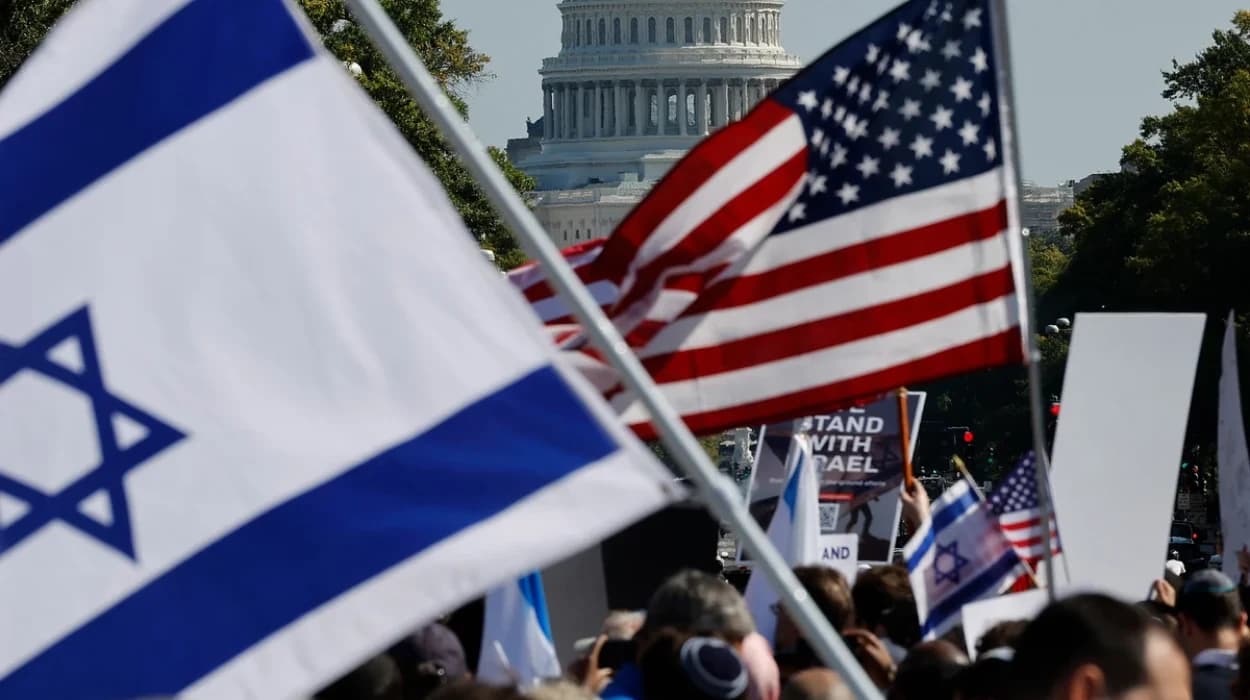
The United States' support for Israel stands as one of the most enduring and strategically significant alliances in modern international relations. Since Israel’s declaration of independence in 1948, the bond between the two countries has evolved from initial diplomatic recognition to a multifaceted partnership spanning military, economic, political, and intelligence cooperation.
A Historical Overview of U.S. Support for Israel
U.S. support for Israel began at a pivotal moment in 1948 when President Harry Truman became the first world leader to officially recognize the newly established State of Israel minutes after its declaration of independence. This early recognition laid the foundation for a close diplomatic relationship that has continued uninterrupted ever since. Initially cautious due to volatile Middle Eastern politics, American policy gradually became more robust, especially during the Cold War when Israel emerged as a critical strategic partner in a region increasingly influenced by Soviet interests.
Throughout the 1960s, U.S. support intensified under Presidents Kennedy and Johnson, who supplied Israel with advanced military technology and weapons systems. The decisive 1967 Six-Day War, when Israel captured significant territories, further solidified the relationship as the U.S. viewed Israel as a key ally amid regional conflict. The U.S. has consistently used its veto power at the United Nations Security Council to block resolutions it perceives as unfairly condemning Israel, underscoring the political dimension of support.
Military and Economic Assistance
Israel remains the largest cumulative recipient of U.S. foreign aid, receiving tens of billions of dollars in military and economic assistance. The landmark 1985 free trade agreement marked the first such deal between the U.S. and any country, reflecting the economic complementarity and strategic partnership. Over the years, military aid commitments have increased steadily, with a formal pledge in 2019 to provide at least $3.8 billion annually in defense aid.
This extensive military support enhances Israel’s qualitative edge in the Middle East, funding advanced weapons systems, joint missile defense programs like Iron Dome, and facilitating intelligence sharing. The U.S. views Israel as a strategic foothold, providing regional stability, technological collaboration, and a counterbalance to hostile actors. This mutual security relationship is often described as a cornerstone of U.S. policy in the Middle East.
Political and Diplomatic Backing
The U.S. has provided unwavering political support for Israel on the international stage. Beyond the Security Council vetoes, the U.S. has made landmark decisions such as recognizing Jerusalem as Israel’s capital and relocating its embassy there in 2018, signaling a new era in diplomatic backing. It also recognized Israeli sovereignty over the Golan Heights, further affirming its support for Israeli claims despite international controversy.
American administrations have played pivotal roles in brokering peace agreements in the region, most notably the 1979 Egyptian-Israeli peace treaty. However, U.S. attempts to mediate the Israeli-Palestinian conflict have often faced setbacks, complicated by differing interests and regional tensions. Notwithstanding these challenges, U.S. diplomatic efforts continue with recognition of Israel as a major non-NATO ally, and through initiatives like the Abraham Accords which normalized relations between Israel and several Arab states, though often sidestepping the core Palestinian issues.
Shared Values and Strategic Interests
U.S.-Israel relations are often framed as a partnership based on shared democratic values, mutual security interests, and cultural ties, including the significant influence of the American Jewish community. Both countries emphasize the importance of democracy, rule of law, and innovation, fostering cooperation beyond military and political spheres, extending into technology, scientific research, and economic development.
Strategically, Israel serves as America’s aircraft carrier in the Middle East, providing critical intelligence, a strong military presence, and a platform for projecting U.S. influence in a volatile region. Given the geopolitical challenges, including conflicts with Iran, Syria, and various non-state actors, this alliance is viewed as vital for maintaining a balance of power.
Challenges and Criticisms
Despite strong support, the U.S.-Israel relationship faces complexities and criticism. Debates around Israeli settlement policies, the humanitarian situation in Gaza, and the unresolved Israeli-Palestinian conflict have sparked contentious discussions in American politics and civil society. Different U.S. administrations have varied in their approach toward these issues, with some advocating more active mediation and others taking a more hands-off stance.
International criticism of U.S. support centers on concerns of bias and the impact on broader regional peace prospects. Nevertheless, bipartisan backing in Congress and among most American leaders ensures that support for Israel remains a consistent pillar of U.S. foreign policy.
America’s support for Israel is comprehensive and multifaceted, grounded in decades of diplomatic recognition, military cooperation, economic partnership, and shared strategic objectives. This alliance has endured through shifting political landscapes and regional conflicts, evolving into a defining feature of U.S. engagement in the Middle East. While challenges and controversies persist, the relationship’s depth and resilience reflect the profound interests and values that bind the two nations, making the United States Israel’s closest and most important ally.