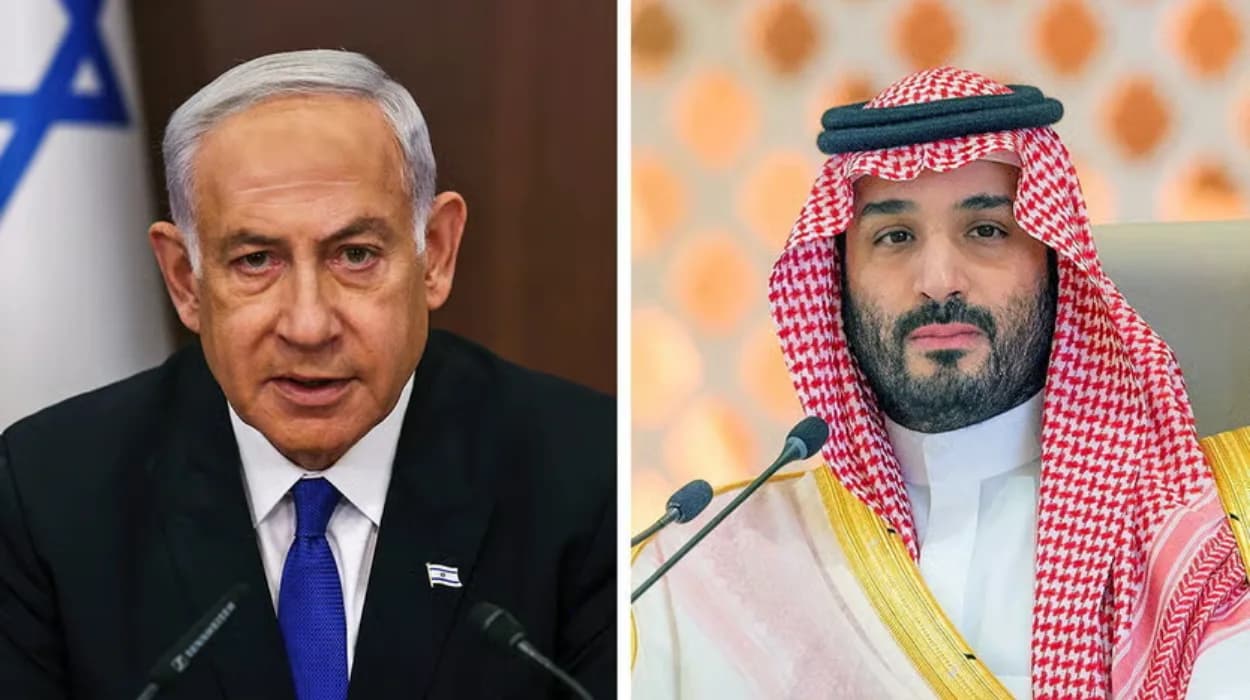
The relationship between Saudi Arabia and Israel is one of the most complex and nuanced in the Middle East, marked by decades of overt hostility and covert cooperation. Despite the absence of formal diplomatic ties, recent developments and shared strategic interests hint at evolving dynamics.
Historical Context of Saudi Arabia–Israel Relations
Since Israel’s establishment in 1948, Saudi Arabia has officially opposed Israeli sovereignty and has aligned itself with the broader Arab world in support of the Palestinian cause. Saudi Arabia voted against the United Nations Partition Plan for Palestine that year and has consistently called for Israeli withdrawal from occupied territories, tying recognition of Israel to the establishment of a Palestinian state with East Jerusalem as its capital.
Throughout the Arab-Israeli conflicts, including the 1948 and 1973 wars, Saudi Arabia supported Arab armies against Israel. The kingdom rejected peace agreements like the Camp David Accords, viewing them as isolating Palestinians. However, behind the public posture of opposition, secret communications and indirect dialogues have occurred since the 1980s, signaling pragmatism amid regional tensions.
Covert Cooperation and Shared Strategic Interests
In recent decades, Saudi Arabia and Israel have developed a pattern of clandestine cooperation primarily motivated by mutual concerns over Iran’s regional influence. Both countries perceive Iran as a major threat, particularly regarding its nuclear ambitions and support for proxy groups like Hezbollah and Hamas.
This shared threat has led to intelligence sharing, security coordination, and discreet diplomatic contacts facilitated often by the United States. For example, reports suggest joint war rooms and indirect communication channels have been established to address regional challenges, reflecting a pragmatic alliance beneath official rhetoric.
These covert ties have extended to economic interactions and limited technological collaboration, although full diplomatic recognition remains absent due to unresolved Palestinian issues.
Saudi Arabia’s Official Stance and Public Opinion
Saudi Arabia officially maintains that no normalization with Israel will occur without a just resolution to the Palestinian conflict, safeguarding Palestinian statehood and rights. Crown Prince Mohammed bin Salman has reiterated this position, emphasizing Saudi Arabia’s support for Palestinian self-determination and condemning Israeli actions deemed oppressive.
Public opinion in Saudi Arabia remains largely skeptical or hostile toward Israel, with the majority opposing normalization absent a comprehensive peace deal. The kingdom continues to condemn Israeli policies in Palestinian territories and has expressed solidarity with Palestinians in international forums. Nonetheless, there has been a notable framing shift, including steps to moderate public discourse and remove anti-Israel content from educational materials, signaling a possible strategic recalibration.
Recent Developments Toward Normalization
In the 2020s, Saudi Arabia has signaled increased willingness to engage Israel under conditions tied to Palestinian statehood. Unofficial negotiations mediated by the United States began around 2023, though they were interrupted by regional conflicts such as the Gaza war.
Economic interests also motivate Saudi openness, as Crown Prince Mohammed bin Salman admires Israel’s technological and innovation sectors and envisions similar growth for Saudi Arabia. High-profile visits and statements by Israeli officials attending events in Saudi Arabia mark unprecedented engagement, although formal diplomatic relations remain on hold.
The geopolitical realignment amid increasing tensions with Iran, and the normalization of Israel with other Gulf countries like the UAE and Bahrain through the Abraham Accords, have pressured Saudi Arabia into reconsidering its stance while balancing domestic and regional political sensitivities.
Challenges and Prospects Going Forward
The pathway toward Saudi-Israeli normalization is fraught with challenges. Key issues include the unresolved Israeli-Palestinian conflict, domestic public opinion in Saudi Arabia, and regional dynamics involving Iran and other Arab states. Critics warn that premature normalization could alienate Palestinians and destabilize the fragile balance in the Middle East.
However, strategic imperatives such as countering Iranian influence, fostering economic diversification, and strengthening alliances with Western powers provide strong incentives for Saudi Arabia to continue cautious rapprochement with Israel.
Future developments depend heavily on progress toward a two-state solution, regional security arrangements, and the interplay of international diplomacy, especially involving the United States and other global actors.