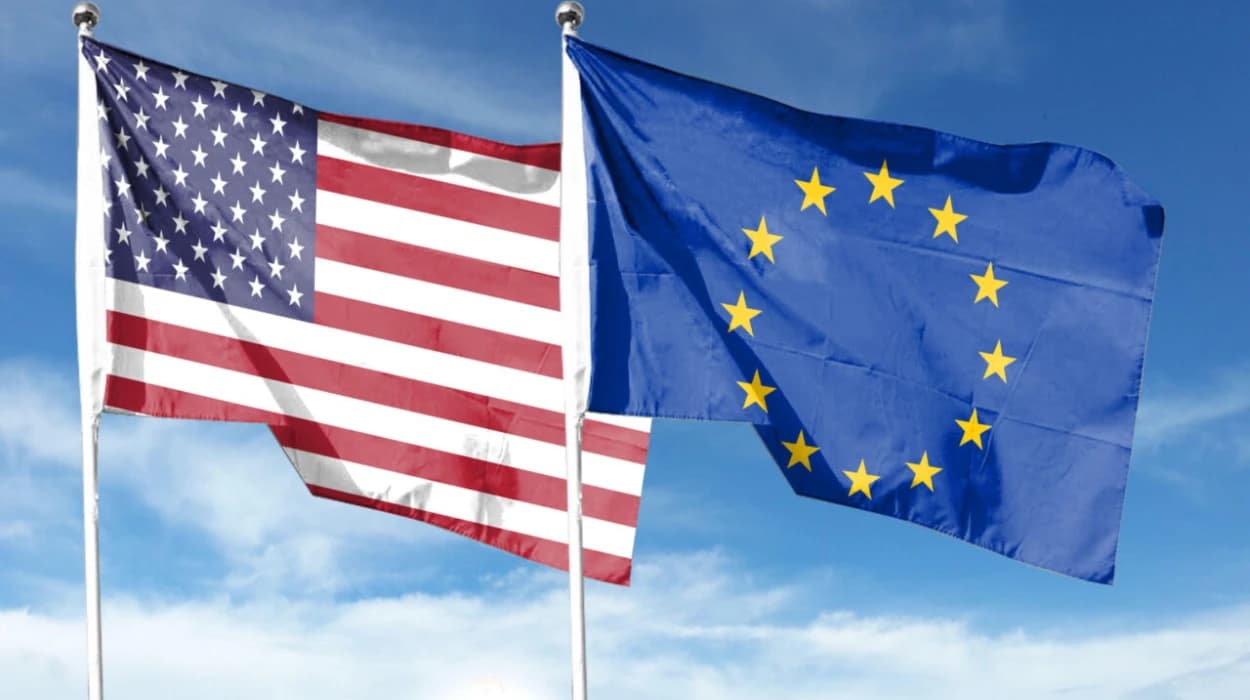
Europe and the United States have shown increasingly divergent approaches toward Palestine, shaped by contrasting diplomatic, political, and ethical priorities as of 2025. While both share the overarching goal of peace and stability in the region, their strategies reflect differing emphases and policy tools shaped by domestic contexts, historical alliances, and international norms.
The United States continues to maintain a deeply rooted alliance with Israel, prioritizing its security and strategic interests in the Middle East. This alliance influences U.S. policy, which often supports robust Israeli security measures and emphasizes combating terrorism. While the U.S. officially supports a two-state solution, its approach has tended toward pragmatism, deferring contentious issues such as settlements and borders to future negotiations.
By contrast, the European Union and many of its member states place stronger emphasis on adherence to international law, human rights, and a rules-based order. The EU consistently condemns Israeli settlement growth in the occupied territories as illegal under international law and calls for a return to the 1967 borders with mutually agreed land swaps as a basis for a viable two-state solution.
Historical and ideological context
The United States has traditionally been a principal ally of Israel, backing strong security measures and supporting Israeli government positions, while advocating a negotiated two-state solution as a long-term peace objective. Successive U.S. administrations have maintained close strategic ties with Israel, mobilizing diplomatic and military support, and engaging in complex mediation efforts.
The Trump administration notably reinforced U.S. alignment with Israeli expansionist policies, including settlement legitimization, which heightened tensions with Palestinian and global actors.
In contrast, the European Union (EU) has emphasized human rights, international law, and a rules-based approach to resolving the conflict. The EU advocates for final borders based on the 1967 lines with mutually agreed land swaps and has consistently condemned Israeli settlement activity as illegal under international law.
This principled stance contributes to policy divergence, with Europe pushing for accountability and negotiations predicated on equitable terms, while the U.S. approach has, at times, been viewed as more pragmatic or aligned with Israeli security priorities.
Current policy divides
In 2025, the EU’s collective voice, albeit fragmented given diverse member state positions, has called for suspension or reevaluation of trade agreements with Israeli settlements, reflecting ethical and legal concerns. Nine EU countries urged talks on ending trade with settlements, advancing a conditional economic agenda tied to respect for international norms.
The European Parliament has also championed supporting Palestinian elections and governance reforms, aiming to strengthen Palestinian institutional legitimacy.
Meanwhile, U.S. policy under the administration of President Donald Trump and his successors has remained cautious about directly confronting Israeli settlement policy while prioritizing combating terrorism and maintaining close U.S.-Israel security collaboration.
The U.S. has pushed hard for ceasefire agreements but has been criticized by some European actors for tolerating or indirectly enabling Israeli policies perceived as incompatible with Palestinian self-determination.
Impact on international mediation
The longstanding Israeli-Palestinian conflict remains one of the most diplomatically challenging issues on the global stage. Transatlantic disagreements between the European Union (EU) and the United States over strategy have complicated prospects for unified international mediation and peaceful resolution.
These divergences reflect fundamental differences in priorities, methodologies, alliances, and the frameworks within which each actor operates.
The EU tends to approach the conflict within a multilateral framework prioritizing adherence to international law, human rights, and transparency. It supports a rules-based peace process focused on a two-state solution grounded in the 1967 borders with agreed land swaps between Israel and Palestine.
The European position stresses accountability particularly regarding Israeli settlement expansion and condemns violations of international law. An important facet of the EU’s role is providing humanitarian aid and development assistance designed to strengthen Palestinian institutions and foster socio-economic resilience.
However, the EU faces significant internal divisions among its member states, complicating coherent policy action. While countries like Ireland, Belgium, and Luxemburg champion a more pro-Palestinian human rights-based approach, others like Germany, Austria, Hungary, and the Czech Republic adopt friendlier stances toward Israel, emphasizing balance or pragmatic relations.
Moreover, institutional differences exist; whereas the European Commission advocates balanced diplomacy, the European Parliament often voices a stronger pro-Palestinian stance and pushes for reforms including Palestinian elections that have long been stalled.
Ethical and political dimensions
Europe’s approach toward the Israeli-Palestinian conflict increasingly reflects a normative foreign policy framework, one where economic ties and humanitarian aid are conditioned on compliance with international human rights standards and international law.
This marks a significant divergence from the more traditional realpolitik stance historically favored by the United States, where strategic alliances and security interests with Israel tend to weigh more heavily in decision-making processes.
The European Union (EU) and many European capitals have emphasized ethical considerations as central pillars in shaping their policies towards Palestine and Israel. This is evident in calls from several EU member states to suspend or re-examine trade agreements with Israeli settlements deemed illegal under international law, reflecting a growing fatigue with impunity surrounding human rights violations in the occupied territories.
By contrast, while the U.S. publicly supports a two-state solution and the peaceful resolution of the conflict, its foreign policy traditionally centers on maintaining a robust strategic alliance with Israel.
American administrations weigh geopolitical security imperatives heavily, often prioritizing counterterrorism cooperation, regional stability through alliances with Gulf states, and ensuring Israel’s security needs. This pragmatic geopolitical approach sometimes results in U.S. tolerance for Israeli settlement expansions and a comparatively muted response to alleged human rights abuses.
Most enduring conflicts
The deepening differences between the European Union (EU) and the United States in their strategies toward Palestine reveal a complex landscape of international engagement with one of the world’s most enduring and contentious conflicts. While both actors share overarching goals of peace and stability, their contrasting approaches are shaped by differing domestic political considerations, strategic priorities, and normative commitments, reflecting broader geopolitical and ethical tensions that influence their policies and diplomacy.
Traditionally, the United States has maintained a close alliance with Israel, emphasizing security concerns that align with protecting Israeli territorial integrity and counterterrorism efforts. U.S. administrations have approached the Israeli-Palestinian conflict with a focus on bilateral negotiations, often advocating for a gradual peace process that balances pragmatic considerations with long-term two-state solutions.
In contrast, the EU’s engagement tends to prioritize a rules-based international order, human rights, and adherence to international law. The collective European stance generally rejects settlement activity on Palestinian lands as illegal under international law and insists on a viable two-state solution based on the 1967 borders with mutually agreed land swaps.