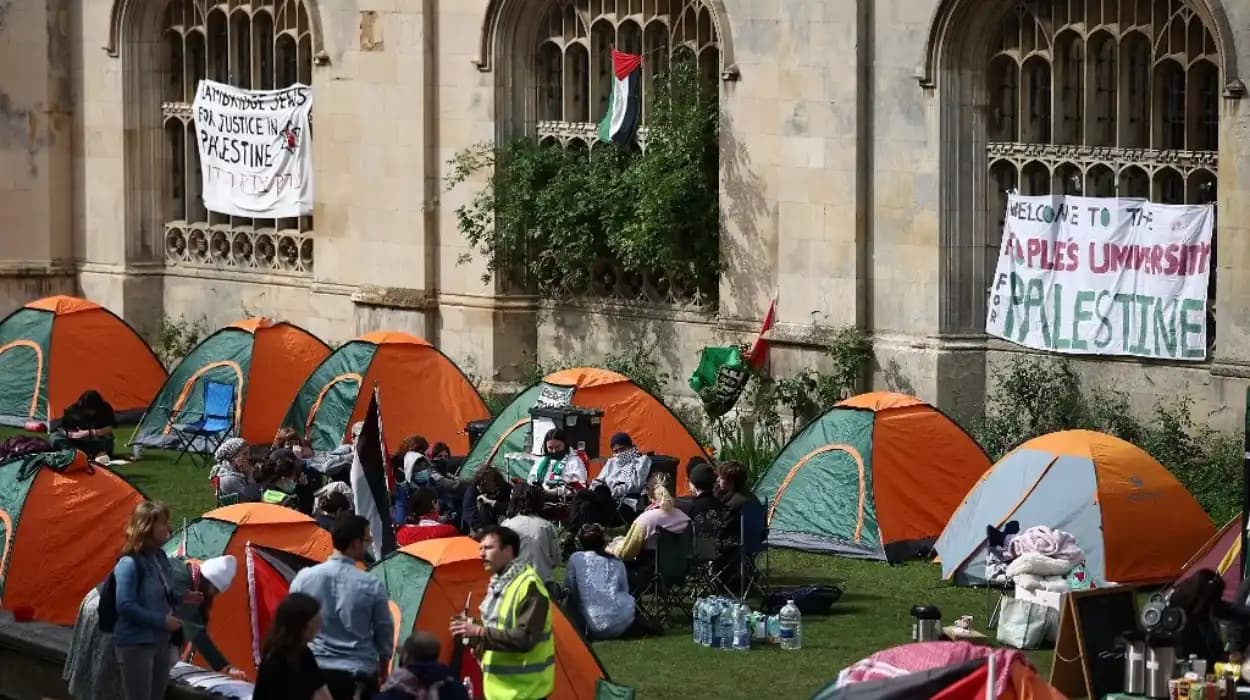
European universities have increasingly deepened their academic, research, and student exchange ties with Palestinian higher education institutions during 2025. This renewed engagement reflects a commitment to supporting education in Palestine amid ongoing humanitarian challenges, promoting knowledge exchange, capacity building, and scholarly cooperation. Enhanced collaborations between European and Palestinian universities reveal an evolving framework of equitable institutional partnerships emphasizing resilience, mutual learning, and future prospects.
Expanding institutional collaborations
Leading European universities, including Lund University in Sweden, have initiated expanded collaborations with prominent Palestinian institutions such as Birzeit University and the Arab American University in the West Bank.
These partnerships facilitate student and faculty exchanges, joint research projects, and curriculum development funded in part through EU-backed Erasmus+ Mobility Programmes. Palestinian students and doctoral candidates benefit from granted living costs to pursue studies abroad, while European academics engage with Palestinian counterparts to foster knowledge transfer and pedagogical innovations. These cross-border educational ties are vital for maintaining academic continuity and quality amid the region’s difficult operational context.
Scholarship and fellowship programs
Many European institutions have established scholarship and fellowship programs aimed at Palestinian students and researchers.
These programs focus not only on traditional academic disciplines but also prioritize fields critical to Palestine’s development needs such as water management, economics, public health, and sustainable agriculture. Initiatives supporting scholars at risk, especially in Gaza, provide vital opportunities for displaced faculty and students to continue their work remotely or at partner universities abroad, countering the ongoing interruption of academic activities caused by conflict and infrastructural challenges.
Impact of political and ethical considerations
In recent years, European universities have increasingly confronted the complex political and ethical landscapes associated with their academic partnerships, particularly those connecting with institutions linked to Israeli settlements or military entities.
This growing awareness has led to varied reactions, including suspension, reassessment, or outright termination of collaborations with Israeli academic counterparts over concerns related to human rights adherence and international humanitarian law.
Several prominent European universities, notably within Italy and the Netherlands, have moved beyond mere symbolic declarations to implement administrative decisions suspending ties with Israeli institutions perceived to have direct or indirect affiliations with contentious state policies. For example, Erasmus University Rotterdam has suspended cooperation with institutional partners suspected of involvement in activities undermining human rights.
This reflects a broader continental wave of universities taking tangible measures to reconsider and limit their engagement with Israeli scientific institutions, as reported by numerous academic and media sources.
These actions underscore a larger trend within European academia to consciously align research cooperation and exchange programs with established ethical and legal standards. Universities recognize their role not merely as centers of knowledge but also as socially responsible actors in international affairs.
Ensuring that their partnerships do not contribute to or legitimize violations of human rights is becoming a guiding principle in decision-making, reflecting a commitment to uphold the values of academic freedom, justice, and international law.
Digital and remote cooperation
The COVID-19 pandemic has transformed the nature of academic and scholarly cooperation globally, and nowhere is this shift more apparent than in the collaborative efforts between Europe and Palestine.
Faced with physical, political, and logistical barriers that traditionally limited academic discourse, European and Palestinian institutions have accelerated the adoption of virtual and blended cooperation models to ensure that despite challenges, scholarly activities can continue to thrive.
Virtual fellowships, online conferences, and joint research networks have emerged as critical platforms in this new era of international collaboration. These digital modes of cooperation allow Palestinian academics, who often face restrictions on travel due to political instability and stringent checkpoints, to remain active participants in global scientific and academic communities.
By leveraging videoconferencing, shared digital workspaces, and cloud-based research tools, Palestinian scholars maintain engagement with European counterparts, expanding opportunities for knowledge exchange and capacity building.
Moreover, these technological approaches enable stronger institutional collaboration. Palestinian universities and research centers, despite infrastructural deficits and limited resources, have been able to enhance their academic output through European partnerships. Distance learning initiatives supported by European funding contribute to improved educational accessibility for Palestinian students, even amid lockdowns or curfews imposed during the pandemic or conflict.
These efforts are instrumental in sustaining academic continuity and preventing educational disruptions that disproportionately affect vulnerable populations.
Sustaining and expanding university partnerships between Europe and Palestine hinges critically on consistent funding, political stability, and institutional resilience. These partnerships have historically played a significant role in bolstering Palestinian higher education capacities, especially in Gaza. However, the fragile political and security landscape, compounded by infrastructural damages and restricted mobility, presents a persistent challenge to academic collaboration and development.
In recent years, the European Union has been instrumental in fostering and coordinating academic cooperation through initiatives such as the Palestine Donor Groups. These coalitions include multiple donors working jointly to streamline support, promote reform agendas, and encourage recovery of the higher education sector post-conflict. The coordination aims to optimize the impact of international funding, share best practices, and align strategic priorities for universities in Palestine.
Academic exchange programs, research collaborations, and capacity-building projects have been key focal points. Under the EU’s Horizon Europe program, Palestinian scientists and academic institutions have been offered opportunities to engage with European counterparts in joint projects addressing Mediterranean challenges.
Several Palestinian universities, such as Al Quds University, Arab American University, and Birzeit University, benefit from EU scholarships, fellowship programs, and virtual academic exchanges that mitigate mobility restrictions imposed by conflict and geopolitical constraints.
Supporting Palestinian higher education
European universities have played a vital role in supporting Palestinian higher education through dynamic and multidimensional partnerships, particularly in recent years. By fostering academic exchange, research cooperation, and ethical policies, these collaborative efforts contribute significantly to building education resilience and promoting socio-economic development in Palestine, especially under conditions marked by adversity and political instability.
One of the key components of this support is academic exchange programs facilitated by initiatives such as the European Union’s Erasmus Mobility Programme. Leading institutions like Lund University have expanded collaborations with Palestinian universities, including Birzeit University and Arab American University in the West Bank, enabling Palestinian students, doctoral candidates, and teaching staff to undertake study and teaching exchanges. These programs provide grants that cover living costs, allowing academic personnel from Palestine to engage with European educational environments and gain expertise that they can take back to their home institutions.
Alongside these exchanges, research partnerships have been a cornerstone of European support, with collaborations stretching back over three decades between UK, European, and Palestinian educational institutions. Such research efforts address critical regional developmental challenges ranging from water resource management to economic policies and public health initiatives.
European universities, through joint projects and capacity-building workshops, work not only to enhance academic knowledge but also to strengthen Palestinian universities’ autonomy and sustainability. This long-term engagement helps offset limitations imposed by conflict and economic difficulties while advancing locally relevant scholarship.