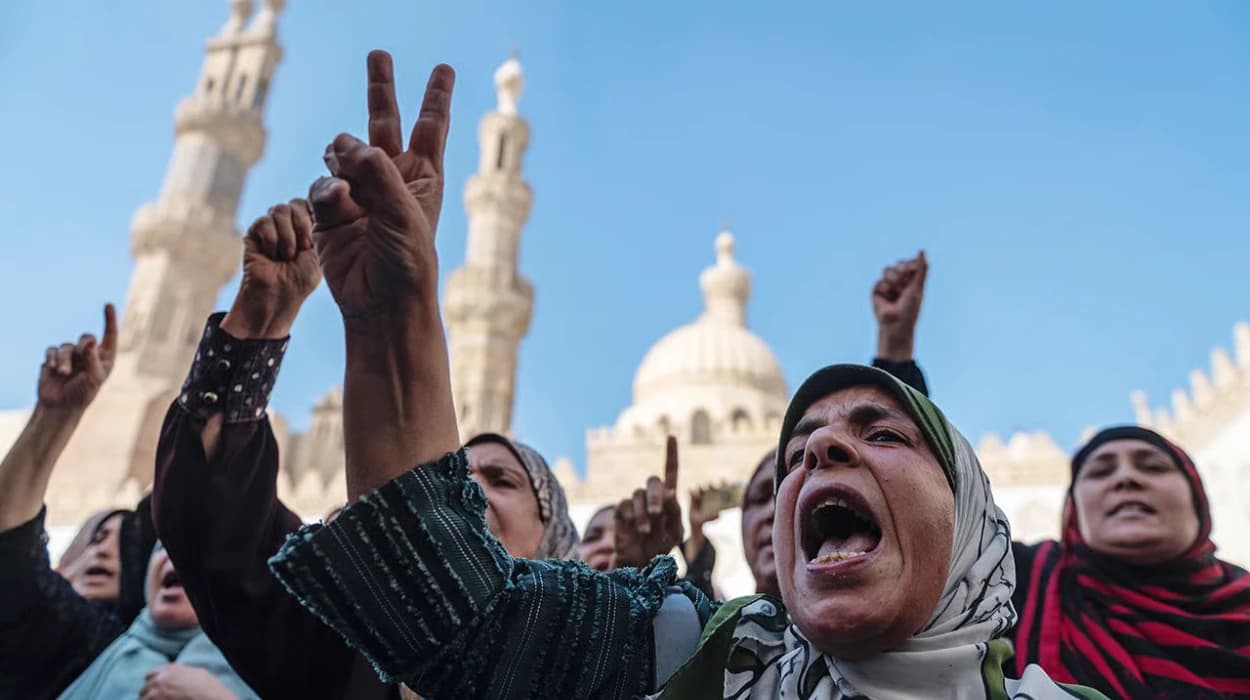
Muslim supporters of Israel represent a minority perspective within the broader Muslim world, shaped by complex historical, religious, and political contexts. While the predominant Muslim stance has traditionally opposed Israel’s legitimacy due to the Israeli-Palestinian conflict, several prominent Muslims publicly support Israel’s right to exist, grounded in religious interpretations, political pragmatism, or personal experiences.
Historical and Religious Context
Initially, the Islamic world largely challenged the establishment and existence of Israel, tied closely to commitments to thePalestinian cause. However, historical figures such as the Sharif of Mecca, Hussein bin Ali, and King Feisal showed early pro-Zionist tendencies, advocating cooperation between Arabs and Jews in the early 20th century. Islamic texts have been interpreted by some scholars to acknowledge the Jewish people’s connection to the land of Israel. For example, experts like Khaleel Mohammed argue that Quranic verses affirm the land’s divine allocation to the Jews, and Imam Abdul Hadi Palazzi cites Islamic sources that recognize the Jewish temples in Jerusalem.
Notable Muslim Supporters of Israel
Muslim supporters of Israel come from diverse backgrounds, including ex-Muslims, reformers, intellectuals, and some clerics. Notable figures include:
- Tawfik Hamid, former militant turned Islamic reformer
- Imam Abdul Hadi Palazzi, a prominent Muslim Zionist scholar
- Khaleel Mohammed, Islamic law scholar advocating recognition of Israel’s biblical claims
- Salah Uddin Shoaib Choudhury, a journalist and vocal Muslim Zionist
Additionally, certain Muslim minority groups within Israel, like the Negev Bedouins, tend to identify with the Israeli state and participate in its defense forces. Prominent individuals like Ismail Khaldi serve as high-ranking officials in Israeli diplomatic services, advocating for Israel’s legitimacy and fostering cross-cultural dialogue.
Contemporary Shifts and the Abraham Accords
The 2020 Abraham Accords marked a significant political shift, normalizing relations between Israel and several Arab states such as the United Arab Emirates and Bahrain. This development has fostered more open expressions of support for Israel within parts of the Muslim world, including social media influencers promoting positive narratives and advocacy for peaceful coexistence.
Challenges and Minority Status
Despite such examples, support for Israel remains a minority stance among Muslims worldwide, largely due to ongoing conflicts and solidarity with Palestinians. The issue remains deeply sensitive, with many Muslims viewing support for Israel as controversial or oppositional to traditional narratives.
Muslim supporters of Israel, though relatively rare, exist across different communities and represent a nuanced perspective grounded in religious texts, historical cooperation, and modern political developments. Their presence reflects the complex diversity within the Muslim world concerning Israel and highlights the evolving discourse around coexistence and peace.
Theological Foundations of Support for Israel Among Muslims
Some Muslim thinkers and scholars support Israel based on specific theological interpretations of Islamic texts. They argue that the Quran contains verses acknowledging a divine covenant with the Jewish people over the land of Israel. For instance, Sura 5, verse 21, referenced by Islamic law scholar Khaleel Mohammed, recounts Moses urging his people to enter the holy land that God has prescribed for them. Traditional Islamic commentators like Muhammad ibn Jarir al-Tabari interpreted this as a lasting divine decree granting Jews a rightful claim to the land.
These interpretations challenge the dominant narrative in much of the Muslim world that certificates exclusive Muslim ownership of Palestine. Supporters cite such scriptural references as religious validation for peaceful coexistence and recognition of Israel’s sovereignty. This theological viewpoint promotes interfaith respect and reframes the conflict beyond political lines, emphasizing shared histories and religious respect.
Political and Strategic Motivations
Beyond theology, political pragmatism drives support among certain Muslim individuals and states. Some view normalization with Israel as a strategic necessity in regional geopolitics. The Abraham Accords demonstrated this shift by establishing ties between Israel and several Arab states for mutual economic, security, and technological benefits.
This pragmatic support sees Israel as a legitimate actor in Middle Eastern politics who can contribute to regional stability. Advocates argue that engaging with Israel allows Muslim nations to influence policymaking more effectively, reduce conflicts, and promote coexistence. This approach also tries to separate political Zionism from the broader Jewish identity, seeking peaceful diplomatic solutions.
The Role of Muslim Zionism and Normalization Movements
A growing and controversial trend gaining attention is Muslim Zionism, which refers to Muslim individuals or groups explicitly supporting the Zionist project and Israel’s policies. Muslim Zionists often engage in advocacy or alliance-building, presenting Islamic theological justifications for cooperation.
However, this phenomenon is contentious. Critics argue these views sometimes repackage settler-colonialism in religious terms, overlooking Palestinian rights and suffering. Islamic jurists critical of Zionism emphasize traditional prohibitions against unjust land seizure and aggression, viewing Zionism as incompatible with Islamic justice principles.
This tension reflects a broader debate within Islam over reconciling historical grievances with future peace prospects. Muslim Zionism is niche but exemplifies the diversity of thought within the Muslim community about the Israeli state and the idea of nationalism.
Social and Cultural Implications
The existence of Muslim supporters of Israel challenges stereotypes about Muslim-Jewish relations. It highlights that opinions within Muslim communities are not monolithic and are influenced by personal experience, education, and exposure to pluralistic ideas.
Many Muslim supporters advocate for mutual understanding and dialogue as a pathway to ending longstanding hostilities. They underscore common human values across faiths and the importance of rejecting violence and discrimination. This cultural engagement fosters some grassroots efforts to build bridges and counter extremist narratives on both sides.
Challenges and Backlash
Despite these developments, many Muslim supporters of Israel face significant backlash within their communities. They may be accused of betrayal or ostracized due to widespread identification of Israel with Palestinian suffering and Muslim solidarity. Social and political pressures often limit open expressions of support.
Furthermore, historical and ongoing conflict dynamics, including wars, settlement expansion, and occupation-related abuses, reinforce negative perceptions of Israel. This environment complicates any attempts to introduce alternate views among Muslim populations.
Nonetheless, these supporters contribute importantly to nuanced discourse, urging reconsideration of entrenched positions and opening space for dialogue based on religious, ethical, and humanitarian considerations.