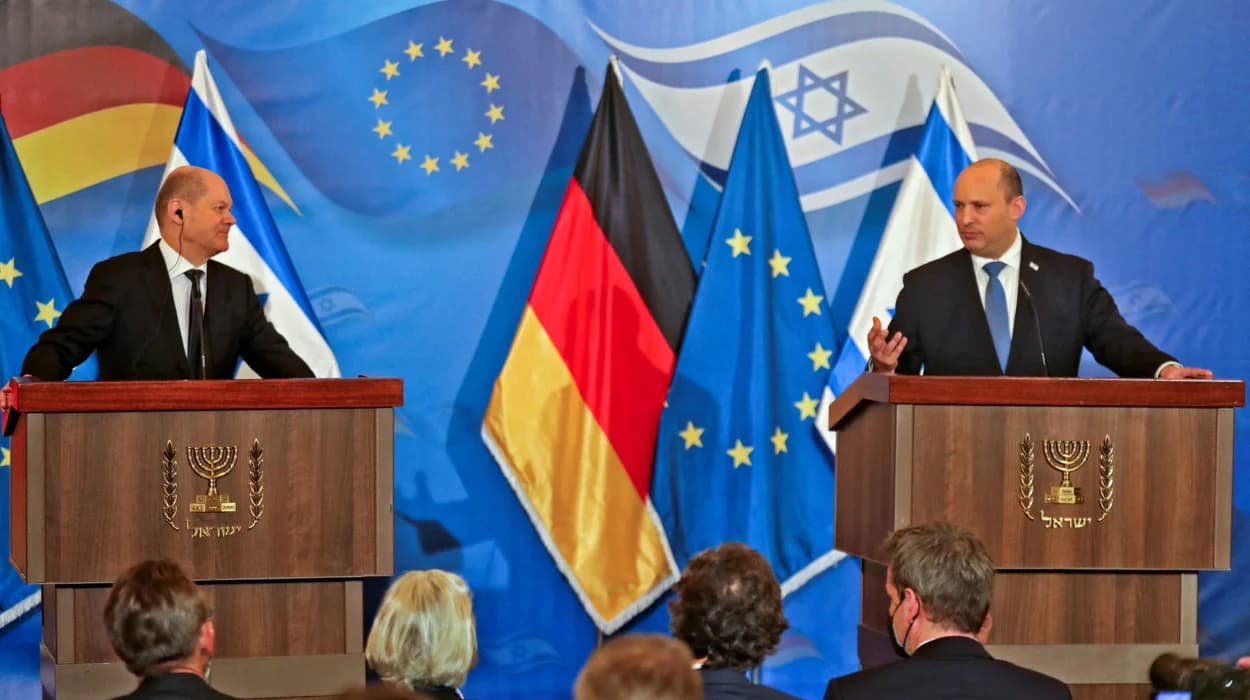
Germany’s support for Israel is a defining feature of their bilateral relationship, grounded in a complex history and a clear national commitment. This support is embedded in diplomatic, political, economic, and security cooperation, reflecting decades of reconciliation and mutual interests.
Historical Roots of Germany’s Support for Israel
The relationship between Germany and Israel began to take formal shape in the aftermath of World War II and the Holocaust (Shoa), during which six million Jews were systematically murdered by the Nazi regime. Germany’s acknowledgment of this atrocity laid the foundation for its support and compensation efforts. The 1952 Luxembourg Agreement was a landmark in this process—it committed West Germany to pay reparations to Israel and Holocaust survivors as moral and political responsibility.
Diplomatic relations were officially established in 1965, a significant milestone that marked the transition from post-war guilt and suspicion to active partnership. The historic 1960 meeting between West German Chancellor Konrad Adenauer and Israeli Prime Minister David Ben-Gurion symbolized the potential for reconciliation between the two nations.
Diplomatic and Political Dimensions
Today, Germany’s support for Israel is enshrined as an element of its Staatsräson, or reason of state. This means Israel’s secure existence is considered a core national interest for Germany, forming a non-negotiable pillar of German foreign policy.
Former Chancellor Angela Merkel was instrumental in articulating this stance with clarity, repeatedly affirming Israel’s right to exist and its security as fundamental to German identity and policy. This support manifests in Germany’s diplomatic backing of Israel in international forums and its opposition to efforts that could jeopardize Israel’s security.
Economic and Security Cooperation
Beyond symbolic gestures and diplomatic ties, Germany and Israel share robust economic cooperation. Germany is one of Israel’s important trading partners within Europe, with collaborations spanning technology, innovation, defense, and environmental sectors.
Security cooperation constitutes a fundamental aspect of the relationship. Germany supplies Israel with essential defense equipment and shares intelligence, contributing to Israel’s national security in a volatile regional environment. This cooperation reflects Germany’s recognition of Israel’s geopolitical challenges and its commitment to balancing historical responsibility with strategic interests.
Cultural and Social Ties
Germany and Israel maintain vibrant cultural exchanges, educational programs, and youth initiatives, promoting mutual understanding and reconciliation. Programs like the German-Israeli Future Forum foster dialogue among young leaders and professionals from both countries, reinforcing long-term friendship and collaboration.
Academic partnerships and joint research projects further strengthen people-to-people contacts, emphasizing a shared commitment to democracy, human rights, and innovation.
Challenges and Criticism
Despite strong bilateral ties, Germany’s support for Israel is sometimes met with domestic and international scrutiny. Critics question aspects of Germany’s policies concerning Israeli settlements and the Israeli-Palestinian conflict, reflecting broader debates about human rights and international law.
Germany tends to balance its unwavering support for Israel’s security with calls for negotiations and peaceful resolution of conflicts, emphasizing two-state solutions and humanitarian considerations.
Advanced Missile Defense Cooperation
One of the most prominent examples of Germany’s support is its acquisition and integration of Israel’s Arrow 3 missile defense system. Announced in a historic €4 billion deal, this advanced system will enhance Germany’s ability to intercept long-range ballistic missiles, serving as a critical component of Europe’s air defense under the Sky Shield initiative. Development of Arrow 3 involved Israeli Aerospace Industries with U.S. partnerships, highlighting multinational collaboration in defense technology.
Israel’s experience deploying the Arrow system, successfully intercepting multiple missile threats in recent conflicts, underscores the system’s operational effectiveness. The delivery of Arrow 3 to Germany marks a milestone in bilateral defense ties and demonstrates trust in Israeli military technology to bolster European security.
Cybersecurity Partnerships
Germany also looks to Israel as a model and partner in cybersecurity. Amid escalating threats from state and non-state actors in cyberspace, Germany seeks to expand cooperation with Israel through a proposed joint cyber research center. This initiative, part of a broader five-point plan by German Interior Minister Alexander Dobrindt, includes enhanced intelligence sharing between German agencies and Mossad, Germany’s development of anti-drone defenses, and civil defense improvements inspired by Israel’s experiences during recent conflicts.
Leveraging Israel’s renowned expertise in cyber defense helps Germany upgrade its own military and civilian security infrastructure, signaling deepening trust and technological exchange between the countries.
Military Equipment and Joint Exercises
Germany has also supplied Israel with sophisticated military equipment, including diesel engines for Israel’s Merkava 4 tanks and Dolphin-class submarines. Meanwhile, Israel employs German-origin technology such as the Spike anti-tank missile system.
The bilateral military relationship extends to joint training exercises like the Blue Flag drills, where German combat aircraft joined Israeli forces for multinational airborne training. This direct engagement underlines practical operational cooperation beyond equipment sales, fostering interoperability and strategic alignment.
Arms Exports and Political Support
In recent years, Germany has approved significant arms exports to Israel, reflecting sustained political support for Israel’s defense capabilities. In 2023, exports were valued at roughly €326.5 million ($353.7 million), indicating Germany’s continuing commitment despite often complex debates around arms sales in the context of Middle East geopolitics.
German officials consistently express strong backing for Israel’s right to self-defense, particularly amid regional conflicts and heightened security threats. Defense Minister Boris Pistorius’s statement following the 2023 Gaza war emphasizing material and political support for Israel encapsulates this enduring policy stance.
Strategic and Regional Implications
Germany’s defense collaboration with Israel also plays into broader geopolitical calculations. Both countries face common threats like Iranian missile proliferation and cyber attacks. The defense and intelligence partnerships contribute to NATO’s wider strategic posture, aligning European efforts with Israeli intelligence and technology.