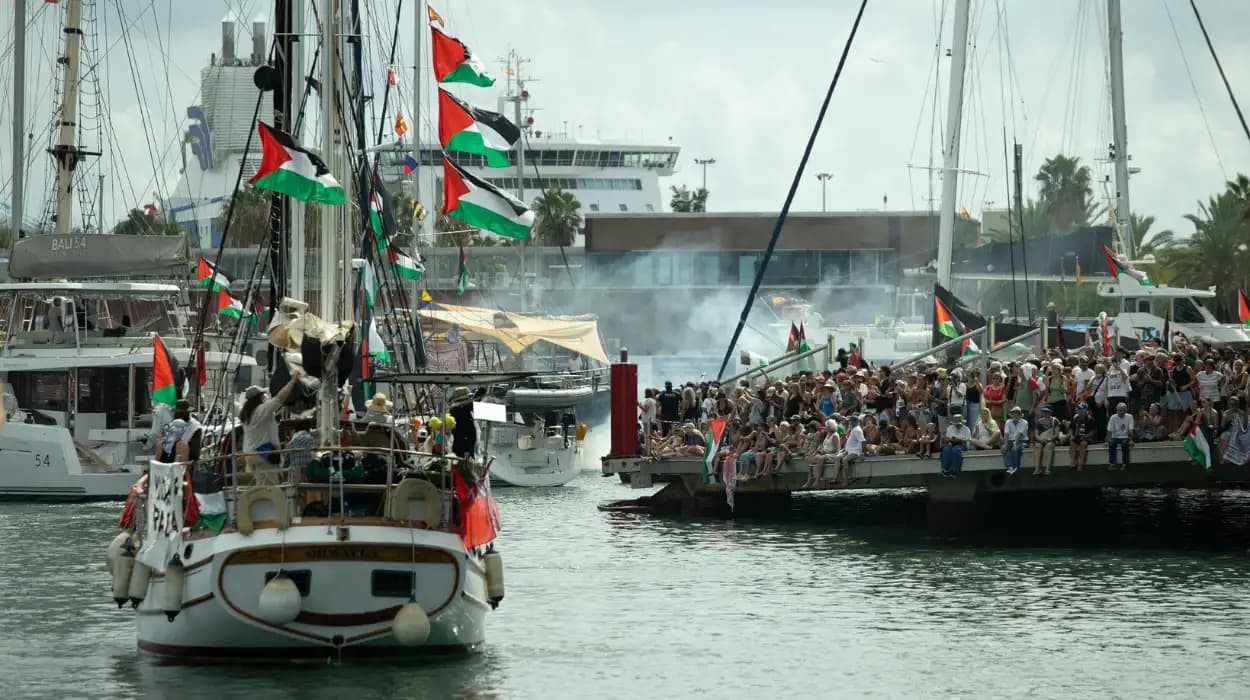
The Global Sumud Flotilla, launched in 2025 amid the dramatic escalation of the Gaza conflict, is a landmark international maritime initiative with a purpose rooted deeply in the concept of steadfastness—Sumud in Arabic. This concept conveys not just endurance but a spirited resistance against hardship and oppression, principles embodied by the flotilla's mission to challenge the Israeli naval blockade of the Gaza Strip. Unlike previous smaller-scale convoy efforts, this initiative stands as the largest civilian-led maritime convoy in history, incorporating over 50 vessels and approximately 500 participants from more than 44 countries. Originating amid a worsening humanitarian crisis in Gaza, the flotilla’s aim is to deliver urgently needed humanitarian aid while simultaneously breaking Gaza’s isolation and rallying global awareness and solidarity for Palestinians facing siege conditions. The flotilla has rapidly become emblematic of the international nonviolent resistance movement confronting systemic blockade and geopolitical constraints.
A Broad Coalition: Nations Rally Around the Cause
Support for the Global Sumud Flotilla spans continents, illustrating widespread international solidarity that defies conventional geopolitical divides. Explicitly, 40 countries across the Middle East, Europe, Africa, Asia, and the Americas have shown support, concern for participant safety, or public endorsement of the flotilla’s humanitarian goals. Middle Eastern governments such as Qatar, Oman, Tunisia, Libya, Jordan, and Palestine vocalize support for the right to aid Gaza. Across Europe, countries like Spain, Ireland, Italy, Slovenia, Greece, Sweden, France, Germany, and Belgium have called for respect of international humanitarian law and the protection of flotilla participants. African support comes notably from South Africa, Algeria, Morocco, Egypt, Senegal, and Nigeria, drawing on anti-colonial solidarities. Asian nations including Malaysia, Indonesia, Bangladesh, Pakistan, India, and Japan emphasize humanitarian imperatives and South-South solidarity, while in the Americas, countries from Brazil, Colombia, Mexico, Argentina to Canada, the United States, and Chile have engaged with the initiative through governments or active civil society sectors. This global backing not only legitimizes the flotilla but amplifies its message across diplomatic, humanitarian, and grassroots domains.
Who Navigates These Waters?
The flotilla brings together a mosaic of coalitions, NGOs, activist networks, and individuals, weaving decades of experience in solidarity and humanitarian work into one coordinated maritime effort. At the forefront is the Freedom Flotilla Coalition, a veteran group organizing sea missions for over 15 years. Alongside are the Global Movement to Gaza, Maghreb Sumud Flotilla representing North African solidarity, and Sumud Nusantara from Southeast Asia—all of which converged in 2025 to unify their forces amid the heightened Gaza crisis.
The participants aboard are remarkably diverse. Beyond the typical activist profile, they include doctors and medical professionals ready to provide emergency care, journalists committed to documenting the mission and Gaza’s realities, artists spreading the message through creative expression, lawyers advocating for international law compliance, politicians lending political support, students energized by youthful idealism, and religious figures underscoring peace and solidarity. Renowned personalities, including climate activist Greta Thunberg (who stepped down from the steering committee mid-mission), celebrated artists, and human rights advocates, have been deeply involved, enriching the flotilla's visibility and international resonance. The steering committee, composed of activists and experts from various countries, manages operations with spokespersons coordinating communications and crisis management, underscoring the professionalism and commitment behind the scenes.
The Heart of the Mission: Humanitarian, Political, and Symbolic Objectives
Delivering urgent aid to Gaza stands at the core of the flotilla's purpose. The blockade imposed by Israel since 2007 has systematically choked Gaza’s economy and restricted essential supplies, turning everyday survival into a monumental challenge. The flotilla carries food, medicines, medical supplies, and other critical resources directly to Gaza’s shores, circumventing stringent land and air controls that often delay or block aid.
Beyond tangible aid, the flotilla is a bold political statement. It confronts the blockade — which international observers and the flotilla organizers describe as unlawful collective punishment — and challenges the restriction of Gaza’s maritime sovereignty. By navigating waters controlled and heavily monitored by the Israeli navy, the flotilla contests the legality of the blockade, demanding international recognition of Palestinians' right to freedom of movement and humanitarian access.
Symbolically, the use of the term "Sumud" evokes years of Palestinian resilience and connects contemporary activism to a broader history of nonviolent resistance worldwide. The flotilla’s journey represents breaking Gaza's isolation, not only physically but psychologically, sending a message of global unity and resilience that transcends borders. It calls on the international community to uphold maritime law, human rights, and the obligation to protect civilians amidst conflict. This blend of humanitarian aid, political resistance, and symbolic assertion defines the multilayered importance of the flotilla.
Navigating Storms: The Challenges Facing the Global Sumud Flotilla
The path of the Global Sumud Flotilla is marked by immense obstacles, both on the seas and in the political arena. Security threats remain the most pressing concern. Israel continues to argue that such missions undermine its sovereignty and pose risks to national security, often associating participants with political factions in Gaza. Past flotillas have faced military interceptions, drone surveillance, and even violent confrontations—reminders of the dangers civilian vessels face when challenging maritime blockades. In 2025, reports of drone harassment and close shadowing by Israeli naval ships heightened fears of escalation at sea.
Logistics add another layer of complexity. Coordinating a multinational fleet requires synchronizing departure times from various Mediterranean ports, managing supplies, ensuring seaworthy vessels, and providing legal as well as medical support on board. The risk of breakdowns—such as recent engine troubles on lead ships—further complicates operations in already tense waters.
Media narratives also pose challenges. Coverage differs sharply along political and ideological lines, with some outlets framing the flotilla as a destabilizing act rather than a humanitarian mission. Organizers must continually assert its peaceful and aid-driven nature while combating misrepresentation.
Diplomatic hurdles remain significant. Governments often face pressure to discourage their citizens from joining, citing concerns about safety and bilateral relations. Some limit official backing, leaving NGOs and grassroots movements to shoulder the weight of coordination.
Yet despite these risks, participants and organizers remain committed. By emphasizing maritime safety, legal defense, and transparent communication, the flotilla sustains its legitimacy and unity, symbolizing resilience against overwhelming odds.
Waves of Support in the Arab World: A Region’s Commitment to Solidarity
The Arab response to the Global Sumud Flotilla demonstrates vigorous regional solidarity. Governments including Qatar, Tunisia, Libya, Jordan, and Palestine have publicly endorsed the mission’s humanity and the critical need to alleviate Gaza’s blockade suffocation. They emphasize the protection of their nationals involved and advocate for international enforcement of humanitarian law.
Civil society across the Arab world amplifies this support through coordinated activism, rallies, and media campaigns. The symbolic power of "Sumud" is felt viscerally in Arab cultural memory, linked to a long-standing tradition of resolute opposition to occupation, colonialism, and injustice. This cultural and political resonance mobilizes grassroots networks, humanitarian organizations, and diaspora communities, creating a dynamic atmosphere of practical and moral support for the flotilla. This groundswell sustains the flotilla, making it not purely an external initiative but deeply rooted in regional aspirations and resistance.
Global Echoes: Diverse International Responses beyond the Region
Responses from outside the Arab world reveal a complex global tapestry. In Europe, many states vocally support humanitarian aims and call for the protection of flotilla participants, with countries like Spain and Ireland facilitating naval escorts to accompany the convoy and ensure safety. NGOs and activist groups across Europe also engage heavily in fundraising, awareness campaigns, and political advocacy related to the flotilla.
North American reactions are mixed; vibrant activist and civil society support exists, but official government positions tend to emphasize caution, influenced by strategic alliances and heightened regional tensions.
Latin America, historically active in global solidarity movements, expresses strong sympathy and endorsement, framing the flotilla within narratives of anti-colonialism, human rights, and justice.
African nations contribute both through diplomatic channels and civil society participation, connecting Gaza’s experience with their own histories of struggle and liberation.
Asian support reflects a growing Global South alignment, emphasizing humanitarian principles, international law, and a collective conscience against geopolitical marginalization.
This diverse spectrum of reactions reflects the flotilla’s ability to transcend regional confines, engaging global audiences and compelling a discourse about justice, sovereignty, and human dignity across cultural and political boundaries.
A Continuing Voyage of Hope and Resistance
The Global Sumud Flotilla stands as a living embodiment of steadfastness—a movement driven by an extraordinary array of participants united not only in humanitarian purpose but in a shared vision of justice and resilience. The flotilla’s journey symbolizes how civil society across the globe can organize nonviolent resistance to break oppressive sieges and shine an international spotlight on forgotten humanitarian crises.
While navigating dangerous waters—both literal and political—the flotilla persists as a beacon of hope for Gaza and a testament to the power of global solidarity. It reinforces that resistance takes many forms, and that even in the face of political adversity, committed grassroots movements can exert meaningful pressure for change. More than a fleet of boats, the Global Sumud Flotilla serves as a symbol of dignity, universal human rights, and the unyielding determination to break isolation and secure freedom for all peoples