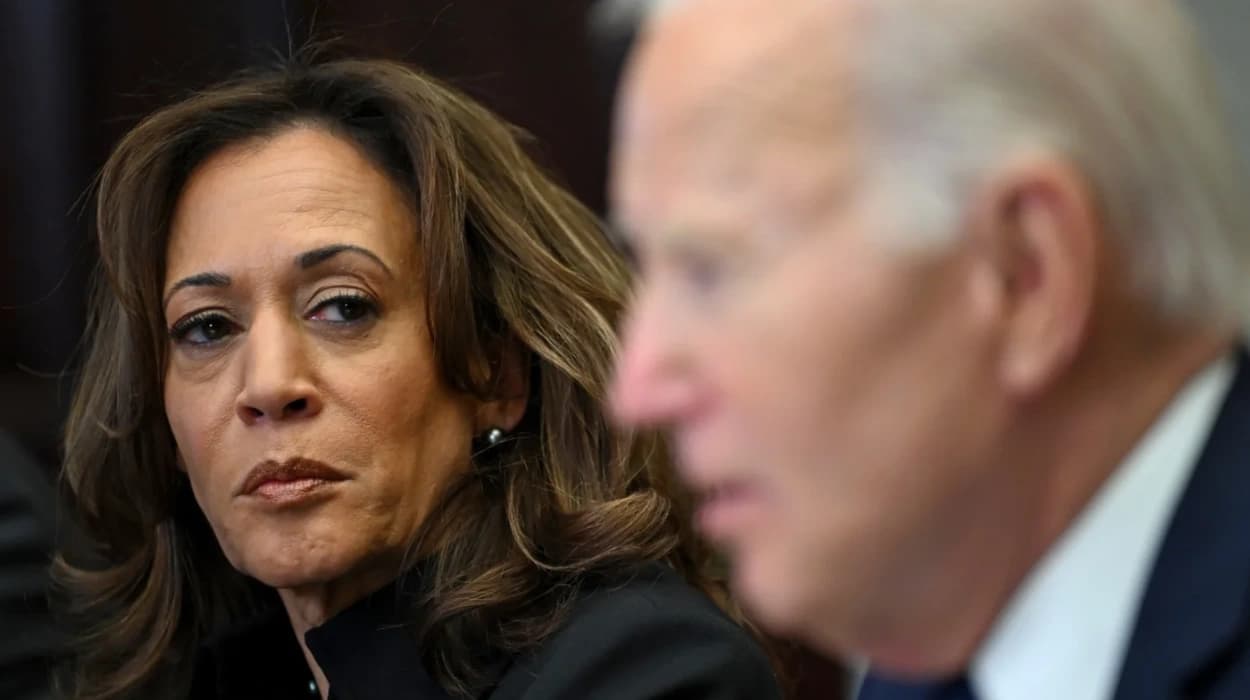
Kamala Harris lost a significant portion of votes in the 2024 U.S. presidential election due to the Biden administration’s unwavering support for Israel’s military actions in Gaza. According to a poll by the Institute of Middle East Understanding and YouGov, nearly 30 percent of 2020 Biden voters who withheld their vote from Harris in 2024 cited dissatisfaction with U.S. policy on Israel's war on Gaza as their primary reason. This issue overshadowed traditional voter concerns such as the economy, immigration, healthcare, and abortion, illustrating a shift toward foreign policy as a decisive electoral factor. Harris’s failure to distinguish herself from Biden’s steadfast support for Israel, despite some empathetic rhetoric toward Palestinians, contributed to her loss of support among progressive Democrats and other voters concerned with the humanitarian crisis in Gaza.
More than 46,000 Palestinians had been killed, and much of Gaza’s infrastructure was destroyed amid the conflict, which further fueled voter discontent. The poll showed that a majority of displeased voters wanted Harris to break with Biden’s policy by withholding additional weapons to Israel, yet she remained a strong advocate for Israel’s right to defend itself.
This position contrasted with the growing calls from within her own party and activists demanding a ceasefire and a re-examination of U.S. support for Israel’s offensive actions. Ultimately, Harris’s alignment with Biden’s Israel policy was a critical factor in her electoral decline, causing millions of prior Biden voters to abstain or switch votes, contributing to her loss against Donald Trump by nearly two million votes in 2024.
Background and Poll Insights
The 2024 presidential election witnessed a noticeable drop-off in Democratic votes compared to Biden’s 2020 numbers. The Institute of Middle East Understanding and YouGov poll surveyed over 600 voters shortly after the election and revealed that 29 percent of those who voted for Biden in 2020 chose not to vote for Harris, with their primary reason tied to dissatisfaction over U.S. support for Israel’s military campaign in Gaza. Foreign policy, traditionally a less influential voter issue, emerged as a critical factor in this election cycle due to the intense humanitarian crisis in Gaza following Hamas’s attack on Israel and the subsequent Israeli military response. While Harris showed some public empathy toward Palestinian casualties, her administration’s continued military aid and political support for Israel alienated a significant segment of the Democratic base, especially progressive voters who had hoped for a break from Biden’s policies but saw none.
Kamala Harris’s Position on Israel and Gaza
Throughout the election cycle, Harris consistently supported Israel as a “secure democratic and Jewish state” that has the right to defend itself, a stance reinforced publicly by her husband, Doug Emhoff. Harris’s tone on the conflict aimed to acknowledge Palestinian suffering without altering the fundamental U.S. position of backing Israel’s military actions. She advocated for a two-state solution and expressed a desire for a ceasefire and hostage releases, but she did not distance herself from Biden’s policies or the provision of weapons to Israel. This position created tension within the Democratic Party, as progressive activists and some party members criticized her for not pushing harder against the ongoing violence in Gaza. Pro-Palestinian protests at the 2024 Democratic National Convention and calls for Palestinian representation on main stages were indicative of this internal conflict. Harris’s foreign policy approach on this issue reflected a measured but firm alignment with Israel, contributing to disenchantment among voters prioritizing the humanitarian crisis.
Voter Reaction and Democratic Party Impact
The fallout from Harris’s stance on Israel-Gaza represented a broader challenge for the Democratic Party. The poll indicated that opposition to Biden’s Israel policy was a more significant voter issue than the economy, immigration, or healthcare—traditionally dominant themes in U.S. elections. Over 53 percent of surveyed Biden voters said the administration’s support for Israel was “too much,” and 36 percent would have been more likely to vote for Harris had she pledged to withhold weapons to Israel. The Democratic Party’s failure to address these concerns contributed to lower voter turnout and loss of votes in key swing states, which played a crucial role in the close election results. Activists and party insiders argued that ignoring the demands of a vocal and growing base that calls for ending U.S. complicity in the conflict undermined Democratic prospects. The eventual ceasefire in Gaza was only achieved after the Trump administration’s envoy engaged directly with the region, highlighting the complex political dynamics at play.
Broader Implications and Context
The Gaza conflict’s impact on U.S. electoral politics illustrates how foreign policy issues can abruptly gain domestic electoral significance, especially when linked to humanitarian crises. Harris’s experience demonstrates the risks political leaders face when aligning closely with contentious foreign policies that draw sharp public criticism. The prolonged conflict, massive Palestinian casualties, and widespread destruction have reshaped voter priorities for many Americans, with rising calls for a more balanced U.S. approach in the Middle East. This shift is emblematic of changing attitudes within parts of the electorate that increasingly question unconditional support for traditional U.S. allies when civilian lives and human rights are deeply impacted. The Biden-Harris administration’s policies reflect the challenges of balancing strategic alliances with evolving public sentiment on humanitarian grounds while navigating internal party pressures.