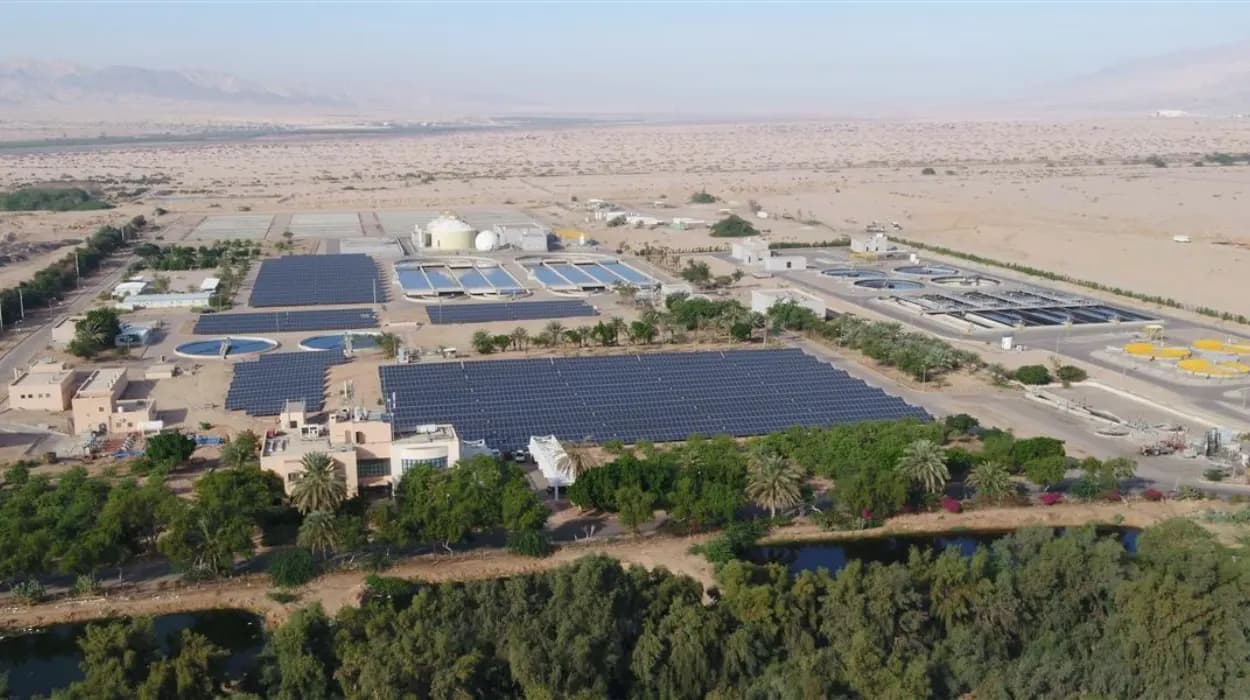
Water scarcity and energy management are two critical challenges facing Jordan today, demanding innovative solutions and strong regional cooperation. As one of the world’s most water-scarce countries, Jordan contends with a limited natural water supply exacerbated by population growth, refugee influx, and climate change. Concurrently, the water sector is energy-intensive, with rising electricity consumption for pumping and treatment processes adding financial and environmental pressures. To address these intertwined issues, Jordan has actively engaged in strategic regional cooperation efforts focusing on water conservation, energy efficiency, and sustainable resource management. This article explores how Jordan’s collaborative regional water and energy projects are shaping a more resilient future, grounded in cross-border partnerships, technology integration, and long-term sustainability.
Water Scarcity Challenges in Jordan
Jordan faces severe water scarcity, with available water per capita substantially below the global water stress threshold. Limited rainfall, over-extraction of groundwater, and the depletion of natural water reserves have tightened the country’s water supply. Compounding these natural factors, demographic pressures including a significant refugee population have increased demand on already stressed water infrastructure. Estimates show that per capita water availability in Jordan is far below the “absolute scarcity” benchmark, which challenges both domestic consumption and agricultural productivity.
Furthermore, the inefficiency of water distribution systems adds to the crisis. More than half of municipal water supplies are lost due to leakage, illegal connections, and wastage, a phenomenon known as non-revenue water (NRW). This leakage results not only in lost water but also increases energy consumption as pumping systems work harder to compensate for losses.
Regional Cooperation on Water Management
Jordan’s water challenges extend beyond its borders, necessitating collaboration with neighboring countries that share transboundary water resources. The Jordan River Basin, shared with Israel, Syria, and the Palestinian territories, exemplifies a delicate regional water ecosystem requiring joint management. Jordan’s cooperation in regional water governance frameworks aims to optimize equitable water sharing while addressing environmental sustainability.
Various multinational initiatives, supported by international donors and development organizations, have bolstered water management in the region. These include efforts to improve water quality, rehabilitate infrastructure, and deploy modern monitoring systems that facilitate better resource allocation. Sharing expertise and harmonizing policies across borders are fundamental to ensuring long-term water security for all parties.
Water-Energy Nexus: Integrated Management Approaches
The link between water and energy—known as the water-energy nexus—is at the heart of Jordan’s regional cooperation strategy. Water supply and treatment are extraordinarily energy-intensive activities, consuming a significant proportion of the country’s electricity. As energy prices increase and environmental concerns mount, Jordan has prioritized energy efficiency in the water sector as a vital approach to enhancing sustainability.
Acknowledging this, Jordan has implemented projects to reduce energy consumption through innovative technologies such as energy-efficient pumps and smart grid integration for water utilities. These projects also include the adoption of renewable energy sources, notably solar, to power water infrastructure. By reducing reliance on conventional electricity grids, Jordan aims to lower operational costs and the carbon footprint of its water services.
Prominent Regional Energy Management Projects
One major regional effort is the Jordan Water Sector Efficiency Project, backed by international institutions like the World Bank. This project seeks to reduce non-revenue water through widespread rehabilitation of water networks and enhanced metering systems. Simultaneously, it works to improve energy efficiency by modernizing pumping stations and incorporating energy-saving measures across water utilities.
Another key initiative is the introduction of an Energy Management System (EnMS), aligned with international standards such as ISO 50001, to monitor and optimize energy use throughout the water sector. Supported by German development cooperation partners, this approach integrates capacity building and digital tools to support Jordan’s water operators in managing energy consumption effectively.
Through these projects, Jordan is also promoting renewable energy integration within the water sector. Pilot schemes deploying solar-powered pumping systems in rural areas reduce the dependency on fossil fuels, increase energy reliability, and contribute to regional climate goals. These scalable models serve as a framework for neighboring countries facing similar energy and water challenges.
Economic and Social Benefits of Cooperation
Jordan’s investments in water and energy management cooperation generate substantial economic and social returns. By increasing water supply reliability and reducing energy costs, these projects bolster the productivity of agriculture and industry, sectors crucial to the national economy. Reliable water access also improves public health outcomes and quality of life, particularly in refugee-hosting communities where resources are most strained.
Furthermore, these efforts build resilience to climate variability and drought conditions by implementing drought management systems and enhancing groundwater recharge initiatives. Regional collaboration amplifies the impact by ensuring consistent policies and joint emergency responses to shared water crises.
International Support and Policy Frameworks
Key to Jordan’s success in regional water and energy cooperation has been the support from global development partners. Financial assistance and technical expertise from institutions such as the World Bank, the Global Concessional Financing Facility, and bilateral donors have enabled large-scale infrastructure projects and capacity-building programs. These partnerships align with Jordan’s national strategies that prioritize water security, loss reduction, and energy efficiency as vital components of sustainable development.
Policy frameworks emphasize integrated resource management, encouraging coordination between ministries of water, energy, and environment. Jordan’s policies also foster regional dialogue to address water allocation equitably while promoting the adoption of cutting-edge technologies for resource conservation.
Challenges and Future Directions
Despite notable progress, Jordan faces ongoing challenges in maximizing the benefits of regional cooperation. Political complexities in the region sometimes hinder collaborative water-sharing agreements. Funding constraints and technical capacity gaps still affect the scale and speed of infrastructure upgrades.
Nonetheless, prospects remain promising. Jordan continues to expand its renewable energy portfolio within the water sector and increase digitalization to improve resource monitoring. Innovations in desalination and wastewater reuse are also under exploration, offering avenues to augment water supply sustainably.
As climate change intensifies resource pressures, Jordan’s commitment to regional cooperation on water and energy management is essential to securing resilient and sustainable development pathways.
Jordan’s approach to regional cooperation in water and energy management exemplifies a forward-thinking response to critical resource challenges. Through collaborative water governance, investment in energy-efficient technologies, and the adoption of renewable energy, Jordan is strengthening its water sector’s sustainability and resilience. Supported by international partnerships and guided by comprehensive policies, these efforts deliver tangible benefits to communities while paving the way for a more sustainable future across the region. Jordan’s experience underscores the necessity of integrated regional strategies in addressing shared environmental challenges, offering valuable lessons to water-scarce countries worldwide.