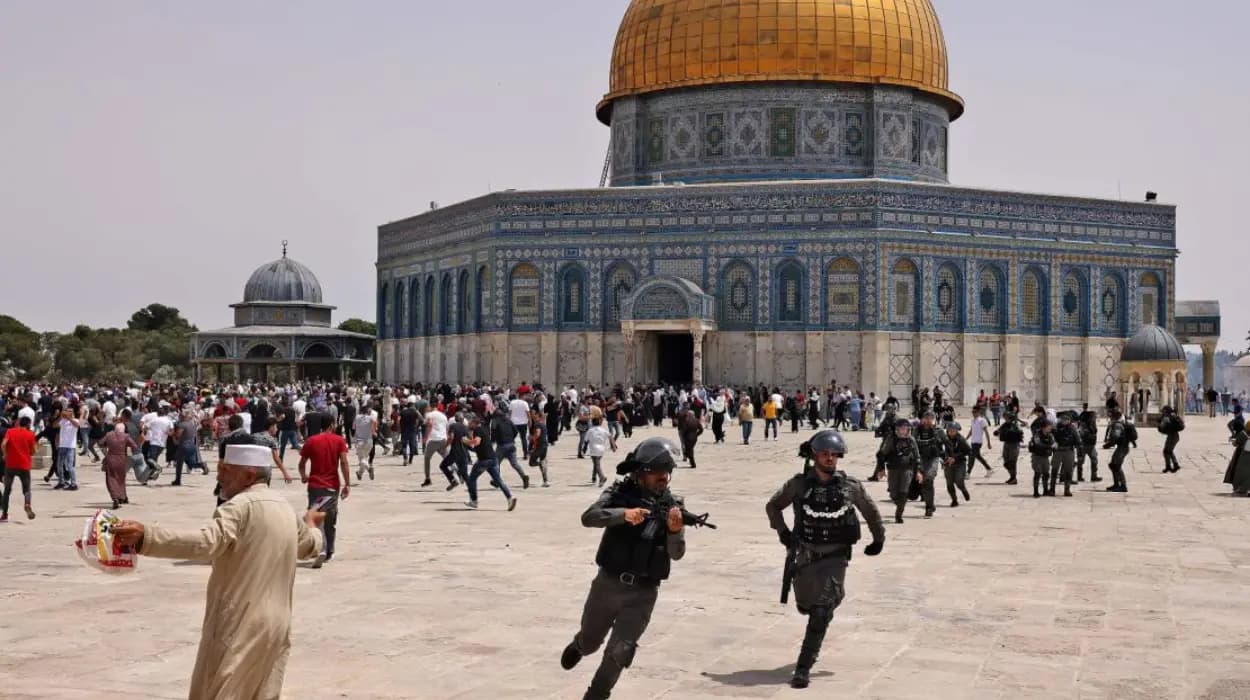
Masjid al-Aqsa, situated in East Jerusalem, stands as the third holiest site in Islam. For millions of Muslims worldwide, it is not only a place of worship but a symbol of faith, history, and identity.
This mosque is part of the larger Al-Haram al-Sharif (Noble Sanctuary) compound, which also includes the famous Dome of the Rock.
Administered by Jordan’s Islamic Waqf but controlled in terms of access and security by Israeli authorities, Masjid al-Aqsa remains at the heart of one of the most sensitive and contested issues in the Israeli-Palestinian conflict.
Religious and Historical Importance of Masjid al-Aqsa
Masjid al-Aqsa holds deep spiritual significance. It is believed to be the place where the Prophet Muhammad ascended to heaven during the Isra and Mi’raj.
Beyond its religious stature, the mosque is a vital symbol of Palestinian identity and sovereignty, especially as it resides in East Jerusalem, a territory claimed by Palestinians for their future state.
The site's history stretches back centuries, and it has long been a focal point of cultural and religious pride. However, Masjid al-Aqsa is also a flashpoint for political and territorial disputes, making it a place where faith and geopolitics frequently collide.
Latest Worshipper Statistics in 2025
In 2025, the number of worshippers visiting Masjid al-Aqsa has been significantly affected by the ongoing tensions and restrictions imposed by Israeli authorities.
Typically, on Fridays and religious holidays, tens of thousands of Muslims gather for prayers.
However, following the events of June 2025, when Israeli forces forcibly cleared worshippers and sealed the mosque’s gates after dawn prayers, the mosque experienced its first full closure since the COVID-19 pandemic, drastically reducing daily visitation numbers.
Palestinian sources report that normally, the mosque welcomes up to 100,000 worshippers weekly, especially during Ramadan and other key Islamic events.
But due to closures and security restrictions, these numbers have dropped sharply, impacting religious life and community cohesion.
Security Incidents and Confrontations in 2025
The year 2025 has seen an alarming rise in security incidents around Masjid al-Aqsa. Reports document multiple confrontations between Israeli forces and Palestinian worshippers.
The forced clearing and sealing of the mosque in June marked a significant escalation. According to Palestinian authorities and international observers, over 30 security incidents, ranging from clashes during prayers to settler incursions, have been recorded at the site so far this year.
These confrontations often involve tear gas, stun grenades, and physical force used by Israeli police to disperse worshippers. The escalation in violence has led to injuries and arrests, deepening the divide and heightening tensions throughout Jerusalem and the West Bank.
Historical Timeline of Israeli Restrictions and Closures at Al-Aqsa
Israeli restrictions on Masjid al-Aqsa access are not new. Over the past two decades, closures and entry limitations have been employed intermittently, often triggered by heightened tensions or security concerns.
- Early 2000s: During the Second Intifada, Israel closed Al-Aqsa for extended periods and restricted Palestinian access as part of broader military operations.
- 2017: The installation of metal detectors after a shooting incident led to mass protests, resulting in the removal of the detectors but ongoing monitoring.
- 2020-2021: COVID-19 pandemic forced temporary closures and limited access as health precautions.
- 2023-2024: Increasing settler visits and clashes around the site led to several partial closures.
- June 2025: The first full closure since the pandemic, coinciding with a broader Israeli military lockdown across the West Bank following regional tensions, including attacks on Iran.
This pattern of closures and restrictions reflects a longstanding Israeli policy to maintain security control over the site, but from the Palestinian perspective, it is viewed as a violation of religious freedom and an assertion of sovereignty over East Jerusalem.
Frequency of Settler Incursions in 2025 Compared to Previous Years
Settler incursions into the Al-Aqsa compound have become more frequent and organized in recent years. 2025 has seen an increase in such incidents, especially during Jewish religious holidays like Tisha B’Av, which commemorates the destruction of the ancient Jewish Temples, historically linked to the site of Al-Aqsa.
In 2025, Palestinian authorities have warned of planned mass incursions by settler groups, often protected by Israeli police, which they describe as provocative acts undermining the site's fragile status quo.
The Organization of Islamic Cooperation (OIC) and other international bodies have condemned these incursions, with reports highlighting a significant rise compared to previous years.
For example, in August 2025, Israeli ministers and settler groups stormed the mosque, sparking widespread outrage and international condemnation. This year’s frequency of such events has surpassed prior years, underscoring growing tensions and the risk of violence.
International Legal and UN Resolutions on Al-Aqsa in 2025
The status of Masjid al-Aqsa and Jerusalem remains a core issue in international law and diplomacy. Numerous United Nations resolutions and international legal frameworks address the status and protection of holy sites in Jerusalem.
- UN Security Council Resolution 242 (1967): Calls for the withdrawal of Israeli forces from territories occupied during the Six-Day War, including East Jerusalem.
- UN General Assembly Resolutions: Repeatedly affirm the need to respect the historical and religious status quo of the Al-Haram al-Sharif compound and condemn actions that threaten its sanctity.
- The Oslo Accords (1993): Address arrangements for Palestinian self-rule, including issues related to East Jerusalem, though the mosque’s status remains unresolved.
- International Court of Justice (2004 Advisory Opinion): Declared Israeli settlements in occupied Palestinian territories, including East Jerusalem, illegal under international law.
In 2025, the United Nations and the Organization of Islamic Cooperation have issued strong condemnation against Israeli actions perceived as violations of the mosque's protected status, including forcible closures and settler incursions.
These calls stress adherence to international law and the protection of religious freedoms.
Security and Political Context in 2025
Israeli authorities maintain strict control over access to Masjid al-Aqsa. Entry is often limited to certain age groups and gender categories, and Palestinian worshippers frequently face barriers such as checkpoints and identity checks.
Officially, non-Muslim visitors may enter during limited hours but are prohibited from praying on the grounds, which has itself been a source of tension.
The site lies at the heart of competing claims to Jerusalem’s sovereignty, with Palestinians insisting on East Jerusalem as their capital, while Israel claims the entire city as its undivided capital. This dispute fuels the volatility around the mosque.
The political context is further complicated by Israeli nationalist groups that organize provocative visits, chanting slogans and displaying banners that Palestinians see as threats to their religious and national rights. These events often escalate into confrontations.
Broader Impact of Al-Aqsa Tensions
The repeated closures, forced evacuations, and settler incursions have attracted widespread international attention. Diplomatic bodies, human rights organizations, and religious groups have called for respect for the mosque’s sanctity and religious freedoms.
These events also threaten regional stability, often sparking protests and violence across the Palestinian territories and beyond. The mosque symbolizes not only religious devotion but also the broader Palestinian struggle for statehood and sovereignty.
Many experts and international leaders emphasize the importance of maintaining the "status quo" arrangements, which have historically sought to prevent religious conflict over the site. However, growing challenges in 2025 underscore the fragility of these arrangements and the urgent need for diplomatic efforts.
Masjid al-Aqsa remains a profoundly sacred place for Muslims around the world and a central symbol of Palestinian identity. In 2025, the site faces unprecedented challenges, with increased closures, settler incursions, and heightened security measures fuelling tensions.
Israeli restrictions and settler activities are widely seen by Palestinians as infringements on their religious rights and national aspirations.
The international community continues to call for respect for Al-Aqsa's religious and cultural significance and adherence to international law.
As tensions persist, Masjid al-Aqsa’s fate will remain closely linked to the broader Israeli-Palestinian conflict and the quest for peace in the region.