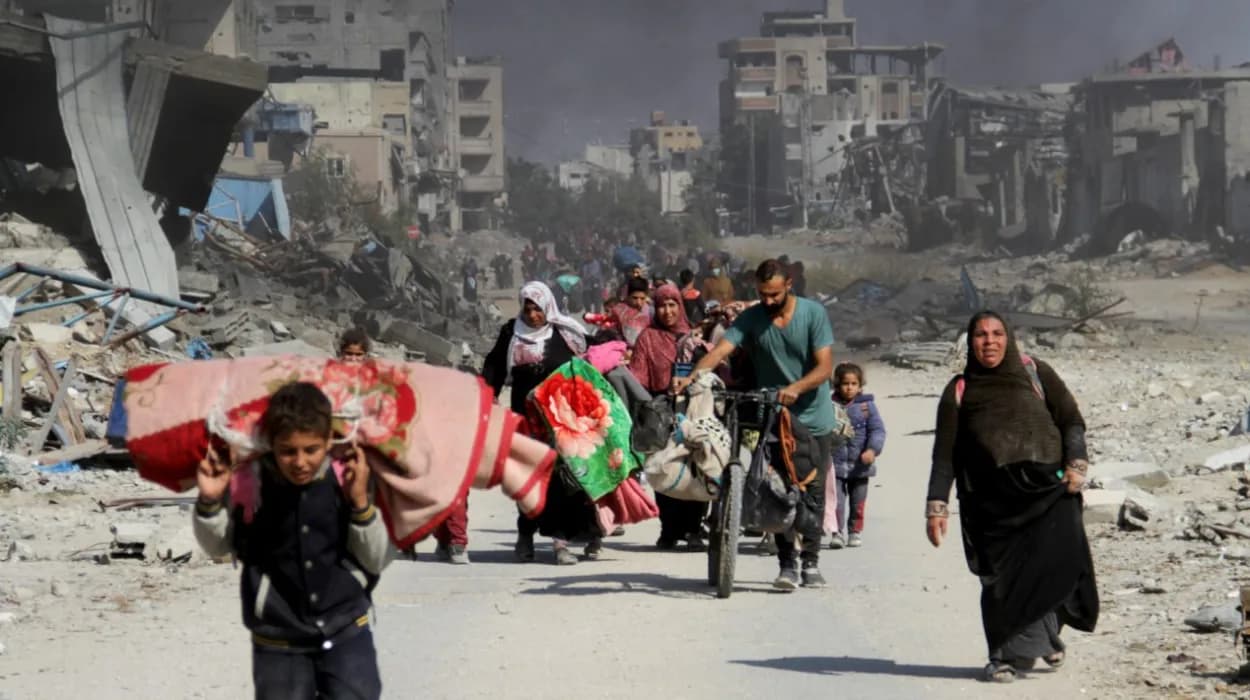
Since October 7, 2023, when the conflict between Israel and Hamas escalated dramatically, numerous reports and investigations by international organizations, human rights groups, and United Nations bodies have examined alleged war crimes committed during military operations in Gaza. The dense urban environment of Gaza, the significant civilian population, and the destruction of critical infrastructure have amplified scrutiny over Israel’s military strategies and actions. Various reports conclude that Israeli forces have engaged in conduct that breaches international humanitarian law, including deliberate attacks on civilian buildings, healthcare facilities, and the imposition of conditions causing widespread suffering. These breaches are cited as war crimes and, in some assessments, crimes against humanity and acts of genocide. The allegations extend to mass displacement of Palestinians, denial of essential services, and targeted killings of civilians and medical personnel, resulting in devastating humanitarian consequences and raising urgent calls for accountability and due process under international law.
Evidence and findings by international organizations
The United Nations Independent International Commission of Inquiry on the Occupied Palestinian Territory reported in October 2024 that Israel committed systematic attacks on Gaza’s healthcare system, including deliberate targeting of hospitals, ambulances, and medical personnel. The report stated these actions violated protections guaranteed under international humanitarian law and constituted war crimes and crimes against humanity. The Commission detailed that Israeli security forces killed and tortured detainees, restricted movement for medical treatment, and created conditions amounting to extermination. Human Rights Watch corroborated these findings, highlighting Israel’s role in enforcing massive forced displacement that saw over 90 percent of Gaza’s population uprooted, further constituting crimes against humanity. Amnesty International went further to conclude in late 2024 that Israel’s military campaign in Gaza met the legal criteria for genocide, citing deliberate intent to destroy Palestinians by causing death, serious bodily or mental harm, and inflicting conditions designed to bring about physical destruction.
The International Criminal Court has asserted jurisdiction and opened investigations into alleged war crimes in the region, issuing arrest warrants in late 2024 against Israeli leaders, including Prime Minister Benjamin Netanyahu and former Defense Minister Yoav Gallant, for their roles in operations resulting in civilian casualties. These developments reflect the growing international legal consensus demanding accountability for violations of the laws of war and protection of civilians. The UN Human Rights Council has also called for independent judicial review and urged Israel to comply fully with international legal obligations. Additionally, investigations reveal atrocities committed by Palestinian armed groups including Hamas, underscoring the complexity and grave human toll of the conflict from all parties involved.
The impact on civilians and infrastructure in Gaza
Israel’s military operations in Gaza have had catastrophic consequences on the civilian population and critical infrastructure. The forced displacement of nearly two million Palestinians—over 90 percent of Gaza’s residents—has created one of the largest urban displacements in recent history. Israeli “evacuation orders,” home demolitions, and destruction of civilian infrastructure including schools, water systems, and power plants have fueled a humanitarian crisis marked by starvation, disease, and lack of access to medical care. Children have been especially affected, suffering both directly from bombings and indirectly from the collapse of healthcare services. Reports emphasize the denial of essential goods such as food, water, and fuel as forms of collective punishment. The destruction of hospitals and targeting of medical workers have crippled Gaza’s health system, leading to mounting deaths from treatable illnesses and injuries sustained during hostilities.
The extensive damage has impeded emergency response and recovery efforts, deepening the trauma and suffering of civilians caught in the conflict. Human Rights Watch’s 2025 world report described the situation as an “abyss of human suffering,” underscoring that the Israelites’ conduct worsened a longstanding repression and amounted to atrocity crimes under international law. Civilian casualties have numbered in the tens of thousands, with many injured needing urgent medical attention that facilities are no longer equipped to provide. The widespread destruction has exacerbated poverty, displacement, and long-term social instability in the region, with little immediate prospect of normalization or reconstruction amid ongoing hostilities and blockades.
Legal investigations, international responses, and accountability efforts
Legal investigations and international responses regarding alleged war crimes in Gaza have significantly intensified in recent years, marking a critical phase in the pursuit of accountability and justice for violations of international law. Central to these efforts is the International Criminal Court (ICC), which since 2024 has taken unprecedented steps in investigating and prosecuting individuals accused of war crimes and crimes against humanity connected to the conflict in Gaza. The ICC’s actions were highlighted by its issuance of arrest warrants for senior Israeli officials, including Prime Minister Benjamin Netanyahu and former Defense Minister Yoav Gallant. These warrants make them the first sitting leaders to face international criminal charges related to the Gaza conflict. The charges include allegations of deliberately depriving civilians in Gaza of essential necessities such as food, water, medicine, fuel, and electricity. The ICC found credible grounds that such actions were conducted intentionally and systematically, constituting war crimes and crimes against humanity under the laws governing international armed conflicts.
The ICC investigation focuses on the period from October 7, 2023—the date the recent hostilities escalated—through at least May 20, 2024, and extends to both the international armed conflict between Israel and Palestine as well as the non-international armed conflict involving Hamas. The Pre-Trial Chamber recognized that the circumstances implicate complex aspects of international humanitarian law, including Israel’s status as an occupying power in portions of the Palestinian territories and the conduct of Hamas as a non-state actor. Besides Israeli officials, ICC warrants were also issued against Mohammed Deif, the military commander of Hamas's al-Qassam Brigades, for crimes against humanity including murder, extermination, torture, and rape, illustrating the court's attempts to hold multiple parties accountable.
Alongside the ICC, other international legal institutions have engaged with the issue. The International Court of Justice (ICJ) is hearing a case brought by South Africa alleging that Israeli actions amount to genocide in Gaza, grounded in the 1948 Genocide Convention. While such ICJ proceedings focus on state responsibility and do not prosecute individuals, they nevertheless carry significant weight in shaping international legal discourse. The ICJ has issued orders demanding Israel take all reasonable measures to prevent genocide and to facilitate humanitarian aid, although enforcement and compliance remain contentious. These efforts reflect broader international concern about the humanitarian crisis and the protection of civilians under occupation and during hostilities.
Human rights organizations have played a fundamental role in documenting abuses and pressuring governments and international bodies to act decisively. Amnesty International’s landmark report in late 2024 concluded that Israeli policies in Gaza meet the legal criteria for genocide, describing systematic efforts to destroy the Palestinian population through a campaign of killings, infliction of severe bodily and mental harm, and deliberate deprivation of life-sustaining conditions. Human Rights Watch and other advocacy groups have similarly condemned the Israeli military’s targeting of civilian infrastructure, including hospitals and schools, as violations of international humanitarian law. They have urged states to halt arms transfers to Israel to prevent complicity in these alleged crimes and have called for sanctions on individuals and entities implicated in the abuses.
The United Nations has reinforced demands for compliance with international law. The UN Human Rights Council, alongside independent commissions of inquiry, has repeatedly criticized the conduct of Israeli forces in Gaza, invoking the principles of distinction and proportionality designed to protect civilians during armed conflict. The UN has stressed the importance of unrestricted humanitarian access to Gaza’s population suffering from blockades, destruction, and displacement. The council and aid agencies call for transparent investigations, reparations for victims, and mechanisms that prevent recurrence of violations, emphasizing that impunity perpetuates cycles of violence.
Nevertheless, the situation remains politically fraught. The Israeli government maintains that its military operations in Gaza are legitimate acts of self-defense aimed at neutralizing Hamas militants who embed themselves within civilian areas, thus complicating military targeting decisions. Israel denies intentional attacks on civilians and asserts that it complies with international law to the extent possible under these challenging circumstances. This competing narrative fuels deep divisions in international forums, complicates enforcement of legal decisions, and fuels diplomatic tensions among states involved in or mediating the conflict.
Public international debate over the legality of actions taken by both Israel and Hamas reflects broader geopolitical alignments and challenges the international community to reconcile legal accountability with political realities. While some governments and organizations emphasize the need for immediate sanctions and prosecution of individuals, others prioritize diplomatic negotiations or maintain strategic alliances with Israel. This divergence points to the difficulties of applying international criminal justice impartially amid ongoing conflicts with entrenched positions.
Ongoing challenges and the path forward
The allegations of war crimes committed by Israel in Gaza represent one of the gravest and most contentious issues within the deeply entrenched Israeli-Palestinian conflict. Since the escalation of hostilities in October 2023, numerous credible reports by United Nations bodies, international human rights organizations, and independent commissions have laid bare widespread violations of international humanitarian law and grave harm inflicted upon the civilian population of Gaza. These documented violations include deliberate attacks on civilian infrastructure, healthcare facilities, and residential neighborhoods, as well as policies that have severely restricted access to essential humanitarian aid. The scale and nature of these acts have led to international legal bodies, such as the International Criminal Court (ICC), asserting jurisdiction and pursuing investigations of senior Israeli officials, marking an unprecedented step towards accountability. At the core of these allegations lies not only the immediate destruction and loss of life but also a systematic approach that many observers describe as constituting war crimes, crimes against humanity, and in some assessments, acts of genocide.
The humanitarian impact of these alleged war crimes is devastating. With over 90 percent of Gaza’s nearly two million residents displaced, the population faces unprecedented suffering. The forced evacuation and destruction of homes have resulted in one of the largest urban displacements globally in recent times. Essential services such as food, water, electricity, and medical supplies have been severely curtailed, exacerbating the crisis. The destruction of hospitals and intentional targeting of medical personnel have crippled Gaza’s healthcare system, leading to deaths that could have been otherwise preventable. Children are among the most vulnerable, with education disrupted due to the destruction of over 70 percent of schools and universities. Such conditions have generated widespread malnutrition, disease outbreaks, and psychological trauma, effects that are projected to endure for generations. International human rights organizations emphasize that these consequences impact fundamental rights recognized under international conventions and call for immediate remedial actions.
Accountability and justice are central to addressing these ongoing challenges. The ICC’s investigations and issuance of arrest warrants against prominent Israeli leaders, including Prime Minister Benjamin Netanyahu and former Defense Minister Yoav Gallant, signal a growing international determination to confront violations of the laws of war. These proceedings are complemented by national and regional legal actions, including cases brought before the International Court of Justice, such as that initiated by South Africa alleging genocidal conduct. However, the road to justice is complicated by the intense geopolitical context, diplomatic tensions, and Israel’s refusal to recognize ICC jurisdiction. Furthermore, Israel consistently denies intentional targeting of civilians and maintains that its military operations are lawful acts of self-defense against Hamas militants operating from within civilian areas. This competing narrative complicates efforts to achieve universally accepted legal resolutions or enforcement of rulings.
Beyond legal proceedings, multifaceted cooperation among international organizations, states, and civil society is essential to protect civilians and prevent recurrence. Safeguarding access to humanitarian aid remains a critical priority. Reports have documented instances where assistance convoys have been obstructed or attacked, leading to deadly consequences for civilians seeking food and medicine. International bodies, including the United Nations and the World Food Programme, have repeatedly called on all parties to facilitate unimpeded humanitarian corridors. Efforts to rebuild Gaza’s infrastructure, restore medical facilities, and provide psychosocial support to survivors are underway but face significant obstacles amid ongoing hostilities and blockades.
The challenging path forward also requires fostering dialogue aimed at lasting peace and justice. The profound violations of rights exposed in Gaza underscore the urgency of conflict resolution mechanisms that address root causes while upholding international law and human dignity. The international community faces the delicate task of balancing political realities with principled advocacy for human rights and accountability. Sustainable peace can only emerge when protections for civilians are guaranteed, justice mechanisms are effective and impartial, and political solutions address the legitimate aspirations of all parties.
The allegations of Israeli war crimes in Gaza reveal a conflict dimension marked by substantial breaches of international norms and catastrophic humanitarian consequences. Immediate and sustained responses are required to ensure protection for civilians, uphold legal accountability, and pave the way for peace. The ongoing investigations by the ICC and other bodies represent critical opportunities to enforce the rule of law and set precedents for future conflicts worldwide. Ultimately, achieving justice and lasting resolution in Gaza depends on cooperative international action grounded in respect for human rights, adherence to legal obligations, and courageous diplomacy to end cycles of violence.