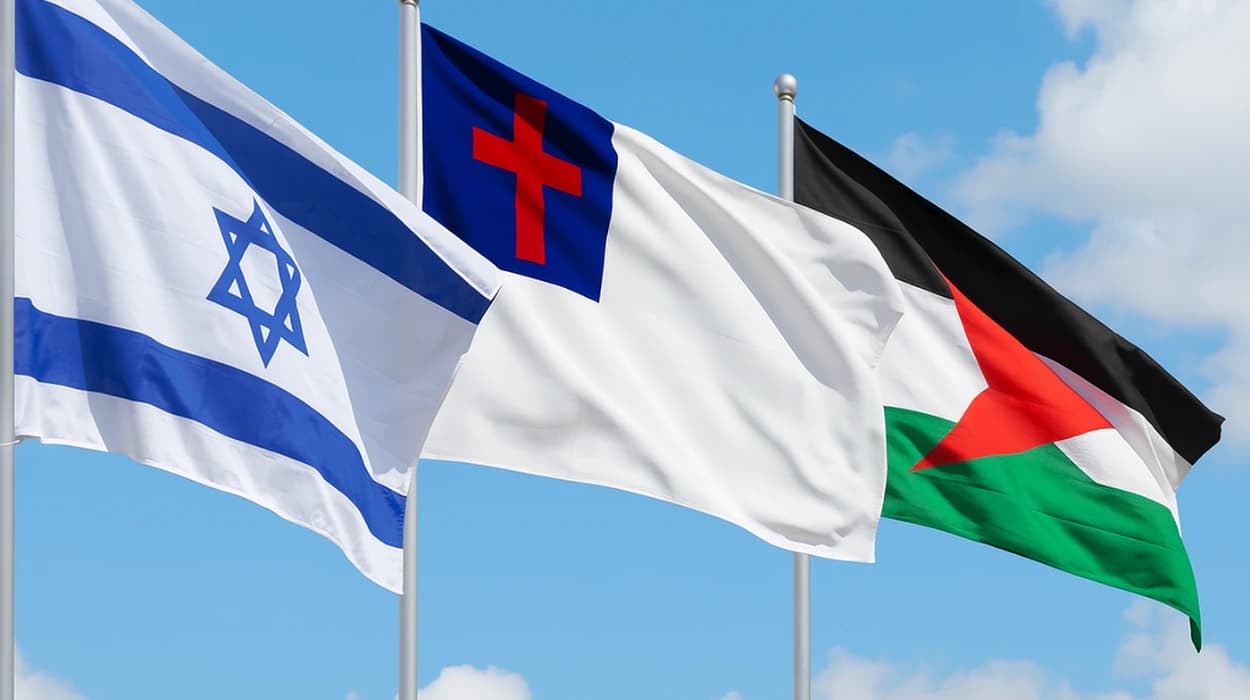
The Israeli-Palestinian conflict presents a profound ethical and theological dilemma for many Christians worldwide.
Biblical Perspectives on Israel and Palestine
Christian scripture frequently references the Jewish people as God’s chosen nation, with covenants underscoring Israel’s unique role. Yet the Bible also stresses justice, mercy, and peace, principles that resonate with concerns for Palestinians today.
Key scriptural narratives, such as in Deuteronomy and Genesis, emphasize God’s promises to Abraham’s descendants, traditionally identified with the Jewish people. However, New Testament teachings underscore reconciliation and love for one's neighbour, advocating compassion across ethnic and political divides.
Historical Context and Its Impact on Christian Perspectives
The Israeli state, established in 1948, holds significant religious and historical importance for Jews and many Christians. Palestinians, predominantly Muslim and Christian, have endured displacement and occupation, prompting widespread calls for justice and statehood.
This complex history influences Christian attitudes. Some Christians emphasize solidarity with Israel based on biblical prophecies and shared Judeo-Christian heritage. Others highlight Palestinian suffering and advocate for their rights under international law and human dignity.
Theological Considerations on Support
The issue is further complicated by theological viewpoints such as Christian Zionism, which supports Israel's Jewish statehood based on biblical promises and eschatological beliefs. Meanwhile, other Christian traditions focus on peacemaking and justice, urging support for all affected populations without bias.
Some theologians argue that unconditional political support for any nation contradicts biblical ethics, which call for justice, mercy, and humility before God. As such, many Christians adopt balanced approaches, praying for peace, advocating for human rights, and condemning violence indiscriminately.
Supporting Peace and Human Rights
Christian advocacy is often directed towards promoting peaceful coexistence, international law adherence, and the protection of human rights irrespective of nationality or ethnicity.
Responding to Violence and Displacement
Christians are involved in providing humanitarian aid to vulnerable populations on both sides, addressing issues like refugee care, education, and health services.
Contemporary Christian Support Survey Insights
Public opinion surveys reveal varied Christian support patterns. Many American evangelicals lean towards supporting Israel, attributing it to religious beliefs and geopolitical alliances. Catholic and mainline Protestant communities tend to express more neutrality or advocate balanced support, reflecting theological diversity and humanitarian concerns.
According to recent research, a significant portion of Christians articulate support for Israel's right to security but also express concern for the humanitarian conditions of Palestinians, underscoring the nuanced nature of Christian perspectives.
Political Polarization Within Christianity
The Israel-Palestine question often reflects deeper political divisions within global Christianity, illustrating how religious identity overlaps with cultural and national identities.
Criticism of Unconditional Support
Some Christians critique unwavering support for Israel as ignoring Palestinian suffering, while others caution against unfair demonization of Israel. Balanced discourse seeks to recognise legitimate fears and grievances comprehensively.
Ethical and Practical Implications
For the Christian faithful, support should ideally transcend political partisanship and be rooted in biblical principles of love, justice, and peace. Supporting Israel or Palestine does not imply endorsing all actions by either side but involves advocating for peaceful coexistence, respectful dialogue, and equitable solutions.
Christians globally are encouraged to engage in prayer, informed dialogue, aid initiatives, and advocacy that reflect Christ’s teachings on reconciliation and compassion for all peoples.
Deciding whether to support Israel or Palestine as a Christian involves navigating biblical mandates, historical legacies, and modern-day realities. The Christian call is to pursue peace, justice, and love, recognizing the humanity and dignity of all parties involved.
Faithful engagement means praying for both Israelis and Palestinians, advocating for peaceful resolution, and upholding principles that transcend political conflict. Through this balanced approach, Christians can contribute positively to a future marked by understanding and harmony.