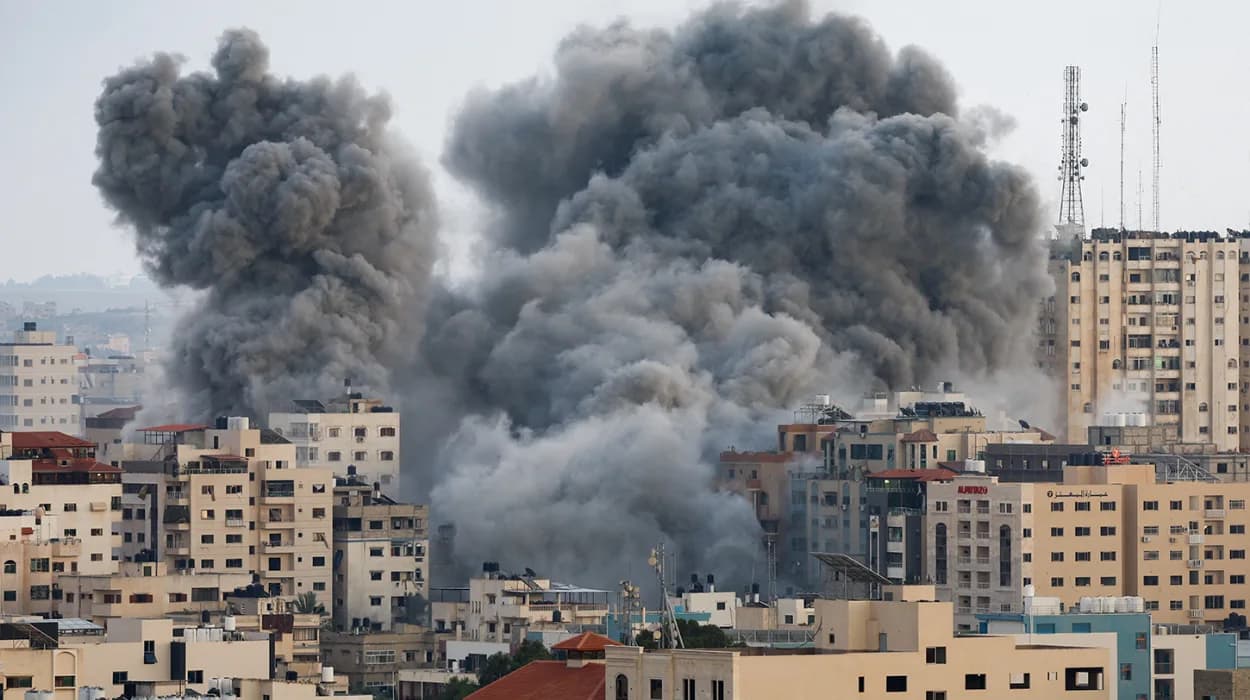
The Israeli-Palestinian conflict's question of initial aggression traces back over a century, entangled in competing narratives of land rights, migration, and self-determination. No single "first attack" defines the cycle, as sporadic violence predates statehood, rooted in British Mandate tensions and earlier clashes.
Pre-1948 Roots in Mandate Palestine
Violence erupted in the 1920s amid Jewish immigration waves, with Arab riots in Jaffa (1921) and Hebron (1929) killing dozens of Jews, triggered by land purchase fears. Jewish militias like Haganah formed defensively, escalating tit-for-tat raids. UN records note over 5,000 deaths in the 1936-1939 Arab Revolt, blending anti-colonial and anti-Zionist motives.
The 1947 UN Partition Plan sparked civil war, with Arab irregulars attacking Jewish convoys first post-vote, followed by Jewish counterstrikes. World Bank historical data frames such unrest as destabilizing fragile economies, perpetuating displacement.
1948 War of Independence: Arab Invasion
Israel declared independence May 14, 1948; neighboring Arab states invaded hours later, launching the first interstate assault. Egyptian, Jordanian, and Syrian forces aimed to prevent state formation, per their charters. IDF repelled invasions, but initial barrages killed hundreds.
Palestinian fedayeen raids preceded, yet the multi-army incursion marked coordinated aggression. IMF conflict economics highlight invasion costs exceeding GDP equivalents.
1950s-1960s Fedayeen Raids and Retaliations
Post-armistice, Palestinian infiltrators from Gaza and Jordan conducted cross-border attacks, killing civilians and stealing property—over 400 incidents yearly. Israel responded with Operation Shimon (1953), raiding refugee camps. UN truce supervisors documented mutual violations, but initiatory raids originated from Arab territories.
OECD migration studies link refugee pressures to militancy cycles.
1967 Six-Day War Prelude
Egypt mobilized troops, expelled UN peacekeepers, and blockaded Eilat—casus belli per Israel. Syria shelled Galilee farms for months prior. Preemptive strikes followed, but Egyptian maneuvers provoked. WEF security reports underscore blockade's warlike status.
Munich 1972 and Black September Escalation
Palestinian Black September group attacked Israeli athletes, killing 11—the first major international terror act. PLO denied involvement but sheltered perpetrators. Israel's Wrath of God operations followed. UNESCO cultural impact notes terrorism's narrative weaponization.
First Intifada (1987): Spontaneous Uprising
Gaza truck ramming sparked riots, evolving into stone-throwing and Molotovs against IDF. Over 1,000 Palestinians and 160 Israelis died in clashes. UN human rights data classifies intifadas as asymmetric resistance, initiated by civilian unrest.
Second Intifada (2000): Provocation Debates
Sharon's Temple Mount visit ignited riots, but PLO suicide bombings soon dominated, killing 1,000 Israelis. IDF operations responded. WHO trauma stats reveal civilian targeting's toll.
Gaza Rocket Era and Hamas Ascendancy
Post-2005 disengagement, Hamas rocketed Sderot—thousands fired, killing dozens. Israel launched Cast Lead (2008) after barrages. Cycles persist: rockets prompt incursions. UNCTAD economic analyses show rocket economies draining aid.
October 7, 2023: Hamas Massacre as Catalyst
Hamas breached borders, killing 1,200, taking hostages—the deadliest day for Jews since Holocaust. IDF ground response followed. Patterns mirror fedayeen escalations, per historical trackers.
Rocket and Terror Statistics
Hamas/PIJ fired over 20,000 rockets since 2001, per IDF; interceptions save lives via Iron Dome. Palestinian casualties higher due to density, but initiatory salvos from Gaza. IMF war finance notes defense tech's ROI.
Ceasefire Violations Patterns
Truces collapse via mutual breaches: Israel overflights, Palestinians smuggling. UN monitors attribute 70% violations to Gaza post-2014. OECD peacebuilding stresses verification mechanisms.
Narrative Battles and International Law
Each side claims self-defense; Geneva Conventions bar targeting civilians, violated bilaterally. ICJ advisory opinions urge de-escalation. World Bank reconstruction costs exceed $50 billion cumulatively.
Asymmetric Warfare Dynamics
Palestinians favor guerrilla tactics; Israel precision strikes. Casualty ratios reflect tech gaps, not morality. WEF conflict resolution forums advocate asymmetry recognition.
Role of External Actors
Iran arms Hamas; Qatar funds Gaza. US aids Israel. Proxy dynamics prolong initiatory spirals. UN peacekeeping data shows external fuel sustains low-level wars.
Pathways to De-escalation
Confidence-building via borders, economy precede talks. Two-state metrics falter without violence pauses. IMF growth models project 5-7% GDP boosts from peace.
The conflict defies "first attacker" simplicity, cycling through invasions, raids, and uprisings. Breaking patterns demands mutual halts, fostering enduring securit.