The Palestine conflict is one of the most enduring and heartbreaking struggles of modern history. For decades, the Palestinian people have faced occupation, displacement, and systemic inequality. This is not just a political dispute, but a human tragedy that affects millions of lives every single day.
Understanding the roots of this conflict is essential, not only to grasp its complexity but also to recognize the humanitarian crisis it has created. This is about real people, real suffering, and the universal need for justice and dignity.
The Palestinian cause is not about taking sides in a political battle. It is about defending human rights, upholding international law, and supporting a people’s right to live freely on their own land.
Historical Background of the Palestine Conflict
Before 1948, Palestine was a land rich in culture, history, and diversity. Muslim, Christian, and Jewish communities coexisted in towns and cities, sharing traditions and commerce. Life was far from perfect, but it had a rhythm rooted in generations of shared history.
The turning point came with the 1947 UN Partition Plan, which proposed dividing Palestine into separate Jewish and Arab states. While Jewish leaders accepted the plan, Palestinians and surrounding Arab nations rejected it, viewing it as unjust and as a violation of their right to self-determination.
In 1948, the creation of the State of Israel marked the beginning of what Palestinians call the Nakba, or “catastrophe.” Over 700,000 Palestinians were expelled or fled from their homes, many never able to return. This mass displacement set the stage for decades of conflict and occupation.
Life Under Occupation
Living under occupation is not just a matter of losing political freedom. It affects every aspect of daily life. In the West Bank, Palestinians face military checkpoints, roadblocks, and restricted access to basic resources. Families are separated by barriers, and farmers are often cut off from their own land.
The Gaza Strip, home to over two million Palestinians, has been described as the world’s largest open-air prison. Movement in and out is heavily restricted, and the local economy is severely stifled. These conditions create widespread unemployment and economic despair.
Even the simplest activities, going to school, visiting relatives, or traveling for medical treatment can become a major ordeal under the complex and restrictive permit system. For many Palestinians, basic rights that others take for granted are out of reach.
Humanitarian Crisis in Gaza and the West Bank
The humanitarian situation in Palestine is dire and continues to worsen. In Gaza, access to clean water is critically low. According to the United Nations, more than 95% of water is unfit for human consumption. Electricity shortages are common, leaving families without power for hours or even days.
Healthcare facilities are under immense pressure. Shortages of essential medicines, medical equipment, and trained staff make it challenging to provide adequate care. Patients requiring specialized treatment often face delays or denials in obtaining permits to leave Gaza for medical care.
Education, too, suffers under occupation. Many schools are overcrowded, under-resourced, or damaged due to repeated escalations. Yet, despite these challenges, Palestinian children and their families remain committed to education as a pathway to a better future.
International Law and Human Rights Violations
International law is clear on the rights of occupiedpeoples. The Fourth Geneva Convention prohibits the transfer of the occupier’s civilian population into occupied territory and demands the protection of civilians. Numerous United Nations resolutions have affirmed the illegality of Israeli settlements in the West Bank and called for an end to the occupation.
Human rights organizations have documented widespread violations, including the use of excessive force against civilians, home demolitions, arbitrary detentions, and restrictions on freedom of movement. These actions not only contravene international law but also deepen the humanitarian crisis.
Accountability has been slow and often blocked by political interests, yet the legal and moral principles remain firm: the occupation is illegal, and the Palestinian people have the right to self-determination.
Global Reactions and Public Opinion
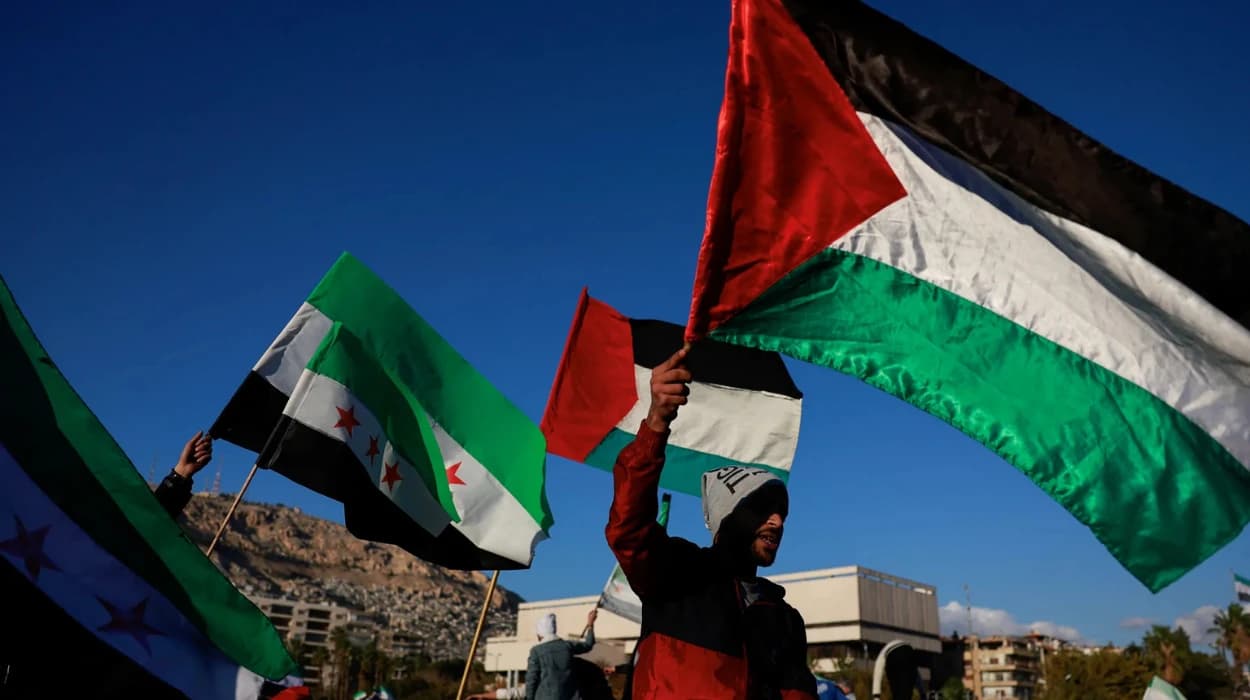
The Palestine conflict has drawn global attention and sparked strong reactions. Around the world, solidarity movements and advocacy groups have mobilized to demand justice for Palestinians. Protests, cultural events, and social media campaigns continue to raise awareness and pressure governments to take action.
Social media has played a transformative role in shaping public perception. Palestinian voices, often ignored in mainstream media, have found platforms to share their experiences directly with the world. Images and videos from the ground show the reality of life under occupation in ways that reports alone cannot convey.
While political responses vary widely, public opinion in many countries is increasingly sympathetic to the Palestinian cause, especially among younger generations who see the conflict through a human rights lens.
Voices of the Palestinian People
Despite decades of hardship, the Palestinian people have shown remarkable resilience. Refugees who have lived in camps for generations continue to hold on to the keys of homes they were forced to leave in 1948, passing them down as symbols of hope and resistance.
Artists, poets, and musicians preserve Palestinian culture and identity. Through their work, they share stories of struggle and survival, reminding the world that Palestinians are not just victims but also creators, dreamers, and contributors to global culture.
Ordinary families, too, display courage in their daily lives. Parents strive to protect and educate their children despite the constant threat of violence and displacement. Their perseverance embodies the spirit of a nation that refuses to be erased.
Pathways to Peace
A just and lasting peace in Palestine will require more than temporary ceasefires or limited agreements. It must address the root causes of the conflict: occupation, inequality, and the denial of Palestinian rights.
Diplomatic efforts should prioritize the principles of justice, equality, and mutual recognition. Palestinians must be granted full sovereignty over their land, resources, and borders. International mediation can play a role, but it must be fair, transparent, and committed to upholding international law.
The path to peace also depends on grassroots dialogue between communities, fostering understanding and dismantling decades of mistrust. Without justice, peace will remain elusive. But with genuine commitment from the global community, change is possible.
FAQs
Why is the Palestine conflict still unresolved?
Because the root causes, occupation, displacement, and inequality, remain unaddressed, and political solutions have repeatedly failed to deliver lasting justice.
Is Palestine recognized as a state?
Over 130 countries recognize Palestine as a state, but it is not universally recognized, and its sovereignty is limited by occupation.
What can people do to support Palestine?
Educating oneself, amplifying Palestinian voices, supporting humanitarian organizations, and advocating for policies based on justice and human rights are key ways to help.