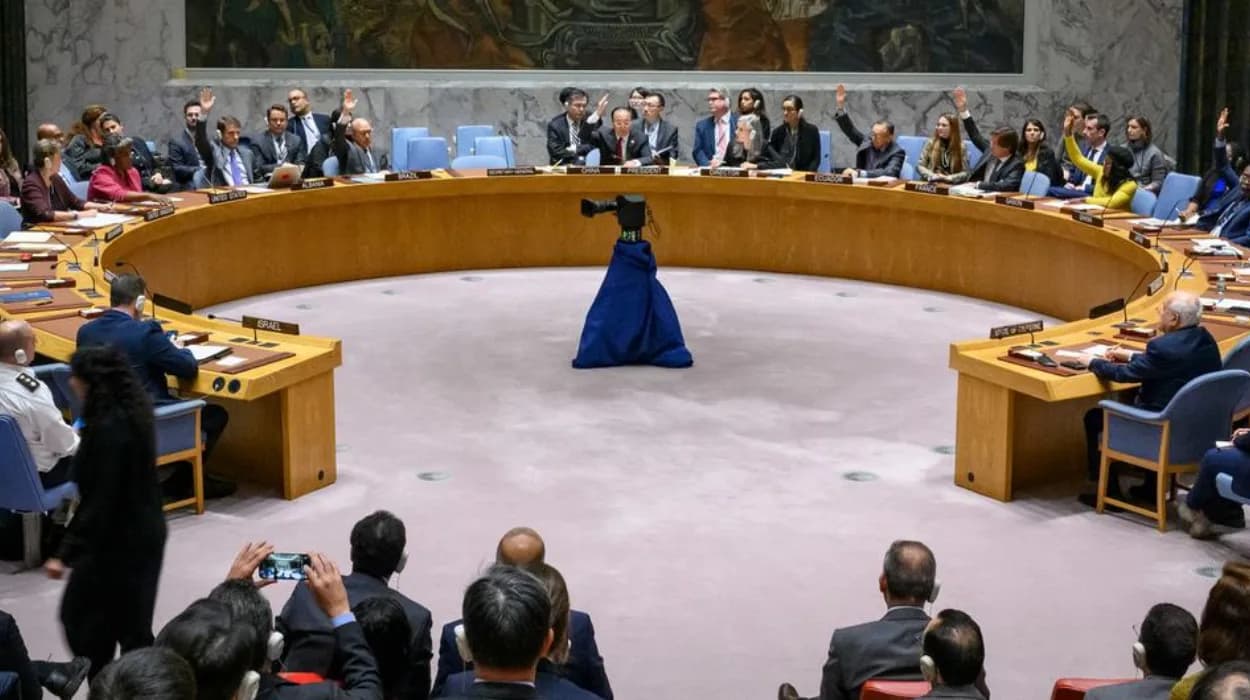
The United Nations was founded on principles of international peace and security. The Israel-Palestine conflict, with its deep historical roots and ongoing volatility, has been a central issue for the UN since its early years. Through resolutions passed by both the United Nations General Assembly (UNGA) and the Security Council (UNSC), the UN has sought to mediate peace negotiations, address humanitarian crises, uphold legal norms and human rights, and establish frameworks for political solutions such as the two-state model. While these resolutions represent significant international consensus and moral guidance, their impact remains limited by political divisions and geopolitical realities on the ground.
Historical Context: Early UN Resolutions and the Partition Plan
The UN’s earliest intervention in the conflict came with Resolution 181 in 1947, which recommended the partition of the British Mandate of Palestine into separate Jewish and Arab states, with Jerusalem under international control. This resolution laid the foundation for the establishment of the State of Israel but was rejected by the Arab states and Palestinian leadership, triggering the 1948 Arab-Israeli War.
Following the war, the UN passed multiple resolutions addressing refugees, their right of return, and the administration of Jerusalem, such as Resolution 194 (1948), which called for the return of Palestinian refugees and compensation for those choosing not to return.
Key UN Resolutions Over the Decades
Over the ensuing decades, the UN adopted numerous resolutions addressing various aspects of the Israel-Palestine conflict. Security Council Resolution 242 in 1967 called for the withdrawal of Israeli armed forces from territories occupied during the Six-Day War and emphasized the recognition of sovereignty of every state in the area. Resolution 338, passed in 1973, urged an immediate ceasefire during the Yom Kippur War and called for the implementation of Resolution 242. In 1979, Resolution 446 declared Israeli settlements a serious obstacle to peace and called for their cessation. The following year, Resolution 478 condemned Israel’s Jerusalem Law, which declared Jerusalem as Israel’s capital, declaring this law null and void under international norms. More recently, Resolution 2334 in 2016 reiterated that Israeli settlements in Palestinian territories have no legal validity and constitute a violation of international law. Together, these resolutions have provided key legal and political frameworks that continue to shape peace initiatives and international responses to the conflict.
Recent UN Resolutions and Developments in 2024
The UN continues to address the Israel-Palestine conflict amid ongoing violence and political disputes through a series of recent resolutions that respond to escalations between Israel and Gaza, humanitarian crises, and hostage situations, while reaffirming commitments to peace. Notable resolutions from late 2023 through 2024 include Resolution ES-10/21 in October 2023, which criticized Hamas actions in the Gaza war; Resolution ES-10/22 in December 2023, which called for an immediate ceasefire and the release of hostages; Resolution ES-10/23 in May 2024, which upgraded Palestine's rights in the UN as a non-member Observer State; and Resolution 2735 in June 2024, which supported proposals for a ceasefire and reiterated endorsement of the two-state solution. These resolutions illustrate the ongoing role of the UN in addressing immediate threats while emphasizing long-term political solutions.
The Structure and Impact of UN Resolutions
Security Council vs. General Assembly
The UN Security Council (UNSC) has primary responsibility for maintaining international peace and security and can issue binding resolutions. However, its effectiveness is often hindered by the veto power of its five permanent members, with the US frequently vetoing resolutions critical of Israel.
In contrast, the UN General Assembly (UNGA) includes all member states and adopts resolutions that carry significant political weight but are non-binding. The General Assembly has been instrumental in recognizing the State of Palestine as a non-member Observer State in 2012 and regularly advocating for Palestinian rights.
Political and Humanitarian Impact
UN resolutions have played a vital role in shaping international law, norms, and humanitarian assistance related to the Israel-Palestine conflict. They have provided legal backing for the rights of Palestinian refugees, called for the cessation of settlement expansion, urged respect for international humanitarian law during conflicts, and mobilized humanitarian aid through UN agencies like UNRWA. Despite limited enforcement capabilities, these resolutions have reinforced global awareness and exerted international pressure on the parties involved.
Partial List of Major UN Resolutions on Israel-Palestine
- 1947,
Res. 181: Recommendation for partition of Palestine.
- 1948,
Res. 194: Right of return for Palestinian refugees.
- 1967,
Res. 242: Withdrawal from occupied territories.
- 1973,
Res. 338: Ceasefire and peace negotiations.
- 1979,
Res. 446: Israeli settlements condemnation.
- 1980,
Res. 478: Condemnation of Jerusalem law.
- 2016,
Res. 2334: Condemnation of settlements expansion.
- 2023,
ES-10/21 and ES-10/22: Gaza conflict responses.
- 2024,
ES-10/23 and 2735: Upgrading Palestine’s UN status and ceasefire
calls.
Challenges Facing UN Resolutions on the Conflict
Veto Power and Political Divisions
The consistently used veto power by the United States in the Security Council has blocked several resolutions aimed at penalizing Israel for alleged violations, limiting the UN’s ability to take effective action.
Lack of Enforcement Mechanisms
Many resolutions, especially those from the General Assembly, lack binding enforcement, reducing the UN’s influence on the ground and allowing continued settlement expansion and conflict.
Geopolitical Fragmentation
The Israel-Palestine conflict involves multiple regional and international actors with conflicting interests. This fragmentation complicates consensus-building within the UN and undermines implementation of resolutions.
The Role of UN Agencies and Humanitarian Assistance
Apart from legal and political measures, the UN contributes through important humanitarian efforts. The United Nations Relief and Works Agency for Palestine Refugees (UNRWA) provides essential services to millions of Palestinian refugees, offering education, healthcare, social services, and emergency relief.
These humanitarian efforts address immediate needs, alleviating suffering amid recurrent violence and blockade but do not resolve the political stalemate underlying the conflict.
The United Nations resolutions on the Israel-Palestine conflict form a foundational element of international efforts to promote peace, justice, and humanitarian aid in the region. While political realities and structural limitations at the UN have curtailed their full effectiveness, these resolutions provide:
- A
legal framework affirming Palestinian rights,
- Ongoing
calls for ceasefire and peace negotiations,
- A
platform for global advocacy and humanitarian coordination.
Understanding the history, milestones, and present-day context of these resolutions is essential for appreciating the UN’s role in one of the globe’s most enduring conflicts and the challenges ahead toward equitable and lasting peace.