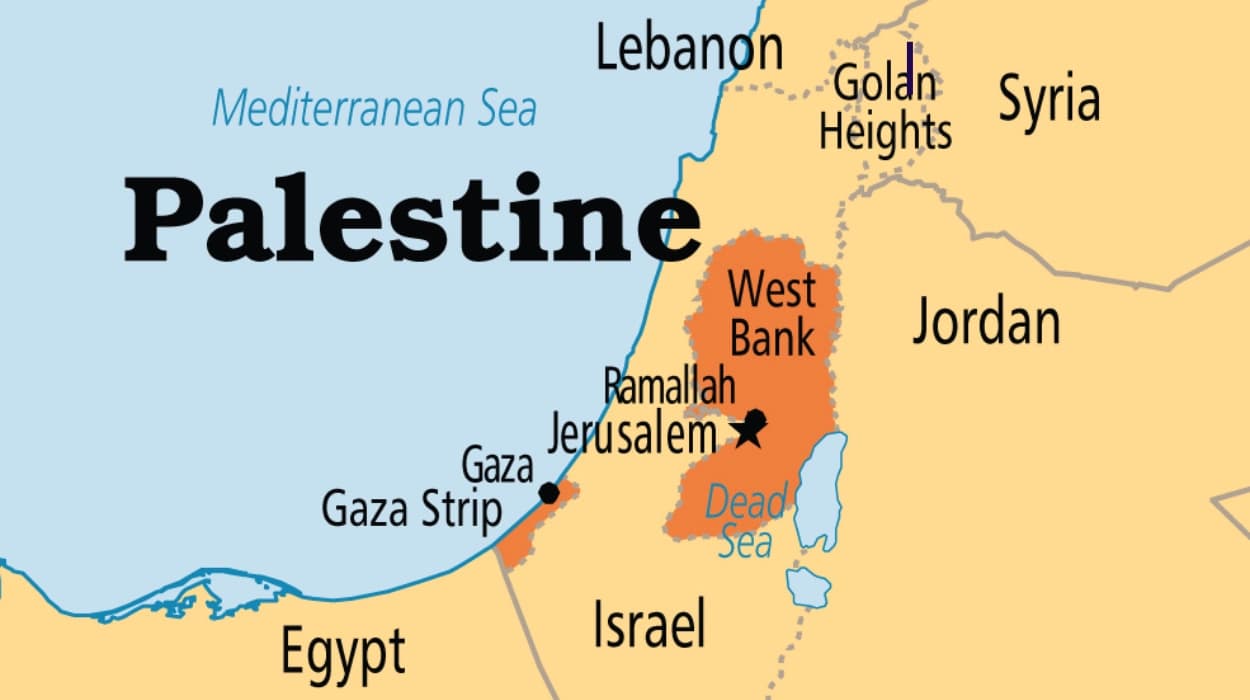
The question of the capital of Palestine is central to one of the most enduring and complex geopolitical conflicts in modern history—the Israeli-Palestinian dispute. While Jerusalem is proclaimed by Palestinians as their capital, the practical administration and international recognition present challenges and contradictions. This article explores the historical, political, and diplomatic aspects surrounding Palestine’s capital status, shedding light on the geographic realities and the global perspectives that shape this critical issue.
Palestine, officially the State of Palestine, consists primarily of two geographically separated territories: the West Bank and Gaza Strip. Palestinians claim East Jerusalem as the capital of their future sovereign state, while Israel exercises de facto control over the entire city, asserting Jerusalem as its eternal and indivisible capital. The United Nations and most countries do not recognize Jerusalem as Israel’s capital due to its disputed status, and neither side’s claims over the city are widely recognized internationally.
Understanding what constitutes the capital of Palestine requires unpacking historical claims, political control, international law, and ongoing conflict. The dynamic facts on the ground complicate any simple answer, making the status of Palestine’s capital a critical and symbolic point of contention.
Historical and Geopolitical Background
Jerusalem is an ancient city sacred to Judaism, Christianity, and Islam, and it has been continuously inhabited for thousands of years. In 1947, the United Nations proposed the partition of Palestine, envisioning Jerusalem as an international city under UN administration to preserve its unique religious significance.
Following the 1948 Arab-Israeli War, the city was divided: West Jerusalem came under Israeli control, while East Jerusalem, including the Old City, was controlled by Jordan until 1967. In the Six-Day War of 1967, Israel captured East Jerusalem and annexed it, extending its municipal boundaries. This annexation has not been recognized internationally and remains a core dispute.
The Palestinians consider East Jerusalem their capital. However, due to Israeli control and restrictions, the Palestinian Authority (PA) administers parts of the West Bank from Ramallah, located just a few kilometers north of Jerusalem, serving as the de facto administrative capital.
Political Claims and International Recognition
Palestine’s declaration of statehood in 1988 named Jerusalem as its capital. The Palestine Liberation Organization (PLO) and later the Palestinian Authority have maintained this claim despite the Israeli annexation and control of East Jerusalem. Some countries recognize the State of Palestine with East Jerusalem as its capital, including many nations in the Global South, parts of Europe, and the Arab world.
However, full international recognition remains incomplete. Many countries, including major Western states, support a two-state solution with Jerusalem as a shared capital or an international city, pending negotiations. The United Nations views East Jerusalem as occupied Palestinian territory and does not recognize Israeli sovereignty there.
With ongoing Israeli settlement expansion in East Jerusalem and the West Bank, prospects for a contiguous Palestinian capital are increasingly complicated. Palestinian institutions, including the Palestinian Legislative Council, have offices in suburban areas such as Abu Dis, near Jerusalem, anticipating a future capital site. Yet, due to political realities, Ramallah continues as the current administrative hub.
Here are three additional headings relevant to the context of "what is the capital of Palestine," including two with bullet points for clarity:
Jerusalem’s Symbolism and Contested Importance
Jerusalem holds immense religious and cultural significance for Palestinians and Israelis alike, making its status deeply symbolic and emotionally charged. For Palestinians, East Jerusalem is not only a political capital but also a cultural and spiritual center, encompassing critical religious sites such as the Al-Aqsa Mosque compound.
Israel’s assertion of Jerusalem as its eternal, undivided capital is rooted in historical connection, religious beliefs, and national identity. This assertion strengthened after the 1980 Jerusalem Law, which officially declared Jerusalem the capital of Israel, a move condemned by much of the international community.
The competing narratives around Jerusalem reflect profound historical grievances and collective memories, making diplomatic resolutions challenging. The city remains a focal point of conflict, symbolizing broader struggles for sovereignty, identity, and human rights.
Current Realities and Future Prospects
Though Jerusalem is proclaimed officially as the Palestinian capital, most day-to-day governance by the Palestinian Authority occurs in Ramallah due to Israeli control and restrictions. Gaza City, once the largest Palestinian city, faces severe humanitarian crises and political division, further complicating Gaza’s role as a potential capital.
Efforts toward a two-state solution hinge significantly on the status of Jerusalem. Various peace proposals have envisaged sharing or internationalizing the city, but no consensus has been reached. Israeli settlements, security concerns, and regional geopolitics pose significant hurdles.
International developments, including increased recognition of Palestine by some countries and growing global advocacy for Palestinian rights, keep the question of Palestine’s capital—and its statehood—prominently on the world agenda.
Palestine officially proclaims Jerusalem, specifically East Jerusalem, as its capital, despite the city being under Israeli control. In practice, the Palestinian Authority administers much of its governance from Ramallah, which serves as the de facto administrative center due to political and security realities. The international community largely does not recognize Jerusalem as the capital of either Israel or Palestine, viewing East Jerusalem as occupied territory under international law. Jerusalem’s status remains one of the most contentious and sensitive issues in the Israeli-Palestinian conflict, largely because of its profound religious, cultural, and political symbolism. Complicating the prospects for establishing a universally agreed-upon Palestinian capital are ongoing geopolitical realities, including Israeli settlement expansion and security concerns that continue to shape the conflict’s landscape.