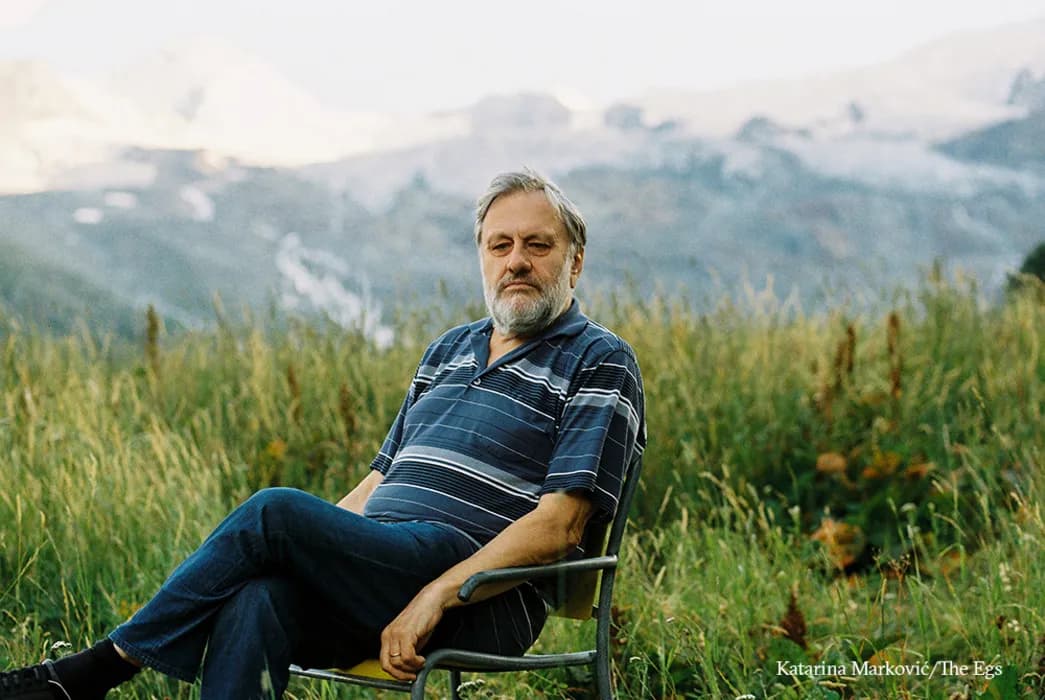
Slavoj Žižek, the Slovenian philosopher and cultural critic, is known for his provocative and complex takes on contemporary issues, including the enduring conflict in Palestine. His reflections on Palestine challenge mainstream narratives, interrogate the nature of truth and ideology, and bring psychoanalytic insights to bear on geopolitics. This article explores Žižek’s nuanced views on Palestine, his critique of political discourse, and the implications of his thought for understanding this longstanding conflict.
The Israeli-Palestinian conflict has long been a focal point of international attention, characterized by deep historical roots, political complexities, and humanitarian concerns. Thinkers and activists worldwide have offered competing narratives and solutions. Among them, Slavoj Žižek occupies a distinctive position with his blend of Marxist critique, Lacanian psychoanalysis, and philosophical inquiry. His commentary goes beyond simplifying binaries, focusing instead on how ideologies shape perceptions, the role of truth and lies, and the possibilities—and difficulties—of peace.
Žižek’s Philosophy of Truth and Discourse on Palestine
Žižek approaches truth not as absolute factuality but as something embedded in ideological discourse. Drawing on Michel Foucault, he emphasizes how "truth-effects" are produced in specific historical and political contexts. For Žižek, the discourse surrounding Palestine is shaped by powerful narratives that often obscure uncomfortable realities.
He critiques how truths are deployed strategically; for instance, misleading or manipulated images and statements during conflicts have profound effects on public opinion. A notable case he discusses involves Israeli admissions regarding the nature of casualties in Gaza, where initial claims circulated widely, while later corrections received less attention, perpetuating misinformation.
Žižek argues that the timing and mode of revealing truths matter deeply. He compares political truth-telling to psychoanalytic practice, where revelations must be given at the right moment to affect change, otherwise risk rejection or ignorance. This perspective challenges simplistic notions of objective truth in political conflicts and calls attention to the performative and constructed nature of public narratives on Palestine.
Critique of Media and Political Narratives
In Žižek’s view, mainstream media and political elites often engage in a form of manipulation that controls what is publicly acknowledged about Gaza and Palestine. He highlights how sensational, emotionally charged images shape international reactions but are selectively framed or even fabricated to legitimize certain policies. This media spectacle suppresses alternative truths about Palestinian suffering that could challenge dominant Israeli narratives.
Žižek also decries the tactic where criticism of Israeli policies is conflated with antisemitism, which stifles open debate and casts legitimate dissent as hate speech. This accusation, he warns, endangers free discourse and dulls the moral sense needed to fully grasp the conflict’s complexities.
The Paradox of Violence and Resistance
Žižek provocatively suggests that Hamas and Israel share a paradoxical relationship, both seeing violent confrontation as the only feasible path forward. He stresses that Israeli military actions, and the ideological framework justifying them, contribute to escalating cycles of violence and hatred, while Palestinian resistance—whatever its forms—emerges from desperation and occupation.
He draws attention to the deeply ingrained fetishistic disavowals on both sides: Israeli society, despite widespread secularism, invests religious and historical justification for its territorial claims; Palestinians stubbornly maintain their connection to the land as a central identity. This clash of narratives complicates peacemaking yet demonstrates the profound emotional and ideological stakes involved.
Calls for Political Solutions and Recognition
Highlighting voices like Ami Ayalon, a former Israeli intelligence chief, Žižek underscores the necessity of recognizing Palestinian aspirations for statehood alongside Israel. He voices support for pragmatic politicians like Marwan Barghouti, a jailed Palestinian leader seen by many as a legitimate interlocutor for peace negotiations.
Žižek acknowledges that meaningful security for Israel cannot exist without political solutions that offer Palestinians dignity, autonomy, and hope. He critiques those who speak about peace only after retirement or removal from power, suggesting that active leadership is necessary to challenge entrenched positions and advocate for change.
The Appropriation and Contestation of Symbols
Žižek discusses how certain slogans and historical symbols have been contested and appropriated. For example, the phrase “From the river to the sea” has been used by Palestinian activists as a call for liberation but demonized in Western discourse as genocidal. Ironically, Israeli politicians themselves have embraced the language in the context of territorial expansion, reflecting the fraught symbolism that envelops the conflict.
He warns against simplistic interpretations of ancient religious narratives used to justify violence, particularly the invocation of biblical enemies to legitimize contemporary military actions. Žižek challenges both religious fundamentalism and nationalist mythology as dangerous forces perpetuating conflict.
Psychoanalytic Insights on Ideology and Denial
Žižek’s psychoanalytic background informs his analysis of how societies manage contradictory truths through denial and fantasy. He points out that many Israelis maintain a "fetishist disavowal," acknowledging rational critiques about occupation but emotionally clinging to nationalist myths. Similar mechanisms protect Palestinian identities amidst trauma and oppression.
This insight helps explain the durability of conflict and the challenges of persuasion, as reason often contends with unconscious attachments and group identities.
Toward a Critical Awareness
Slavoj Žižek's reflections on Palestine compel us to look beyond surface-level narratives and question the construction of political truths. His combination of philosophy, psychoanalysis, and political critique offers a sobering view of a conflict deeply embedded in history, ideology, and power. Žižek urges openness to uncomfortable truths, timely courage in discourse, and recognition of shared humanity as essential for any hope of peace.
Slavoj Žižek views truth as something shaped and constructed within various ideological frameworks rather than as an absolute or objective fact. He critiques how media manipulation often blurs realities, especially highlighting how criticism of Israel is frequently conflated with antisemitism, which stifles meaningful discourse. Žižek sees both Hamas and Israel as locked in a destructive cycle of violence, each justified by opposing narratives that perpetuate the conflict. He emphasizes the urgent need for political recognition of Palestinian aspirations for peace and dignity as fundamental to achieving lasting security. Drawing on psychoanalytic theory, Žižek explains that denial and deeply embedded myths serve to sustain the ongoing conflict, revealing how both sides resist confronting uncomfortable truths that might pave the way for resolution.