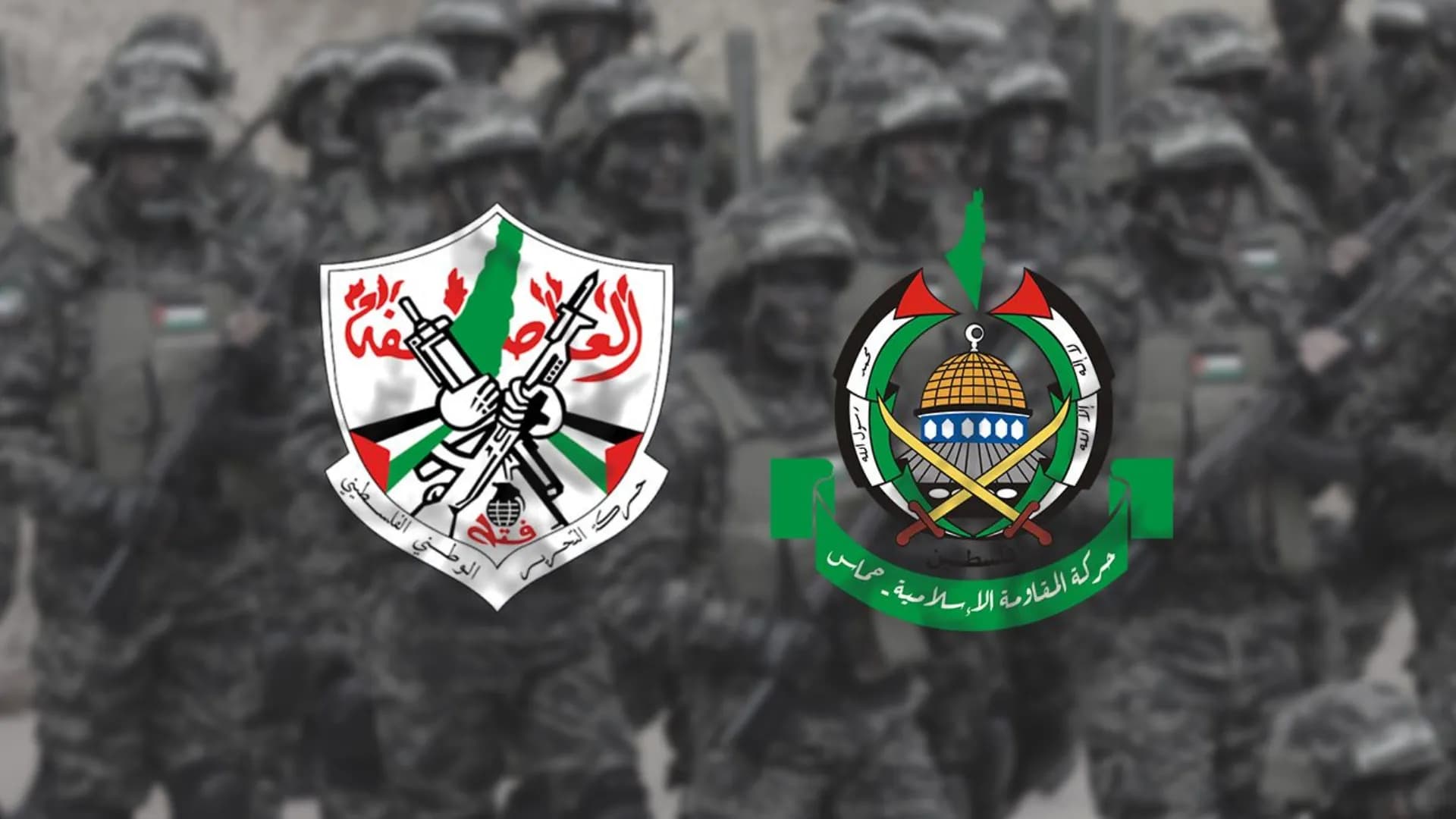
Both Fatah and Hamas are the greatest political parties in Palestine which have dictated the politics of the region over the years. The common ground between the two is limited to the same aim of creating a Palestinian state within the 1967 line, but: tät arrogant and arrogant manner in which each treats the other.
- Ideologies,
- Strategies,
- and Political approaches
are distinctly different.
The Fatah and Hamas partnership
The Palestinian factions are seeking to resolve the rancorous political and territorial battle that has made them foresee reconciliation. The resulting decades of rivalry, war and independent rule by the Fatah in the West Bank and Hamas in Gaza has led to a series of negotiating attempts towards reunifying Palestine under the Palestine government.
Later in July 2024, Hamas and Fatah signed a national-unity accord in Beijing, mediated by China, which it intended to implement as an intermediary government to govern both West Bank and Gaza after the war between Israel and Gaza.This agreement acknowledges that Palestinian unity is essential to governance, reconstruction and political leverage but previous attempts of reconciliation have ended due to profound distrust and contrasting ideology.
The coalition work is normally characterized by compromises: Fatah has come to accept a role of Hamas in governance, and Hamas has scaled down some of its demands, with both sides insisting on creation of a Palestinian state on the 1967 borders with continued resistance to occupation.
Ideological Differences
Fatah
- Established in the late 1950s, by the diaspora of Palestinians.
- A secular nationalist movement whose main aim was (and still is) armed struggle, but which is now drawn to diplomacy.
- Under the guidance of Arafat and Abbas who are the current president, Fatah emerged as the biggest group in the Palestinian Liberation Organization (PLO).
- Fatah has advocated talking to Israel and supports a two-state solution on the basis of the 1967 borders.
Hamas
- It was established in 1987 in Gaza branching out of the Muslim Brotherhood.
- An Islamic-based movement of Palestinian nationalism.
- Runs a military arm, the Izz al-Din al-Qassam Brigades, involved in armed struggle against Israel.
- It does not accept the right of Israel to exist, though its political document of 2017 said it would accept a Palestinian state within boundaries of the 1967 conflicts as a transitional one.
- Since 2007, Hamas has controlled the Gaza Strip, after breaking with Fatah in a bloody struggle.
Strategy Towards Israel
- The Fatah organization does not use arms anymore as it renounced armed struggle following the Oslo Accords in the 1990s.
- Hamas still promotes the use of armed struggle as a legitimate way against occupation of Israel.
This is the core of their strategic differences that have caused fundamental political divisions and in some cases tensions between these two movements.
Political and Territorial Control
- Fatah is the ruling force of the PA, and it controls the West Bank.
- Hamas is the ruling force in the Gaza Strip, after the militant group won the 2006 parliament elections and transferred the government there by force in 2007.
These two rival governments split in a 10-year long Palestinian political crisis.
Attempts at Reconciliation: Fatah and Hamas Agreement
Fatah and Hamas have been trying to get together even after experiencing conflicts and differences, as in the year 2007 during the Gaza armed conflicts:
- Colossal agreements on how to finally dissolve the rift between them have been made in the hope of establishing a united Palestinian government.
- There are still difficulties, particularly on the issue of the armed status of Hamas and the diplomatic directions preached by Fatah.
- Sustainable peace needs addressing both intellectual and practical matters between the groups, analysts say.
Support Bases and Methods of Rallying Followers
- Hamas has powerful grassroots followership via ideology-based activism within the mosques and the universities and social agencies.
- Fatah has wider recognition and more international backing and more importantly they enjoy greater financial resources and hold more positions in the PA to garner loyalty.
- As a number of Fatah followers are economically dependent on the current PA sector, Hamas followers tend to associate themselves with the Hamas actor in Islamist and resistance terms.
The Hamas-Fatah conflict
The HamasFatah conflict describes an on-going political and armed rivalry between Hamas, the most popular Palestinian faction, and Fatah, the second-most popular faction, that has been applying the politics of the Palestinian territories since the mid-2000s. However, the war took off to large proportions following the parliament elections of 2006, which saw Hamas defeat Fatah by a margin that it enjoyed.
Important moments in the history of the conflict are:
- In 2006, Hamas competed in (and won) parliamentary elections which Fatah does not accept in their entirety.
- Fissures develop between Gaza Hamas and Fatah over judicious issues such as Hamas establishing its own armed forces and extending rule early 2007.
- June 2007: Violent clashes between the Hamas and Fatah forces in Gaza results in full Hamas control and effectively split the Palestinian Authority into two administrations with Gaza held by Hamas, the West Bank by Fatah.
What Are Their Objectives Today?
- The objectives of the two parties are to ensure that Palestine becomes an independent state that consists of the West Bank, Gaza Strip, and East Jerusalem in the 1967 borders.
|
Aspect |
Fatah |
Hamas |
|
Ideology |
Secular nationalist |
Islamist |
|
Founded |
Late 1950s |
1987 |
|
Strategy |
Negotiations, diplomacy |
Armed resistance |
|
Recognition of Israel |
Recognizes Israel |
Does not recognize, but tacit acceptance of 1967 borders |
|
Territorial Control |
West Bank (Palestinian Authority) |
Gaza Strip |
|
Support Base |
International backing, financial ties |
Grassroots activism, Islamist network |
|
Relation |
Former rivals, occasional agreements |
Former rivals, occasional agreements |
- The Hamas statements do not conceal the desire to liberate Palestine up to the river to the sea but in the real context they are willing to settle up at the 1967 borders because this is a compromise.
- Fatah recognizes Israel to a full extent and is a negotiated two-state solution.