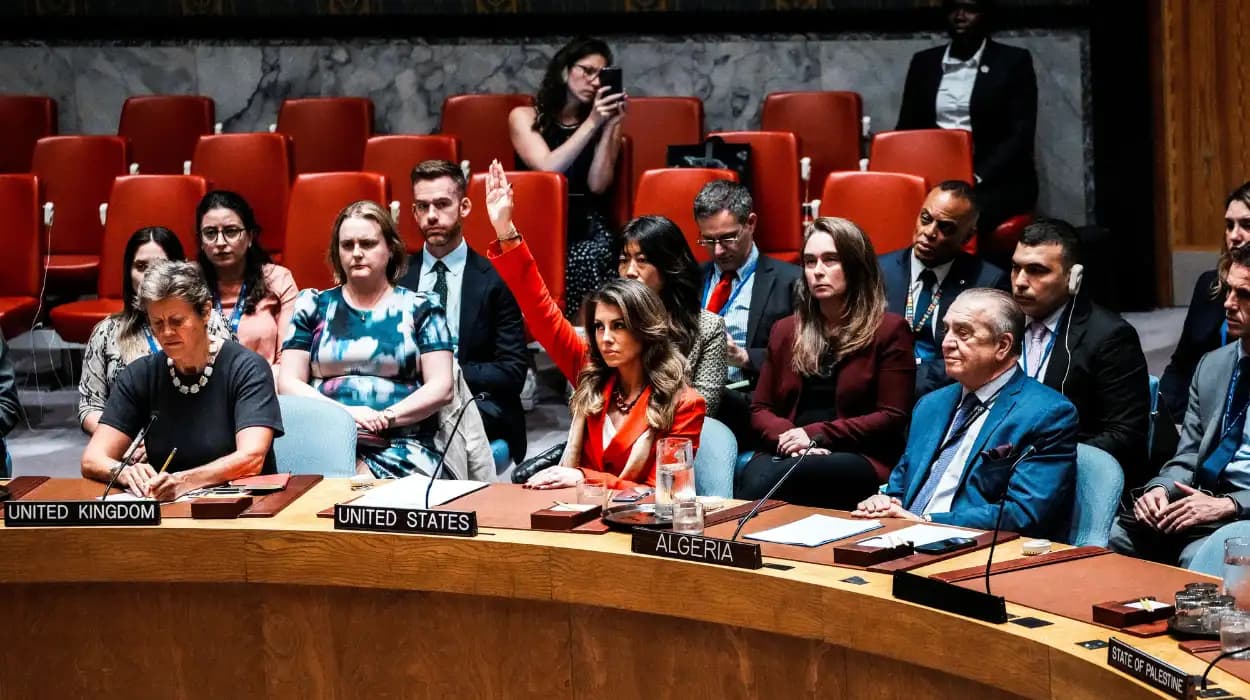
The US has repeatedly vetoed United Nations Security Council resolutions demanding ceasefires and humanitarian aid access in Gaza. The primary rationale given by the US administration centers on its support for Israel's right to self-defense, particularly against Hamas, and concerns that proposed resolutions insufficiently condemn Hamas or recognize Israel’s security concerns. The US argues that some resolutions legitimize narratives that benefit Hamas and thus fail to address underlying security issues.
The US vetoes are often accompanied by calls for aid delivery that does not empower Hamas, emphasizing strict measures and conditions on aid distribution to prevent diversion by Hamas. Israel, with US backing, justifies restrictions citing security concerns and accusations of Hamas misuse of aid. The humanitarian crisis in Gaza, marked by high civilian casualties, severe food shortages, and restricted medical supplies, has drawn global condemnation. However, the US vetoes have blocked UN efforts for unconditional ceasefires and full humanitarian aid access.
US representatives state their position as defending a long-standing alliance with Israel and opposing resolutions seen as one-sided or ineffective in ending violence. Other UN Security Council members, including China and several non-permanent members, criticize the US vetoes as shielding Israel from accountability and prolonging civilian suffering.
The ongoing conflict in Gaza has sparked one of the most severe humanitarian crises of the century. Amidst intensifying Israeli military operations, widespread civilian casualties, and a crippling blockade, the United States has repeatedly used its veto power at the United Nations Security Council (UNSC) to block resolutions calling for immediate, unconditional ceasefires and full humanitarian aid access in Gaza. These US vetoes have sparked contentious debates globally about the balance between Israel’s security concerns, humanitarian needs, and international law. This article explores the reasons behind the US veto, the humanitarian situation in Gaza, global responses, and the broader implications for peace and aid delivery in the region.
The US Veto in Context: Support for Israel’s Security
The United States holds permanent membership in the UNSC with veto power, which it has exercised multiple times to block resolutions related to Gaza, including those demanding ceasefires and unrestricted aid access. Central to the US position is a steadfast commitment to Israel’s right to defend itself, especially against Hamas, the militant group controlling Gaza, which the US and other countries designate as a terrorist organization.
US representatives argue that many proposed UNSC resolutions fail to properly condemn Hamas’s actions and instead offer legitimacy to narratives beneficial to Hamas, thereby undermining efforts toward genuine conflict resolution. The US asserts that resolutions calling for unconditional ceasefires without addressing Hamas’s capabilities and hostilities could embolden the group and jeopardize Israel’s security. As stated by US diplomats, Israel must be assured that Hamas’s threat is neutralized to prevent future violence.
For instance, in recent UNSC voting sessions, the US opposed resolutions that called for immediate, unconditional, and permanent ceasefires in Gaza, demanding the release of Israeli captives held by Hamas. The US regarded the linkage of ceasefire demands to hostage releases as a "non-starter," insisting the two issues require separate handling. The US vetoes, therefore, reflect a foreign policy balancing act: a firm support for Israel’s security while navigating the complexities of an entrenched conflict with significant civilian suffering.
Humanitarian Crisis and the Aid Blockade
Gaza, home to over two million Palestinians, faces dire humanitarian conditions exacerbated by an Israeli blockade and recurrent military operations. The enclave suffers from acute shortages of food, water, fuel, and medical supplies, driving what global organizations describe as a looming famine and collapsing health infrastructure.
According to the United Nations Office for the Coordination of Humanitarian Affairs (OCHA), aid deliveries in Gaza are heavily restricted, with humanitarian agencies often impeded in their efforts to operate freely within the enclave. The blockade limits the volume and types of aid allowed entry, ostensibly to prevent Hamas from diverting resources for military use. Israel and the US maintain that strict controls are necessary to safeguard regional security and prevent aid misuse.
However, human rights groups and UN agencies strongly criticize these restrictions for worsening civilian suffering. Many Palestinians live in conditions marked by malnutrition and overburdened hospitals. Observers report scenes of children pleading for food and aid queues that have, tragically, come under Israeli fire. The aid distribution system has also faced scrutiny for militarization and inefficiency, with NGOs warning that certain new frameworks for aid control fail to respect humanitarian principles of impartiality and neutrality.
Global Reactions and Diplomatic Isolation
The US vetoes have increasingly isolated it diplomatically on the issue. At recent UN meetings, the veto was the sole opposing vote among 15 members for resolutions endorsed by a broad international coalition demanding ceasefires and humanitarian relief. Countries including China, and many non-permanent Security Council members, have condemned ongoing Israeli actions as violations of international humanitarian law and UN resolutions, criticizing the US for shielding Israel from accountability.
The international community remains deeply divided. While the US prioritizes Israel’s security narrative, many other nations emphasize the urgent need for unimpeded humanitarian access and for reducing civilian casualties through ceasefire agreements. The stalemated UNSC votes highlight the challenge of achieving consensus when geopolitical alliances and conflicting interests are at play.
Balancing Security and Humanitarian Needs
The US position underscores the tension inherent in balancing national security interests with international humanitarian obligations. Israel’s concerns about Hamas’s military capacity, tunnel networks, and rocket attacks drive policies that restrict Gaza’s access and justify military responses. Conversely, the humanitarian fallout—reported by the World Food Programme and UNICEF as catastrophic—calls for urgent and substantial aid delivery and de-escalation.
Global institutions like the UN advocate for open border crossings and the lifting of restrictions on aid flow to alleviate civilian distress while continuing negotiations on security. The UN’s appeals consistently call for aid delivered by impartial agencies under humanitarian principles to ensure that essential supplies reach vulnerable populations without diversion or exploitation.
Persistent Challenges and Prospects for Resolution
The conflict’s longevity with tens of thousands of Palestinian casualties and debilitating blockade conditions illustrates the immense challenges in breaking cycles of violence. US vetoes at the UN reflect a broader geopolitical climate where peace efforts are entangled with strategic alliances and security doctrines.
Amid increasing international pressure, some incremental changes have occurred, including limited aid entry negotiated under strict conditions, and sporadic ceasefire agreements brokered by third parties. Yet, the larger question remains unresolved: how to achieve a durable peace that addresses Palestinian humanitarian rights and Israeli security in tandem.
The US veto of humanitarian aid and ceasefire resolutions in Gaza underscores its unwavering support for Israel’s security, particularly concerning the threat posed by Hamas. While humanitarian crises escalate with thousands of civilians affected by blockades and airstrikes, the US frames its vetoes as necessary to avoid legitimizing Hamas and to ensure any ceasefire aligns with broader security goals. This stance has drawn significant international criticism for prolonging suffering and obstructing diplomatic consensus. Achieving a balance between humanitarian imperatives and security realities remains an urgent and complex priority for the international community.