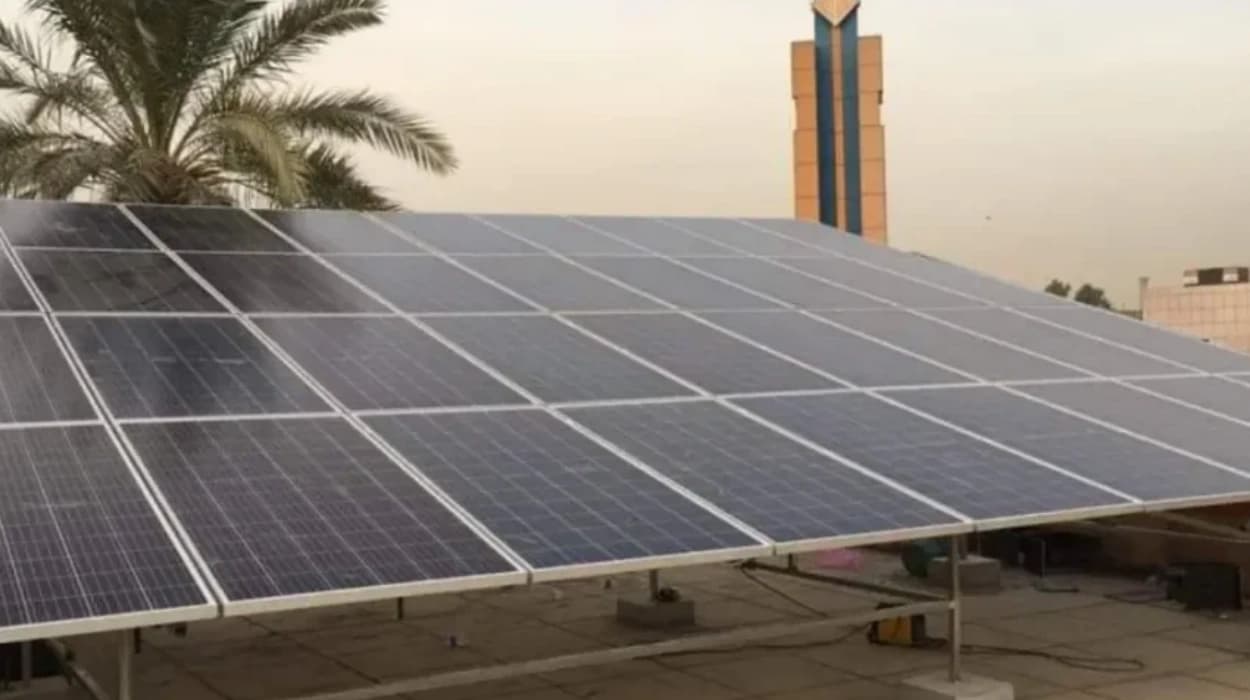
Baghdad (The Palestine Telegraph Newspaper) - February 3, 2026 – Iraq has allocated $4.5 billion (£3.6 billion) from its 2026 budget to finance solar energy systems across all provinces. The cabinet approved the funding to address chronic electricity shortages, with installations targeting 5,000 megawatts of capacity. Prime Minister Mohammed Shia al-Sudani announced the initiative will create 50,000 jobs and reduce reliance on imported power from Iran and Syria.
The solar push forms part of Iraq's National Energy Strategy aiming for 30% renewable energy by 2030. Contracts will prioritise local firms meeting international standards. Implementation begins Q2 2026 under Ministry of Electricity oversight.
Why Has Iraq Approved $4.5 Billion for Solar Energy Systems?
Cabinet spokesman Bassem al-Awadi confirmed the $4.5 billion allocation during Tuesday's press briefing. Funds cover procurement, installation, and maintenance of photovoltaic panels in 19 governorates. Al-Sudani stated the investment addresses summer blackouts affecting 50 million citizens.
Daily demand peaks at 27,000 megawatts against 19,000 megawatt generation capacity. Iran supplies 1,500 megawatts via imports; Syria 300 megawatts. Solar targets add 12% to grid within three years.
Details of Iraq's 2026 Solar Energy Budget Breakdown
$2.8 billion finances panel purchases from Chinese, South Korean manufacturers. $1.2 billion covers installation by local contractors. $500 million allocates to grid integration and storage batteries.
Projects span Baghdad, Basra, Nineveh, Anbar provinces. Each site capacity ranges 50-500 megawatts. Ministry of Electricity tenders launch March 2026.
Prime Minister Al-Sudani's Statements on Solar Power Initiative

Al-Sudani:
"Solar energy ends electricity crisis, creates sustainable jobs."
He linked funding to $153 billion 2026 budget surplus from oil at $90/barrel. PM visited Anbar solar pilot generating 100 megawatts since 2024.
Unemployment stands at 15%; solar employs technicians, engineers locally.
Ministry of Electricity Implementation Timeline and Targets
Q2 2026: Site surveys complete. Q3: First 1,000 megawatts online. 2027: 3,000 megawatts operational. Full 5,000 megawatts by 2028.
Storage systems prevent night-time shortfalls. Smart grids integrate renewables.
Strategic Importance of Solar Amid Iraq's Energy Crisis
Summers record 50°C temperatures; blackouts last 10-20 hours daily. 2025 protests demanded reliable power. Gas-fired plants operate at 60% capacity due to fuel shortages.
Solar peak generation aligns with daytime demand.
Provinces Selected for Initial $4.5 Billion Solar Deployments
Basra receives $800 million for 800-megawatt desert array. Baghdad $600 million rooftop systems. Nineveh, Anbar $500 million each post-ISIS reconstruction sites.
Kurdistan Region coordinates $400 million allocation.
Job Creation Projections from Solar Energy Investments
50,000 direct jobs: 20,000 installation, 15,000 maintenance, 15,000 manufacturing. Indirect employment hits 100,000 in supply chains.
Training centres open in five provinces.
International Partnerships for Iraq Solar Technology Transfer
China's PowerChina bids $2 billion panels. South Korea's Hyundai offers EPC contracts. UAE's Masdar finances $1 billion pilot.
US Trade Development Agency funded feasibility studies.
Reduction in Imported Electricity Dependency Post-Solar Rollout
Iran contract expires 2027; solar replaces 1,500 megawatts. Syria supplies end 2028. Annual savings $1.2 billion.
Domestic gas freed for export.
Technical Specifications of Approved Solar Photovoltaic Systems
Panels: 550-watt monocrystalline, 25-year warranty. Inverters: 98% efficiency. Batteries: Lithium iron phosphate, 4-hour storage.
Desert coatings resist sand abrasion.
Financing Mechanism from Iraq's 2026 Oil Revenue Surplus
$153 billion budget assumes $90 oil price, 4 million bpd. Solar funded from $50 billion reserve fund. No debt incurred.
Parliament approved allocation unanimously.
Previous Iraqi Solar Projects and Lessons Learned
2022 Muthanna 300-megawatt plant cost $300 million. 2024 Anbar 100-megawatt pilot succeeded. Basra 125-megawatt operational.
Maintenance contracts extended five years.
Impact on Iraq's Paris Agreement Renewable Targets

NDC commits 30% renewables by 2030. Solar achieves 12% alone. Wind tenders planned 2027.
Carbon credits explored.
Local Manufacturing Component in Solar Supply Chain
$400 million builds Karbala panel factory, 1,000 megawatts annual capacity. Inverter assembly in Najaf.
85% local content target.
Grid Integration Challenges Addressed by Solar Budget
$800 million upgrades substations. Siemens 500kV lines connect southern arrays. Frequency stabilisers prevent fluctuations.
Environmental Benefits of Iraq's Solar Energy Expansion
Annual CO2 reduction 7 million tonnes. Desert land use avoids agriculture conflicts. Water-free cooling systems.
Biodiversity corridors planned.
Employment Demographics in Solar Workforce Projections
40% youth under 30; 20% women technicians. Vocational centres train 10,000 annually.
Kurdistan, southern Shiite provinces prioritised.
Comparison to Neighbouring Countries' Solar Investments
Saudi Arabia $50 billion Vision 2030 solar. UAE 5 gigawatts operational. Jordan 20% renewables.
Iraq leapfrogs from 1% base.
Tenders and Procurement Process for Solar Contracts
e-bidding platform launches February. Pre-qualification requires 10% bank guarantee. Chinese firms dominate bids.
Transparency monitored by World Bank.
Maintenance and Operations Contracts Duration
25-year power purchase agreements. Local firms operate post-construction. Annual audits required.
Electricity Tariff Structure Post-Solar Integration
Industrial users pay 8 cents/kWh; residential 5 cents. Surplus exported to Turkey.
Role of Ministry of Finance in Solar Funding Release
Quarterly tranches tied to milestones. $1 billion first instalment March 2026.
International Financing Institutions Involved
Asian Infrastructure Investment Bank $500 million loan. Green Climate Fund application pending.
Solar Radiation Potential Across Iraqi Provinces
Anbar averages 2,200 kWh/sqm yearly. Basra 1,900. Baghdad 1,800. Optimal for photovoltaic yield.
Training Programmes for Solar Installation Technicians
10 centres, 5,000 trainees yearly. German dual-model curriculum. Certification mandatory.
Impact on Iraq's Gas Export Capacity Post-Solar Shift
2 billion cubic feet/day freed for Turkey, Jordan. Aramco joint venture accelerates.
Smart Grid Technology Deployment with Solar Arrays
$300 million SCADA systems. Huawei 5G backhaul. Real-time monitoring centres.
Women's Participation Initiatives in Solar Sector
20% quota engineering roles. Basra women-led cooperatives. Scholarships for 1,000 female students.
Youth Employment Programmes Tied to Solar Budget
Unemployment 15%; solar absorbs 3%. Apprenticeships mandatory for contractors.
Post-ISIS Reconstruction Synergies with Solar Projects
Nineveh panels power schools, hospitals. Anbar microgrids for liberated villages.
Cross-Border Electricity Export Agreements Planned
Turkey 500 megawatts 2028. Jordan 300 megawatts. Syria resumption post-stabilisation.
Carbon Credit Revenue Projections from Solar Farms
$100 million annual from voluntary markets. Compliance credits post-2030.
https://login.ptelegraph.com/admin/posts/create#https://login.ptelegraph.com/admin/posts/create#
85% materials, labour Iraqi-sourced. Penalties for violations.
Monitoring and Evaluation Framework for Projects
Quarterly World Bank reviews. Satellite imagery verifies progress.
Excess Power Curtailment Prevention Measures
Battery storage 1,000 megawatt-hours. Demand response programmes.
Integration with Existing Gas-Fired Power Stations
Hybrid plants Basra, Najaf. Peaking gas complements solar baseload.