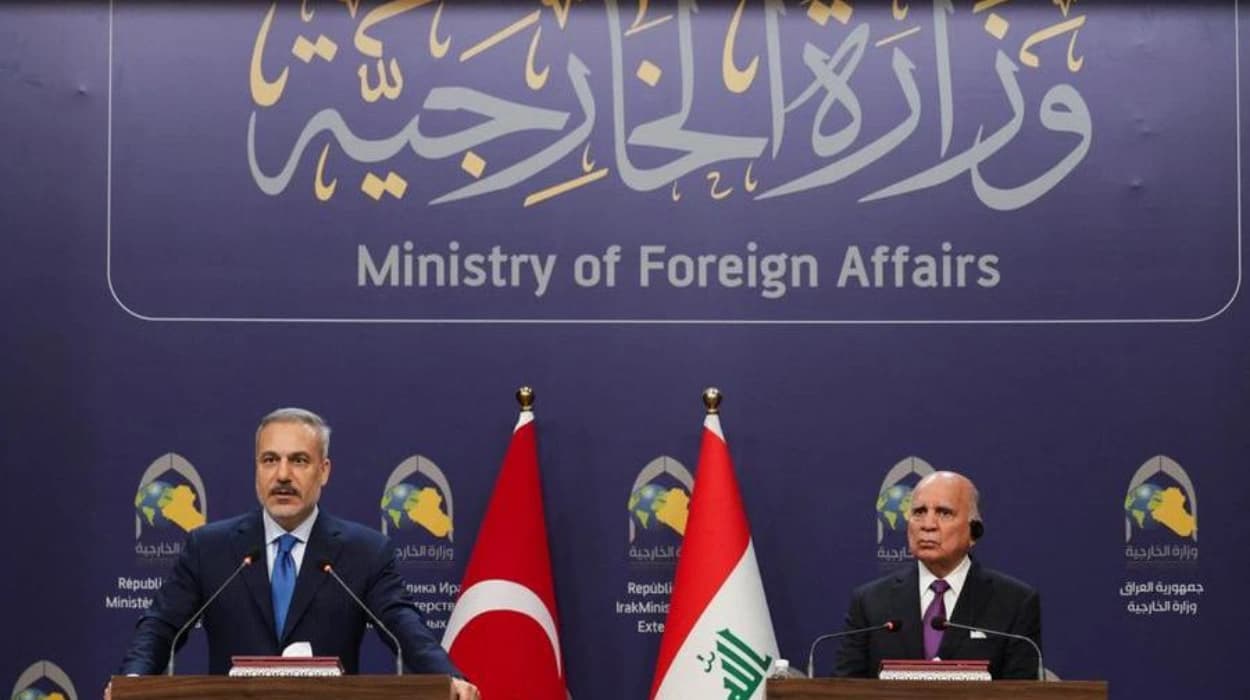
Iraq and Turkey have signed a historic agreement to jointly manage water resources, ensuring Iraq receives its fair share of water from the Tigris and Euphrates rivers. The deal includes large-scale water infrastructure projects financed through Iraqi oil revenues and represents a milestone in bilateral cooperation on water scarcity.
Iraq and Turkey Consolidate Water Cooperation
The Iraqi government and Turkey formalised a significant water management agreement on November 2, 2025, in Baghdad, witnessed by Iraqi Prime Minister Mohammed Shia Al Sudani and signed by Iraqi Foreign Minister Fuad Hussein and Turkish Foreign Minister Hakan Fidan. The agreement represents a landmark effort to collaboratively manage shared water resources of the Tigris and Euphrates rivers which originate in Turkey and flow into Iraq.The agreement comes amid one of the worst droughts Iraq has faced in decades, with water reserves reported at their lowest in 80 years. Prime Minister Al Sudani described the agreement as
“one of the sustainable solutions to the water crisis in Iraq through large joint projects”
aiming at addressing water scarcity and strengthening bilateral relations.
Framework for Cooperation and Joint Projects
The signed deal includes a framework for cooperation with detailed mechanisms to be implemented by a committee formed by Iraq's government to oversee water infrastructure projects. Turkish companies will execute these initiatives funded by revenues from Iraqi oil sold to Turkey.
Initial projects include the construction of three dams focused on water harvesting and three land reclamation projects aimed at rehabilitating Iraq’s water infrastructure and irrigation systems. This is seen as "the largest infrastructure investment in Iraq's history," according to Turkish Foreign Minister Hakan Fidan, who highlighted the deal’s significance in addressing regional climate challenges and water shortages.
Background and Water Crisis Context
Iraq is ranked among the world’s five most climate-vulnerable countries. Summers with temperatures exceeding 50°C and prolonged droughts have severely depleted water supplies flowing through the Tigris and Euphrates—key lifelines for Iraq’s agriculture and population. Approximately 70% of Iraq’s water comes from these rivers, making the country heavily dependent on upstream neighbors, primarily Turkey.
For years, Iraq has raised concerns over Turkish dams restricting water flow, contributing to water scarcity downstream. At the same time, Turkey underscores the importance of dams for its southeastern agricultural regions and insists on cooperation to manage shared water resources fairly.
Political and Diplomatic Significance
The water agreement marks a positive pivot in Turkish-Iraqi relations, which have previously experienced strain due to security and territorial matters, including Turkish military operations in northern Iraq. This pact signals a shift towards enhanced diplomatic and practical cooperation between the two neighbors.
The deal builds on frameworks established during Turkish President Recep Tayyip Erdogan’s visit to Baghdad in April 2024, which laid the groundwork for a decade-long cooperative strategy focusing on water management, agricultural development, and financial mechanisms involving oil revenue. It underscores Iraq's strategic use of its natural resources to fund critical infrastructure projects essential for national water security.
Official Statements and Reactions
As reported by Tan Gumcu of The National News, Iraqi Prime Minister Mohammed Shia Al Sudani emphasised that the agreement is
“a sustainable solution to the water crisis”
and noted that it would strengthen bilateral relations and cooperation across multiple sectors.
Hakan Fidan, Turkish Foreign Minister, highlighted the significance, stating,
“After long years, Türkiye and Iraq are cooperating on water,”
and described the agreement as
“important and historic and the first of its kind.”
Iraqi Foreign Minister Fuad Hussein emphasised the joint responsibility and mutual benefits of the agreement, committing to “efficient management” of water resources to the benefit of both nations.
While the agreement marks a historic step, the ongoing challenge of climate change and water scarcity in the region requires sustained cooperation and adaptation. Both countries have committed to continuing this dialogue and implementing joint projects designed to conserve water and improve agricultural irrigation efficiency, viewed as crucial for the region’s food security and environmental stability.
The financing mechanism anchored in oil revenues enables a practical framework to ensure steady funding for these vital projects, reinforcing the collaboration's long-term viability.
This accord between Iraq and Turkey remains a pivotal moment addressing one of the most pressing environmental and geopolitical issues in the region. Its successful implementation could become a model for managing transboundary water resources amid escalating climate pressures.