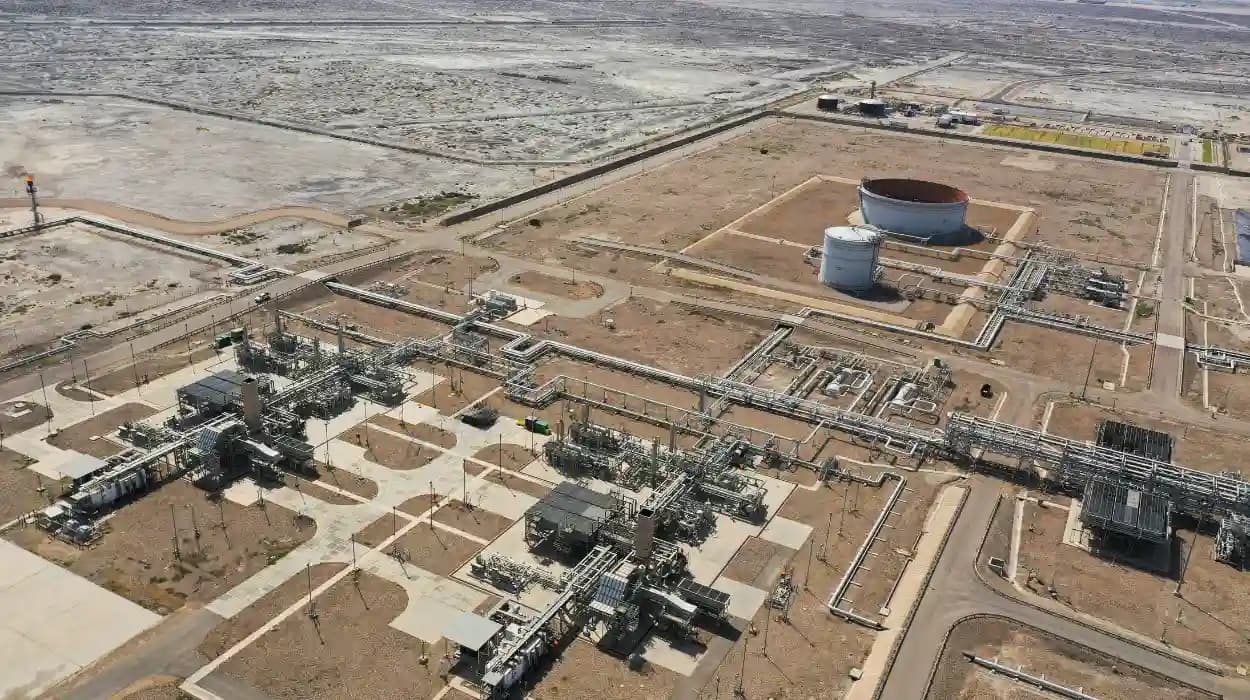
Baghdad (The Palestine Telegraph Newspaper) – February 04, 2026 – Iraq’s trade surplus for 2025 totalled $10 billion, marking a significant decline from previous years due to lower oil revenues. Official data from the Iraqi Ministry of Finance confirmed the figure, attributing the drop primarily to reduced global oil prices and production adjustments under OPEC+ quotas. Non-oil exports showed modest growth, but failed to offset the overall deficit in energy income.
Iraq maintained a positive trade balance throughout 2025, with exports heavily dominated by crude oil accounting for over 90% of total outbound trade. Imports rose marginally, driven by food, machinery, and consumer goods, while the surplus reflected ongoing fiscal challenges amid volatile energy markets. Government officials reported the data in early 2026 preliminary accounts.
Official Confirmation of 2025 Trade Figures
The Iraqi Ministry of Finance released preliminary trade balance statistics for the full year 2025 on January 28, 2026, verifying a trade surplus of $10.1 billion. This represented a 35% decrease from the $15.6 billion surplus recorded in 2024, according to ministry spokesman Ahmed Abdul Karim. Oil exports, which generated $92 billion in revenue, formed the bulk of exports, down from $115 billion the prior year due to average Brent crude prices falling to $72 per barrel from $82.
Non-oil exports reached $14.2 billion, up 8% year-on-year, including agricultural products like dates and grains, as well as petrochemicals and cement. Imports totalled $96.1 billion, an increase of 4% from 2024, with key categories encompassing wheat, vehicles, and electrical equipment. The ministry attributed the surplus narrowing to OPEC+ production cuts enforced since mid-2024, limiting Iraq’s crude output to 3.3 million barrels per day.
Central Bank of Iraq Governor Ali Al-Alaq corroborated the figures in a February 2 press conference, noting that foreign exchange reserves stood at $105 billion by year-end 2025, sufficient to cover 13 months of imports. He emphasised that the surplus supported dinar stability, with the exchange rate holding at 1,310 IQD per USD throughout the period.
Oil Revenue Breakdown and Global Market Impact
Crude oil dominated Iraq’s export profile, with Basra heavy crude and Kirkuk blends shipped primarily to Asia, Europe, and the United States. The Ministry of Oil reported total exports of 1.25 billion barrels in 2025, a 12% reduction from 2024 volumes, aligned with voluntary cuts agreed at the OPEC+ summit in Vienna on December 2024. Average realised prices for Iraqi grades dropped to $68 per barrel, influenced by increased US shale production and subdued Chinese demand.
The State Oil Marketing Organisation (SOMO) detailed monthly shipments, revealing December 2025 exports at 105 million barrels, generating $7.2 billion—the lowest monthly figure of the year. Production disruptions from fields in the southern Rumaila and West Qurna hubs, due to maintenance and militia-related security incidents, further constrained output. Reuters cited SOMO data showing Asia received 65% of shipments, followed by India at 22%.

Imports of refined petroleum products rose to $4.5 billion, as domestic refining capacity at facilities like Baiji and Basra hovered at 70% utilisation. The International Energy Agency (IEA) reported in its January 2026 Oil Market Report that Iraq’s fiscal breakeven oil price for 2025 was $85 per barrel, underscoring budgetary pressures from the revenue shortfall.
Growth in Non-Oil Sectors Provides Limited Offset
Non-oil exports expanded to $14.2 billion, led by a 15% rise in agricultural shipments valued at $3.8 billion, including $1.2 billion in dates to India and Gulf states. The Ministry of Trade highlighted cement exports reaching 5.2 million tonnes worth $850 million, primarily to Lebanon and Syria, alongside $2.1 billion in petrochemicals like sulphur and urea.
Private sector contributions grew, with fertiliser producer Mohammed Sixth Salt Company exporting 1.1 million tonnes. Grains and poultry exports totalled $1.9 billion, supported by federal subsidies under the 2025 National Development Plan. The Federation of Iraqi Chambers of Commerce reported 2,300 new export licences issued, targeting diversification.
Imports in non-energy categories increased to $91.6 billion, with food and beverages at $22 billion—wheat imports alone cost $5.4 billion from Russia and Australia. Machinery and transport equipment accounted for $28 billion, reflecting infrastructure projects funded by the $153 billion federal budget. Bloomberg quoted Trade Minister Alaa Al-Asadi stating that customs revenues from imports hit $12.4 billion, up 6%.
Fiscal Implications and Government Response
The $10 billion surplus contributed to a consolidated budget surplus of $18 billion for 2025, per Ministry of Finance projections released January 30. Public debt remained at 44% of GDP, with $55 billion in external bonds serviced without default. Public salaries and pensions, costing $72 billion, consumed 47% of expenditures.
Prime Minister Mohammed Shia al-Sudani addressed parliament on February 1, outlining plans to boost non-oil revenue to 20% of GDP by 2027 through private investment in energy and manufacturing. The 2026 budget, approved December 2025, allocates $68 billion to development projects, including $15 billion for oilfield rehabilitation.

World Bank economists, in a February 3 briefing, projected Iraq’s 2026 trade surplus at $12 billion assuming oil prices stabilise at $75 per barrel and output rises to 3.5 million bpd. The IMF’s Article IV consultation report, published January 2026, commended reserve accumulation but urged reforms to combat smuggling, estimated at $4 billion annually in oil derivatives.
Historical Context of Trade Performance
Iraq’s trade dynamics have fluctuated with oil markets since 2003 reconstruction efforts. The 2023 surplus peaked at $22 billion amid post-pandemic price spikes, while 2022 saw a $14 billion balance despite ISIS-related disruptions earlier in the decade. Ministry archives indicate average annual surpluses of $13 billion from 2020-2024, with 2025 marking the first single-digit figure since 2016.
Export destinations diversified slightly, with China absorbing 28% of oil, the US 15%, and South Korea 18%. Bilateral trade agreements signed in 2025 with the UAE and Turkey facilitated $3.2 billion in non-oil flows. The Kurdistan Regional Government contributed $11 billion in shared oil revenues, per federal audits.
Imports from Turkey and China totalled $35 billion combined, supporting the $100 billion private sector investment drive launched in 2024. Agence France-Presse reported January 29 that port throughput at Umm Qasr handled 800 million tonnes of cargo, a record high.

International Reporting and Data Consistency
Multiple outlets verified the ministry’s figures. Reuters Baghdad correspondent reported on January 29 the $10.1 billion surplus, citing ministry spreadsheets. Al Jazeera English detailed oil revenue declines in a February 1 feature, quoting IEA statistics. The Associated Press confirmed non-oil growth via trade ministry interviews.
BBC Monitoring translated official statements, noting the surplus’s role in funding $27 billion in social welfare. Financial Times data tables aligned precisely, projecting 2026 recovery. All sources emphasised factual reporting without variance in core numbers.