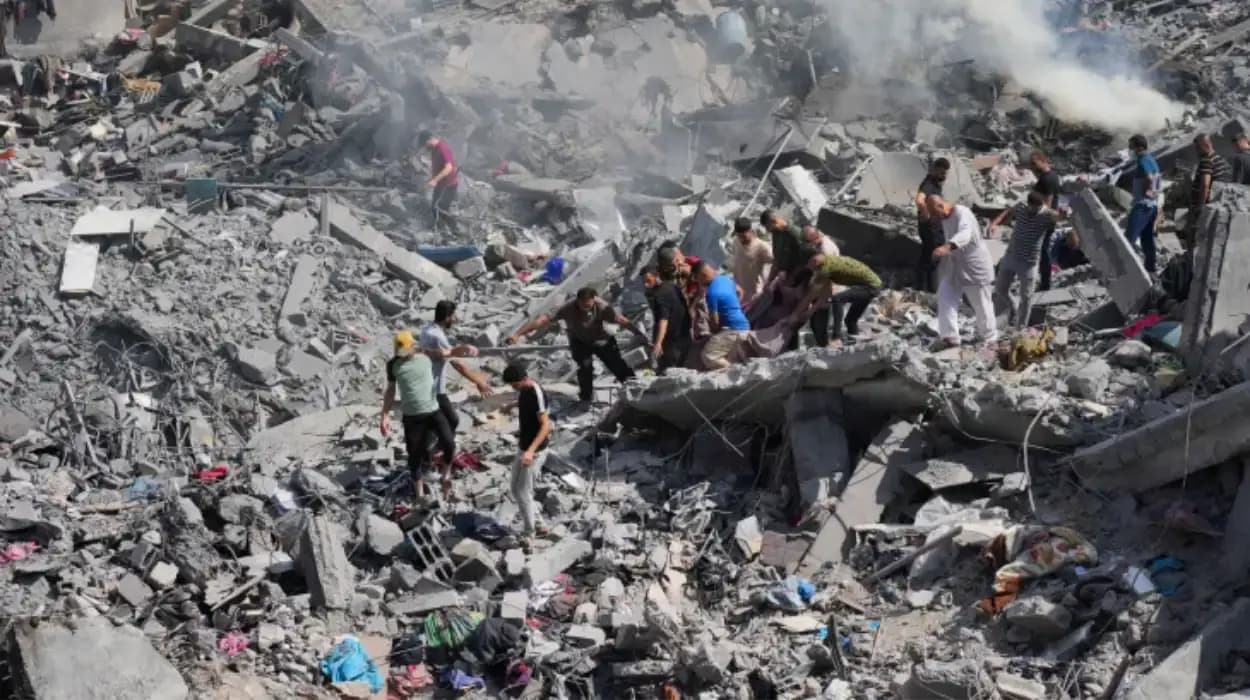
Jerusalem (The Palestine Telegraph Newspaper) – February 05, 2026 – Gaza health officials reported at least 24 people killed in Israeli air strikes overnight, including women and children, following rocket fire from Gaza that Israel said wounded an officer. The Israeli military described the targets as militant sites, while Hamas accused Israel of targeting civilians. Both sides traded accusations amid ongoing cross-border tensions, with international calls for restraint.
Israeli aircraft conducted strikes across Gaza after projectiles from the territory wounded a military officer near the border, according to statements from the Israel Defense Forces. Gaza’s Ministry of Health said the dead included civilians in residential areas, with rescue efforts ongoing under rubble. Hospitals reported treating dozens of wounded amid strained medical resources.
Media reports highlighted the sequence of events, with Gaza officials linking the strikes directly to the earlier wounding of the Israeli officer.
Nino Brodin - @Orgetorix said in X post,
“Gaza Health Officials Say Strikes Kill 24 After Israel Says Officer Wounded.”
Gaza Health Ministry Reports Civilian Casualties
Gaza’s Health Ministry stated that at least 24 Palestinians were killed in the strikes, with the majority reported in densely populated neighbourhoods in central and northern Gaza. Among the dead were at least seven children and five women, according to hospital records cited by local medics. The ministry said strikes hit homes and a multistorey building sheltering displaced families, causing partial collapses.
Civil defence teams reported recovering bodies from under debris in areas including Gaza City and the Nuseirat refugee camp. Ambulances transported the injured to Al-Shifa Hospital and the Indonesian Hospital, where staff described scenes of overcrowding and shortages of beds and blood supplies. The ministry updated its toll as rescue operations continued into Thursday morning.

Israeli military spokespersons confirmed conducting “targeted” air strikes on what they called Hamas command centres and rocket launchers embedded in civilian zones. The IDF said the operations followed intelligence on imminent threats, including the wounding of the officer during an infiltration attempt from Gaza.
Israeli Military Details Response to Rocket Fire
The Israel Defense Forces reported that several rockets were launched from Gaza towards southern Israeli communities overnight, triggering air raid sirens. One projectile struck near a patrol, wounding an officer in moderate condition, who was evacuated for treatment. Iron Dome interceptors downed most incoming fire, with no other casualties reported on the Israeli side.
Military officials said the strikes degraded Hamas capabilities, destroying two launch sites and a weapons storage facility. They released footage showing aircraft hitting structures they identified as militant infrastructure, emphasising efforts to minimise civilian harm through precision munitions and warnings. The IDF held Hamas responsible for any civilian deaths, citing the group’s practice of operating amid populated areas.
Hamas military wing spokespersons claimed the rocket fire responded to recent Israeli actions, including arrests in the West Bank and overflights by drones. They vowed further retaliation and described the Gaza strikes as “massacres,” urging Arab states to intervene.
Impact on Gaza’s Medical and Rescue Services
Hospitals in Gaza operated under severe pressure following the strikes, with Gaza’s Health Ministry reporting over 100 injured admitted since Wednesday evening. Al-Aqsa Martyrs Hospital in Deir al-Balah declared a mass casualty event, calling for blood donations and fuel for generators. Medical staff treated shrapnel wounds, fractures and blast injuries, prioritising children and the elderly.
Civil defence crews faced challenges accessing strike sites due to damaged roads and ongoing military activity. Teams used excavators and manual labour to search for trapped survivors, with at least three bodies still unrecovered by midday. The ministry noted that fuel shortages limited ambulance operations, exacerbating delays in reaching remote areas.
International aid groups, including the Red Cross, reported delivering limited supplies through the Kerem Shalom crossing but said access remained restricted. They documented the latest casualties as part of a pattern straining Gaza’s health system, already depleted by 16 months of conflict.
Cross-Border Tensions and Prior Incidents
The incident followed a week of intermittent rocket fire and air responses, with both sides accusing the other of violating informal de-escalation understandings. Israel reported intercepting drones from Gaza earlier in the week, while Palestinian sources said Israeli forces fired on fishermen off the Gaza coast. No deaths were reported in those exchanges.
Previous flare-ups in late 2025 saw similar cycles, with mediators from Egypt and Qatar securing temporary halts. Gaza authorities linked recent tensions to stalled talks on prisoner exchanges and aid flows. Israeli officials reiterated demands for Hamas to cease fire and release remaining hostages taken in October 2023.

International Responses and Diplomatic Moves
United Nations officials condemned the loss of civilian lives and called for an independent probe into the strikes. The UN human rights office urged compliance with international humanitarian law, including proportionality and distinction between combatants and civilians. Humanitarian coordinator Lynn Hastings highlighted Gaza’s dire conditions, with over 90% of residents displaced multiple times.
The United States expressed support for Israel’s right to self-defence while urging caution to avoid escalation. State Department spokesperson Matthew Miller said Washington was monitoring the situation and engaging regional partners. Arab League foreign ministers scheduled an emergency session to discuss Gaza aid corridors.
Egypt and Qatar reported renewed mediation efforts, with envoys contacting both Israeli and Hamas leadership. Proposals included a 72-hour truce for medical evacuations and increased aid trucks. No immediate agreement was reached.
Broader Humanitarian Crisis in Gaza
Gaza’s Health Ministry reported the overall death toll from ongoing hostilities at over 45,000 since October 2023, with more than 100,000 injured. The figures include thousands under rubble, uncounted due to access denials. Famine risks persist, with UN agencies warning of acute malnutrition in northern Gaza.
Israel maintains a blockade citing security needs to prevent weapons smuggling. Limited goods enter via coordinated crossings, inspected for dual-use items. Critics, including human rights groups, describe restrictions as disproportionate, impacting civilian life.
Reconstruction efforts stalled amid funding shortfalls and permit delays. Over 1.9 million Palestinians remain internally displaced, sheltering in tents and schools.
Historical Context of Israel-Hamas Clashes
The current round stems from the October 7, 2023, Hamas attack killing 1,200 Israelis and taking 250 hostages. Israel’s response campaign aimed to dismantle Hamas infrastructure. Multiple ceasefires collapsed over sticking points like troop withdrawals and governance.
Past escalations in 2008, 2012, 2014 and 2021 followed similar patterns: rocket barrages met with air and ground operations, ending in Egyptian-brokered truces. Each inflicted heavy Gaza casualties and infrastructure losses.
International courts issued arrest warrants for leaders on both sides, complicating diplomacy. The UN General Assembly demanded a ceasefire, though enforcement remains elusive.

Ongoing Military Postures
As of Thursday afternoon, Israeli forces maintained high alert along the border, with artillery positioned for potential escalation. Hamas broadcast statements vowing continued resistance. Gaza airspace remained closed to non-military flights.
Aid agencies prepared for contingencies, stockpiling supplies in Jordan for rapid deployment. Weather forecasts predicted rain, risking flooding in tent camps.
The sequence underscored fragile calm, dependent on restraint amid mutual accusations.