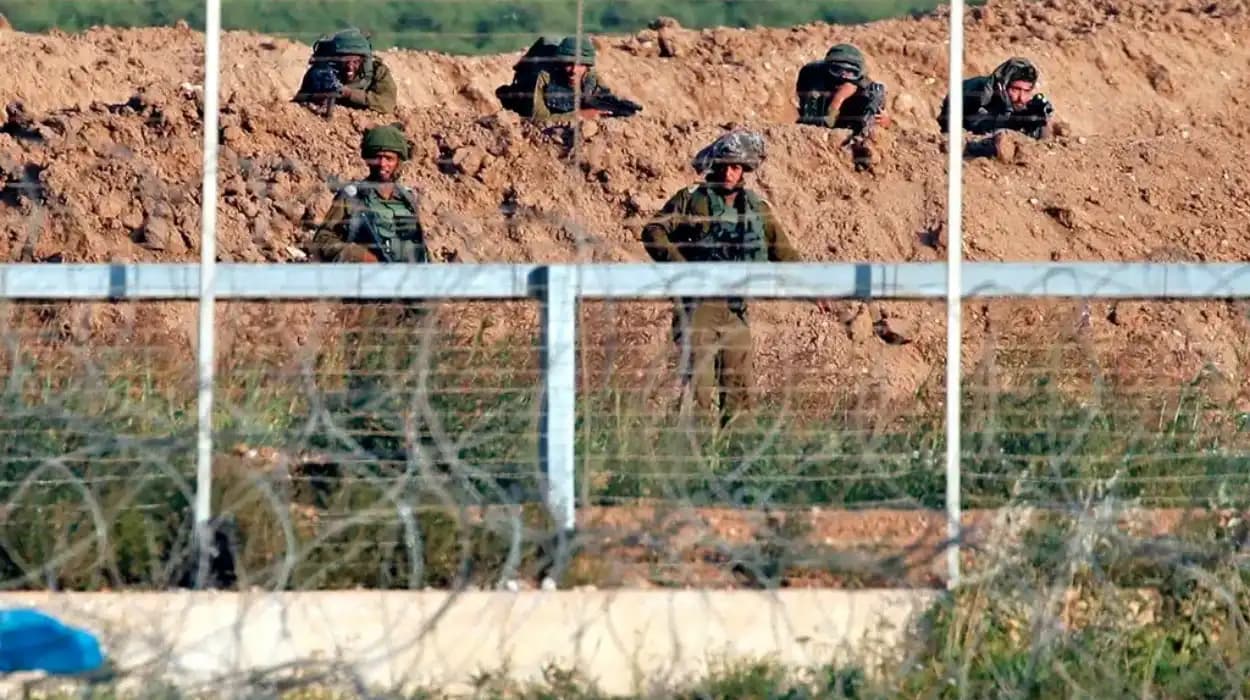
Jerusalem (The Palestine Telegraph Newspaper) February 6, 2026 – A group of Israeli activists breached the Gaza boundary fence during a march calling for the re-establishment of Jewish settlements in the territory. The incident occurred near the former Netzarim Corridor, with participants advancing several hundred metres into the buffer zone before Israeli forces intervened. No casualties were reported, though Palestinian authorities condemned the action as a provocative violation of the 2005 disengagement agreement.
Israeli security forces detained approximately 25 individuals following the breach, which took place on Thursday afternoon amid ongoing truce negotiations. Organisers from the Nachala settler movement described the march as a symbolic act to pressure the government of Prime Minister Benjamin Netanyahu to authorise resettlement. Military spokespersons confirmed the group cut through the perimeter fencing using wire cutters before being repelled by border troops.
Breach Occurs Near Strategic Netzarim Corridor Location
The march began at the Erez Crossing area, where participants carried banners reading "Gaza Is Ours Forever" and Israeli flags. Eyewitness accounts from Israeli media outlets reported the group chanting slogans advocating for immediate settlement construction. IDF units deployed non-lethal measures, including tear gas, to turn back the activists without escalation.
Palestinian officials in Gaza, via Hamas-run media, stated the incursion endangered fragile ceasefire terms mediated by Egypt and Qatar. Gaza border guards monitored the event from elevated positions but did not engage directly. The Israeli military later reinforced the fence with additional patrols and engineering teams.

Event footage broadcast by Channel 13 News showed activists linking arms and advancing under a blue-and-white banner before dispersal. No gunfire exchanges occurred, distinguishing the incident from prior escalations along the border.
Nachala Movement Leads Call for Gaza Resettlement
Nachala, founded in 2022, has organised multiple marches asserting Jewish rights to Gaza territory based on biblical claims and security needs. Movement head Meir Lichtenstein told Army Radio the breach demonstrated public willingness to reclaim land evacuated in 2005. "Our presence there is non-negotiable," Lichtenstein stated during a live interview.
The group coordinated with like-minded organisations, including Regavim and the Land of Israel Faithful, drawing hundreds to the starting rally. Participants included former Gaza settlers displaced 21 years ago, who recounted personal stories of abandonment to reporters. Police estimated turnout at 400 before the border push.
Supporting details from Haaretz indicate Nachala submitted formal requests to the Defence Ministry for settlement approval, rejected on security grounds. The movement referenced recent military operations in Gaza as justification for reoccupation.
Government and Military Response Contains Incident
Prime Minister Netanyahu's office issued a statement describing the breach as unauthorised and contrary to policy. Defence Minister Israel Katz ordered an investigation into security lapses allowing the fence penetration. IDF Chief Eyal Zamir visited the site, confirming no territorial gains by the activists.
Knesset Foreign Affairs Committee chair Sharren Haskel defended the marchers' motivations while criticising execution.
"The sentiment reflects majority views post-October 7,"
Haskel remarked to Ynet, citing polls showing 60 per cent Israeli support for settlement consideration.
Opposition leader Yair Lapid condemned the action as reckless, potentially derailing hostage talks. Shin Bet assessed risks of retaliatory rocket fire but reported none materialised.
Historical Context of Gaza Disengagement Fuels Demands
Israel unilaterally withdrew settlers and troops from Gaza in August 2005 under Ariel Sharon's plan, dismantling 21 communities housing 9,000 residents. Nachala activists frequently invoke this event, arguing reoccupation would neutralise Hamas threats. Archived IDF records detail the operation's logistics, including 48,000 soldiers deployed.
Post-disengagement, Gaza borders have seen repeated clashes, with breaches by Palestinians more common. Times of Israel archives note similar settler marches in 2024 near Khan Younis, dispersed peacefully. The Netzarim Corridor, bisecting Gaza, served as a buffer until 2005.
Current demands align with coalition agreements including far-right parties like Otzma Yehudit, which mandate settlement planning. Jerusalem Post reports document ministerial discussions, though no approvals issued.

Palestinian Reactions Highlight Ceasefire Concerns
Hamas spokesperson Sami Abu Zuhri called the breach a "dangerous precedent" in official statements to Al Jazeera. Gaza Civil Defence reported no damage but heightened alert status. PA President Mahmoud Abbas urged international condemnation via Ramallah media.
Egyptian mediators, facilitating indirect talks, expressed alarm over destabilisation. UN Gaza coordinator Sigrid Kaag monitored developments, reiterating buffer zone integrity in briefings.
Al-Monitor cited Palestinian sources tracking 12 similar minor incursions since November 2025 ceasefire, all repelled without injury.
International Observers Monitor Border Tensions
US Ambassador Mike Huckabee noted the incident in talks with counterparts, per Axios leaks. EU foreign policy chief Kaja Kallas called for restraint from Brussels. Qatar's Prime Minister Mohammed bin Abdulrahman Al Thani emphasised de-escalation in Doha statements.
Amnesty International documented the event alongside broader settlement critiques. Reporters Without Borders verified footage authenticity amid disinformation claims.
Security Implications and Reinforcement Measures
IDF engineering corps repaired the breach within hours, installing anti-cut mesh. Drone surveillance intensified over northern Gaza. Military analysts on Kan 11 noted vulnerabilities exposed but contained effectively.
Nachala vowed continued actions, scheduling rallies in Tel Aviv. Police prepared for larger gatherings, citing past violence precedents.
Government sources indicated potential legal charges against leaders for trespass and incitement. Detainees underwent questioning at Beersheba facility.

Broader Political Ramifications in Coalition Dynamics
Far-right ministers Itamar Ben-Gvir and Bezalel Smotrich praised the march privately, per Israel Hayom. Netanyahu balanced responses to maintain coalition stability amid judicial probes. Polling institute data showed 52 per cent public approval for Gaza settlement exploration.
Knesset debates scheduled for Sunday will address border policy. Settlement minister Orit Strook promised legislative pushes.