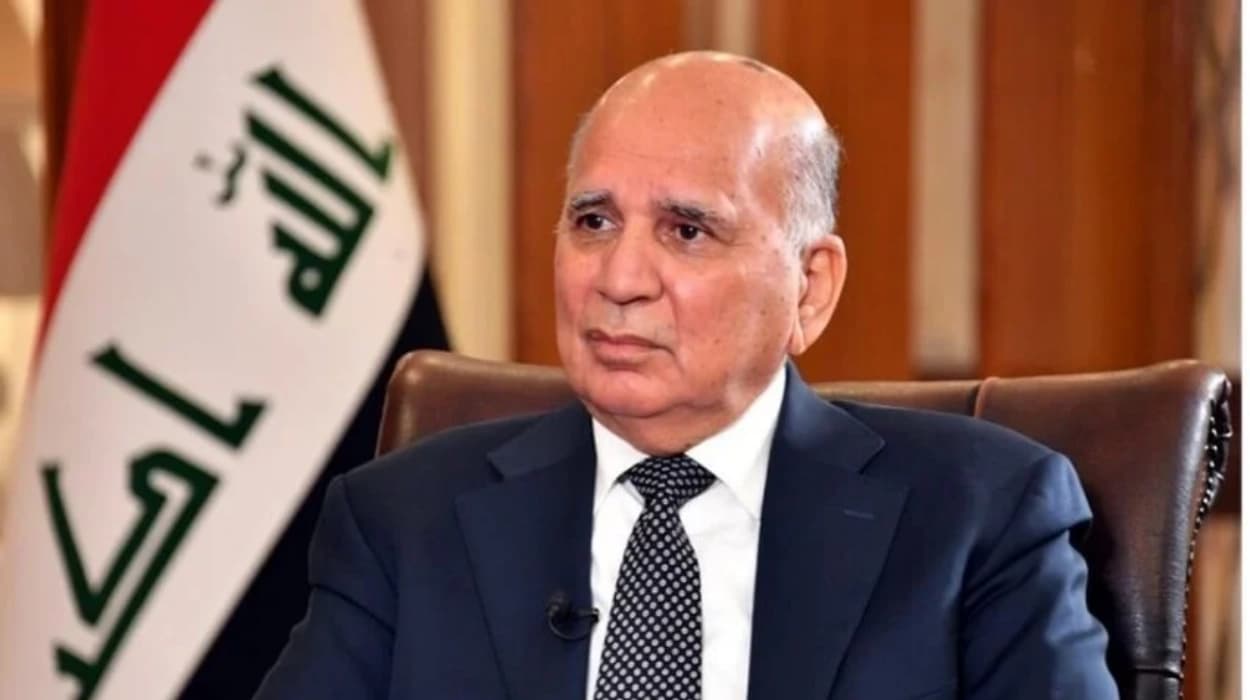
Baghdad (The Palestine Telegraph Newspaper) February 05, 2026 – The Kurdistan Democratic Party (KDP) and Patriotic Union of Kurdistan (PUK) have reached an agreement to nominate Fuad Hussein as their joint candidate for Iraq’s presidency, following high-level talks in Erbil. The deal ends months of rivalry between the two main Kurdish parties over the post, reserved for Kurds under Iraq’s power-sharing system. Kurdish leaders mediated by Kurdistan Region President Nechirvan Barzani confirmed the breakthrough. The unified stance aims to facilitate a parliamentary vote and broader federal government formation.
The agreement on Fuad Hussein, Iraq’s current foreign minister and a prominent KDP figure, resolves a key political deadlock that had delayed the presidential election. Parliamentary sessions for the vote were postponed multiple times as the KDP and PUK pursued internal consensus. With 15 candidates officially approved, the race had narrowed to prominent Kurdish nominees, but the joint endorsement strengthens Hussein’s position ahead of the required two-thirds or simple majority vote in the Council of Representatives.
Media outlets reported details of the pivotal meeting that sealed the deal.
Zoom News - @zoomnewskrd said in X post,
“#EXCLUSIVE: Zoom News has learned that the KDP and PUK have reached an initial agreement to endorse KDP candidate and current Iraqi Foreign Minister Fuad Hussein as their joint candidate for the Iraqi presidency. The breakthrough follows a high-level meeting in Erbil today between KDP President Masoud Barzani and PUK President Bafel Talabani, mediated by Kurdistan Region President Nechirvan Barzani.”
Background on Kurdish Negotiations for Presidency
Negotiations between the KDP and PUK intensified after Iraq’s parliamentary elections, with both parties initially nominating separate candidates. The KDP backed Fuad Hussein, while the PUK fielded Nizar Amedi and incumbent President Abdul Latif Rashid sought re-election. Disputes centred on power distribution, with the KDP proposing to cede federal ministerial posts—including deputy prime minister, foreign minister, construction minister and deputy parliament speaker—to the PUK in exchange for the presidency.
KDP officials emphasised their larger parliamentary representation—31 seats compared to the PUK’s 18—as justification for leading the nomination. Talks involved direct meetings between Hussein and PUK deputy Qubad Talabani, alongside interventions by regional mediators. The Coordination Framework, Iraq’s Shia alliance, urged compromise to meet constitutional deadlines, dispatching delegations to Erbil and Sulaymaniyah.
Parliament approved 15 nominees by early February, down from over 40 initial applicants, in line with Law No. 8 of 2012. The Speaker’s Office postponed sessions at the PUK’s request to allow Kurdish consensus, with the constitutional 30-day window from parliament’s first sitting expiring soon after.
Fuad Hussein’s Profile and Prior Roles
Fuad Hussein brings extensive federal experience to the candidacy. As foreign minister, he handled Iraq’s diplomacy amid regional tensions, including US-Iran frictions and Syria repatriations for ISIS detainees. Previously, as finance minister, he negotiated budgets, international loans and oil revenue shares critical to Kurdistan-federal relations.
Hussein’s nomination aligns with the KDP’s electoral strength, garnering over 1.13 million votes. In interviews, he framed the presidency as a Kurdish entitlement under power-sharing norms, deferring final selection to parliament. His readiness to trade portfolios signals pragmatism aimed at unifying Kurdish representation in Baghdad.
The presidency remains ceremonial but pivotal: it tasks the prime minister-designate with government formation, signs laws and represents Iraq externally. Past presidents mediated deadlocks, underscoring the post’s stabilising role.
Iraq’s Power-Sharing Framework and Election Process
Iraq’s unwritten muhasasa system allocates the presidency to Kurds, premiership to Shia Arabs and parliament speakership to Sunnis, observed since 2003. The constitution mandates parliament elect the president post-elections via secret ballot. A two-thirds majority wins outright; otherwise, top two candidates proceed to a simple majority runoff.
Kurdish unity bolsters prospects against rivals, requiring Shia and Sunni bloc support. Previous cycles saw splits prolong deadlocks, delaying cabinets. The KDP-PUK deal links to wider talks on portfolios, budgets and disputed territories like Kirkuk.

Impact on Federal Government Formation
The presidential accord accelerates coalition-building among 329 parliament members. Shia Coordination Framework nominated Nouri al-Maliki for prime minister, despite US reservations voiced by President Trump and senators. Framework envoys met Masoud Barzani to synchronise leadership posts.
Sunni blocs seek speakership reaffirmation, while minorities demand reserved seats. Kurds tie support to federal budget implementation, oil export resumption and Article 140 execution on disputed areas—normalisation, census and referendum.
Constitutional Timeline and Recent Delays
Parliament’s inaugural session convened December 29, 2025, triggering the 30-day presidential deadline. Votes scheduled for late January were deferred as Kurdish rivals consulted. KDP MP Shirwan Dubardani confirmed Hussein’s nomination, while PUK statements stressed ongoing dialogues.
By February 4, parliament listed nominees including Hussein and Amedi. Analysts noted three frontrunners: Hussein, Amedi and Rashid. Failure to unify risked open competition, potentially fragmenting Kurdish votes.

Broader Kurdish-Federal Tensions Addressed
Agreement dovetails with stalled issues: Kurdistan’s 2023-2025 budget suspension over payroll disputes; oil sales halted since March 2023 pending Baghdad deals; Peshmerga salary arrears. Hussein’s prior finance role navigated these, securing interim transfers.
Security coordination persists against ISIS remnants, with Peshmerga-federal forces integrated in Nineveh and Diyala. Joint centres, backed internationally, counter threats amid Syria shifts.
Regional and International Reactions
Neighbours monitor Iraq’s stability for energy and security spillover. US transfers of Syrian ISIS detainees to Iraq, funded internationally, coincide with talks. Trump administration friction over Maliki underscores external stakes.
Kurdish parties maintain ties with Baghdad missions and multilaterals. Hussein’s familiarity from diplomacy eases continuity.

Next Steps in Parliamentary Proceedings
Parliament must schedule the vote promptly. Blocs finalise coalitions, eyeing cabinet balance. Kurds present Hussein formally, canvassing cross-community backing.
Failure risks renewed delays, though unity improves odds. Outcome shapes Iraq’s 2026 governance amid economic recovery forecasts and security challenges.