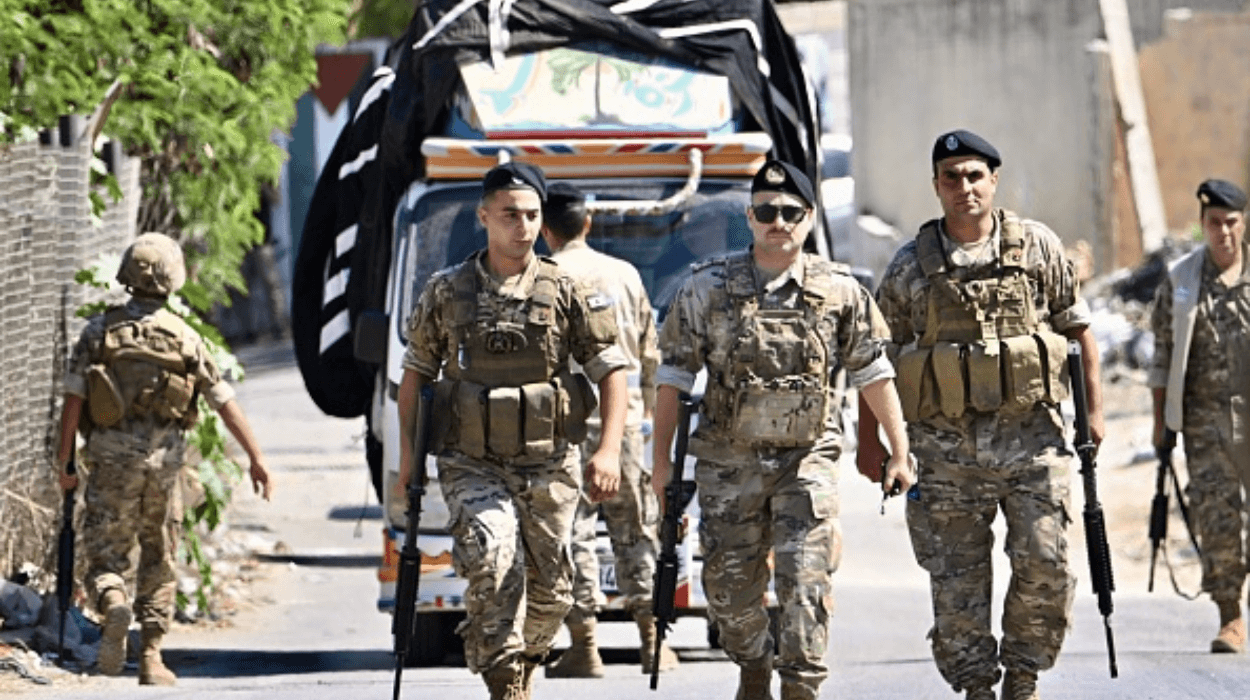
Lebanon (The Palestine Telegraph Newspaper) February 4, 2026 – Lebanon's army chief, General Rodolphe Haykal, arrived in Washington for meetings with US officials as the second phase of Hezbollah disarmament approaches. The visit focuses on securing American support for Lebanese Armed Forces efforts to extend weapons collection north of the Litani River under the 2024 ceasefire terms. Phase one in southern Lebanon concluded successfully, setting the stage for expanded operations amid heightened regional scrutiny.
General Rodolphe Haykal, commander of the Lebanese Armed Forces, began a three-day visit to Washington on February 3, 2026. The trip follows completion of the ceasefire's initial phase south of the Litani River. US officials emphasise the army's role in disarming Hezbollah to enforce UN Security Council Resolution 1701.
Al-Monitor highlighted the timing of the visit in a recent update. AL-Monitor (@AlMonitor) said in X post,
"NEW: Lebanon’s army chief in Washington as Hezbollah disarmament enters critical phase Gen. Rodolphe Haykal is seeking US support for what is likely to be a cautious approach to expanding the geographic scope of the LAF's efforts to disarm Hezbollah."
Ceasefire Background and Phase One Achievements
The ceasefire took effect on November 27, 2024, ending 14 months of hostilities between Israel and Hezbollah. Brokered by the US and France, it mandates Hezbollah withdrawal north of the Litani River and Lebanese army deployment south of it. Phase one required clearing non-state weapons from areas near the Blue Line border by late 2025.

Lebanese forces deployed 5,000 troops and 15,000 reservists to 15 positions in southern Lebanon by January 26, 2026. UNIFIL verified Hezbollah's surrender of 2,000 rifles, 50 launchers, and evacuation of 80 positions. Israel partially withdrew from nine villages while retaining strategic oversight.
Caretaker Prime Minister Najib Mikati's cabinet approved phase one completion on January 31, 2026. Information Minister Paul Morcos stated the government would review plans for areas north of the Litani in February. The Higher Defence Council allocated $200 million for army expansion.
General Haykal's Washington Agenda
Haykal's delegation includes southern command officers. Scheduled meetings involve Secretary of State Antony Blinken, National Security Advisor Jake Sullivan, and Pentagon officials. Discussions cover non-lethal aid, intelligence sharing, and training to support disarmament logistics.
A US embassy statement in Beirut outlined priorities including armoured vehicles for patrols and border security equipment. The US has provided $3 billion in assistance since 2006, comprising tanks and helicopters. Pentagon spokesperson Major General Pat Ryder confirmed new aid packages under consideration.
Journalist Jared Szuba noted the visit's focus in a post referencing Al-Monitor reporting. Jared Szuba (@JM_Szuba) said in X post,
“ICYMI @AlMonitor – Lebanon's army chief Gen. Rodolphe Haykal is in Washington today seeking support for LAF plans for the risky second phase of the 2024 ceasefire with Israel. US wants LAF to begin disarming Hezbollah north of the Litani River More”
Haykal met US Ambassador Lisa Johnson in Beirut on February 2 before departure. He addressed preparations with President Joseph Aoun, reviewing southern security gains. Haykal is set to speak at the Washington Institute for Near East Policy on February 5.
Phase Two Disarmament Requirements
Phase two targets medium-range rockets, anti-tank missiles, and precision munitions north of the Litani. The army established five collection centres in Nabatieh, Tyre, and Sidon by February 1. UN Resolution 1701 committee, led by France, will oversee via inspections and satellite monitoring.
Hezbollah Secretary-General Naim Qassem described the process as a strategic pause in December 2024. The group handed over initial caches in phase one per UNIFIL records. Parliamentarian Hassan Fadlallah affirmed compliance aligns with sovereignty on Al-Manar television.
Lebanese Foreign Minister Abdallah Bou Habib announced phase two start for mid-February on January 27. The plan defers full northern disarmament discussion to February cabinet review, prompting US concerns over pace.
Lebanese Army Deployments and Operations
Southern Lebanon features 104 villages within five kilometres of the Blue Line. Troops man checkpoints at Maroun al-Ras, Aitaroun, and Kfarkela. UNIFIL commander General Aroldo Lázaro reported 95% deployment compliance as of February 3.
Joint patrols with UNIFIL numbered 50 since January 26, yielding 300 confiscated weapons. US-funded cameras monitor Syria border crossings. Interior Minister Bassel Boustany recruited 5,000 volunteers from Christian and Druze communities.

Incidents stayed minimal: a January 15 clash in Majdal Selm killed two during a handoff. Army spokesperson Brigadier General Haitham Jaber issues daily briefings. Israel occupies five positions and conducts strikes on alleged Hezbollah sites despite the ceasefire.
International Support and Regional Dynamics
France announced a March 5 army support conference after envoys from Saudi Arabia, US, Qatar, and Egypt met President Aoun. Qatar pledged $500 million for reconstruction tied to progress. Saudi Arabia and UAE backed via Arab League in January.
US President Donald Trump called the ceasefire a stability step in a January 29 Fox News interview. Israeli Prime Minister Benjamin Netanyahu affirmed enforcement readiness to the Knesset on February 2. UN Secretary-General António Guterres welcomed advances on February 2.
President Aoun urged national unity in an address. Parliamentary Speaker Nabih Berri endorsed phase two after meeting Haykal on February 1. Syria's adjacent Hay'at Tahrir al-Sham controls complicate smuggling.
Economic and Security Context
Lebanon's 2025 GDP shrank 6.6% per World Bank January data. Disarmament unlocks $10 billion Gulf pledges. US views the army as key to preventing Hezbollah rearmament, with $150 million recent border aid.
International monitors from US, France, and Italy supervise 20 northern bunkers. Phase two completion by March enables full Israeli exit. Haykal hails army efforts as a rebuilding step in recent statements.