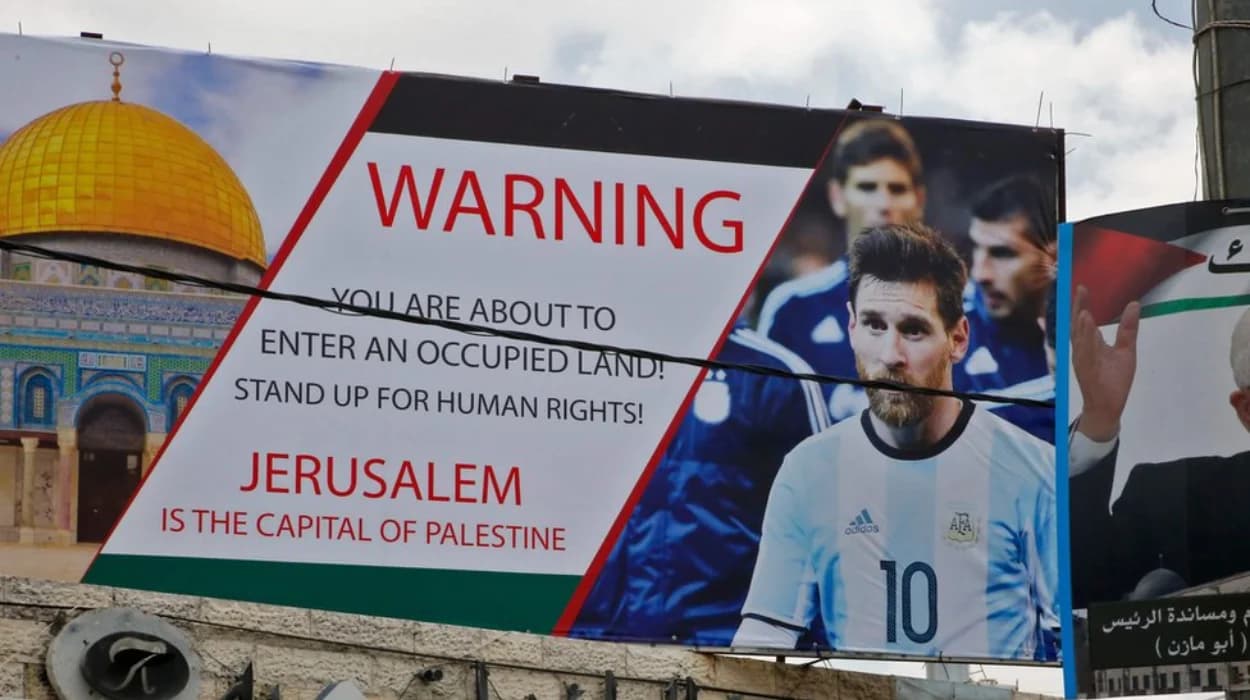
Talking about Lionel Messi’s support for Israel requires navigating a complex intersection of sports, politics, and public sentiment across multiple regions. Messi, one of the most celebrated footballers globally, embodies not only athletic excellence but also cultural symbolism that resonates widely, including deeply among Palestinians and across the Arab world.
Lionel Messi: A Global Football Icon and Symbol
Lionel Messi’s stature transcends football. Revered worldwide for his skill and sportsmanship, he has become an emblem of inspiration for millions, especially in Latin America, but also in regions such as the Middle East, where football passion runs deep. His successes with Barcelona and Argentina have endeared him to many Palestinians, who see in him a symbol of talent amid hardship.
Palestinian youth, football fans, and players alike follow Messi’s career with enthusiasm. His Barcelona jersey is commonly worn across Palestinian territories, symbolizing aspiration and a connection to the global sports community. For many Palestinians, supporting Argentina in international tournaments means supporting Messi.
However, Messi’s global appeal also places him at the center of complex political dynamics, especially when football intersects with issues of sovereignty, occupation, and identity in Israel and Palestine.
The 2018 Argentina-Israel Match Controversy
In 2018, tensions arose when Argentina scheduled a warm-up friendly match against Israel in Jerusalem ahead of the FIFA World Cup. This decision sparked outrage in Palestinian communities and beyond, prompting heated debate about the role of sports in political conflicts.
The match was initially slated for Haifa but was later moved to Teddy Kollek Stadium in Jerusalem’s Malha neighborhood a locale that was once an Arab village before the 1948 Arab-Israeli conflict. This relocation carried symbolic weight, coinciding with Israel’s 70th anniversary celebrations and following the U.S. recognition of Jerusalem as Israel’s capital, a move opposed by Palestinians and much of the international community.
Palestinians viewed the match as politicized, an attempt by Israel to legitimize its claims over Jerusalem and whitewash contentious policies marked by violence and occupation.
Palestinian Appeals and the Role of Messi
Young Palestinian player Mohammad Khalil, who was severely injured during Gaza protests, publicly appealed to Messi not to participate in the Jerusalem match. His plea resonated with many Palestinians who perceived Messi’s involvement as tacit support for Israel’s controversial policies, especially given the timing and location of the match.
The Palestine Football Association formally urged Argentina to cancel the match, warning that it would be used as a political tool. Jibril Rajoub, its president, criticized the decision, emphasizing the potential loss of support among Messi’s millions of Arab and Muslim fans, stating that Messi could face a boycott and calls for his image and jersey to be rejected if he played.
Movements like Boycott, Divestment, and Sanctions (BDS) condemned the match, asserting that it was part of Israel’s strategy to mask human rights violations amid a surge in violence in Gaza. These groups urged international athletes to refrain from participating in events that might legitimize Israel’s actions perceived as oppressive.
The Impact of the Match and Messi’s Position
The match went ahead, and while Messi himself did not explicitly comment on the surrounding political debates, his participation was seen as a focus of controversy. Neither a clear endorsement nor rejection of Israel’s policies, Messi’s silence spotlighted the dilemma athletes often face balancing professional commitments with complex geopolitical realities.
For many Palestinians, Messi’s involvement created a sense of betrayal. Their affection for him clashed with a perception that playing in Jerusalem implicitly undermined Palestinian claims and struggles. The incident highlighted how sports figures can unwittingly become symbols in conflicts they might prefer to avoid.
The Broader Context: Football’s Role in Israeli-Palestinian Relations
Football in Israel and Palestine is often much more than just sport it is a reflection of wider social and political realities.
Israeli clubs play in settlements in occupied territories deemed illegal under international law, drawing criticism from groups like FIFA and human rights organizations. Palestinian clubs and players face restrictions related to movement and access due to the occupation, impacting their ability to compete fully.
International matches and the presence of global football stars on such politically charged grounds inevitably invoke debates about normalization and the role of sports in conflict.
Global Responses and Ethical Considerations
The Argentina-Israel match in Jerusalem became a focal point for global reactions. The Arab League urged Argentina to cancel the game, citing Israel’s use of sport for political messaging and the harm caused to Palestinian rights.
Many athletes globally have faced calls to take principled stands on issues such as apartheid, occupation, and human rights. Whether to engage in boycotts or withdrawals is complex and personal, reflecting broader ethical questions about the role of sport in activism.
While Messi has been a vocal advocate for humanitarian causes in other contexts, his public neutrality on this issue illustrates the difficult balance between maintaining a global career and navigating contentious political landscapes.
Messi’s Support for Social Causes
Although Messi tends to avoid political controversies, he has supported various humanitarian efforts. He established the Leo Messi Foundation, focusing on health care, education, and children’s welfare. His outreach transcends national and religious divides, emphasizing universal values.
This humanitarian lens, while distanced from direct political engagement, fuels debates about whether global sports icons should adopt stances on geopolitical conflicts that impact their fan base or limit their participation in specific venues.
The Lasting Legacy of Messi’s Relationship with the Region
Messi remains deeply admired throughout the Arab world and Palestine. His career continues to inspire young players and fans despite political tensions that occasionally pit his image against profound international disputes.
His relationship with Israel is emblematic of the broader challenge for sport to remain a force for unity in a polarized world. The 2018 match controversy remains a cautionary tale about how athletes’ choices can be interpreted far beyond the pitch.
Does Messi support Israel? The question defies a simple answer. While Lionel Messi has never publicly endorsed Israeli policies or aligned himself explicitly with the state, his participation in high-profile matches on Israeli soil, including the contentious 2018 Jerusalem game, has made him a focal point of political debate.
For Palestinians and many in the Middle East, Messi’s presence in Israel is fraught with symbolic significance amidst decades-long conflict. Conversely, Messi’s global stature as a sportsman often seeks to transcend political divides, embodying unity through football.
His case illustrates the broader intersections between international sports, politics, and identity, demonstrating that the world’s greatest athletes often bear a weight of expectations beyond their athletic roles.