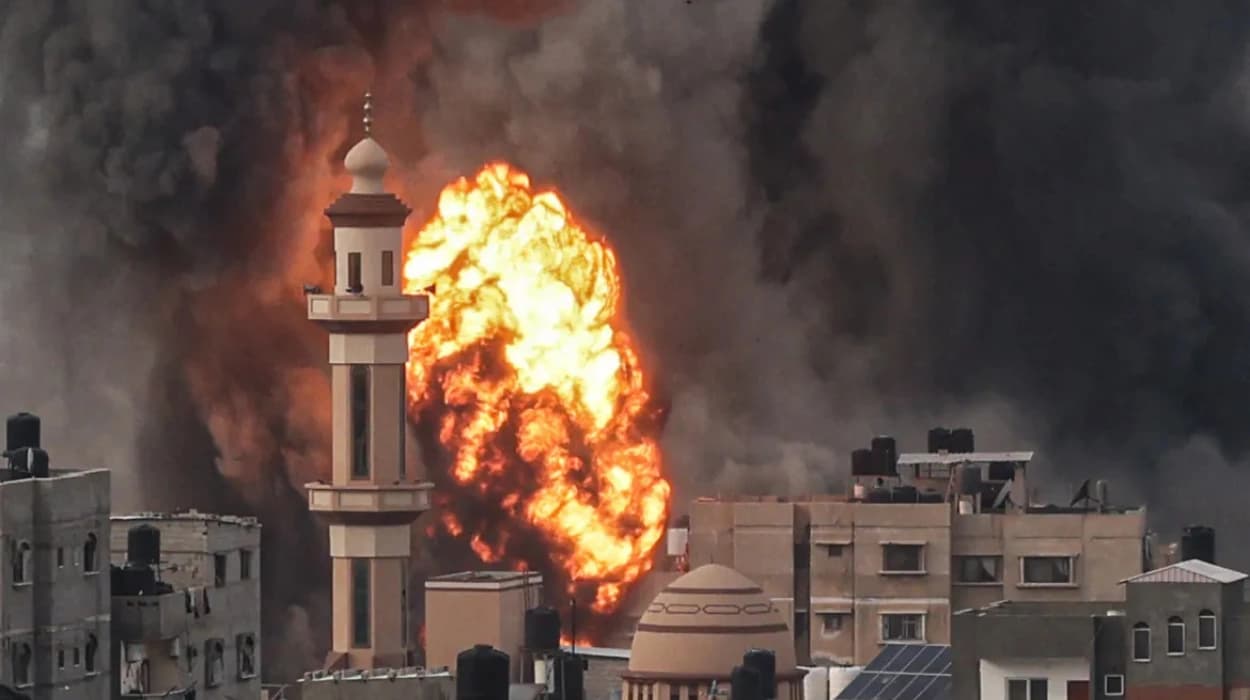
At least 22 Palestinians were killed in overnight Israeli airstrikes in Gaza’s Rafah, Khan Younis, and Deir al-Balah, as reported by local health officials. The strikes come amid ongoing displacement, mounting civilian casualties, and severe humanitarian concerns, with both Israeli and Palestinian sources affirming continued violence and crisis across the Strip.
Inverted Pyramid: All Key Updates at the Top
Israeli airstrikes killed at least 22 Palestinians overnight in the Gaza Strip, targeting densely populated areas including Rafah, KhanYounis, and Deir al-Balah, according to statements from Gaza’s health officials reported by international and regional media. The attacks add to a sharply rising civilian toll amid Israel’s ongoing campaign, as air and ground operations persist throughout the territory, compounding humanitarian suffering and displacement for the enclave’s largely besieged population.
What Happened in Gaza Overnight?
“Children and Women Among the Dead,” Reports Save the Children and Local Health Authorities
As reported by Save the Children and cited by Al Jazeera’s live coverage, overnight Israeli airstrikes struck areas across Gaza, “wiping out entire families,” with many casualties identified as children and women. Medical sources told WAFA News Agency that emergency services struggled to reach casualties due to ongoing shelling and the targeting of rescue crews, leaving many trapped under rubble or stranded in unsafe areas.
Hospital officials in Deir al-Balah stated to The Associated Press that,
“At least 14 Palestinians were killed in Israeli airstrikes, including women and children, while eight more died when seeking food aid at a designated distribution point.”
This aligns with reports from the Gaza Health Ministry, which continues to record high daily death tolls.
How Widespread Is Civilian Displacement?
“We Want to Live. We Are Tired,” Says Displaced Resident
As relayed by Hanadi Dahoud to the Associated Press,
“We are dying. There is no food, no drink, no electricity, no medicine. We want to live. We just want to live. We are tired”.
Mass displacement follows renewed Israeli military evacuation orders for Rafah and surrounding areas, with families fleeing on foot or with makeshift transport to the coastal area of Muwasi, as also described by AP reporters on the ground. The United Nations warns that these “continuous forced movements” have created widespread panic and uncertainty, as articulated by Philippe Lazzarini, UNRWA’s chief:
“People are treated like pinballs with constant military orders playing with their fate and lives”.
How High Is the Casualty Count in Gaza Now?
“Civilian Deaths Continue to Mount”—Reuters, LA Times, and BBC
Palestinian health officials report more than 60,000 Palestinians killed since October 2023, as covered by Stephen Farrell of Reuters, with over a third of victims being children and women.
“The majority of victims are women and children,”
confirms a summary from WAFA’s Y.S, while LA Times staff corroborate the immense toll, noting that
“the death toll has climbed to 60,034, with 145,870 wounded. These include 18,592 children and 9,782 women”.
The BBC notes that
“at least 83 Palestinians were killed and 554 injured in Gaza in the past 24 hours,”
reflecting the relentless pace of violence as of August 1, 2025. According to Reuters and The Economist, international monitors estimate the number of deaths and indirect fatalities attributable to the collapse of Gaza’s health system could be even higher, suggesting the true toll may be tens of thousands more.
What Does the Israeli Military Say About the Airstrikes?
“We Target Only Militants,” States Israeli Defense Forces
As reported by the Los Angeles Times and other international outlets, Israeli military spokespeople assert,
“Israel only targets militants and tries to avoid harming civilians, and blames civilian deaths on Hamas, saying the militants operate in populated areas.”
The IDF claims the latest strikes targeted Hamas military infrastructure, including
“rocket launchers, weapons storage facilities, and tunnels,”
but did not directly address specific accusations of civilian harm.
Has Humanitarian Aid Been Affected?
“Much of Gaza Now Relies on Aid,” Say AP and PBS
The war has devastated Gaza’s agriculture, industry, and infrastructure, leaving the majority of its population dependent on humanitarian aid, according to AP and PBS reporting.
“Crowds of Palestinians often wait for aid trucks, which must pass through areas under Israeli control. Incidents of violence and shooting have occurred at these aid sites, further complicating deliveries and risking lives,”
notes the PBS Newshour report attributed to Deir al-Balah hospital staff. The United Nations continuously warns of famine risks, with conditions rapidly deteriorating under continued Israeli restrictions and fighting.
What Is the Response from Aid Organisations and International Bodies?
“An Escalating Pattern of Strikes on Civilian Targets”—OCHA, Save the Children, Human Rights Watch
The UN Office for the Coordination of Humanitarian Affairs (OCHA) and Save the Children have documented an
“escalating pattern of strikes on tents, residential buildings, and crowded hospitals,”
as also confirmed by Human Rights Watch’s latest statements, describing the deaths of civilians seeking food as “potential war crimes.” Ahmad Alhendawi, Regional Director of Save the Children, warns:
“Children and families in Gaza have barely caught their breath and are now being plunged back into a horrifically familiar world of harm that they cannot escape”.
Are the Death Toll Figures Credible and Who Verifies Them?
Disputes Over Numbers, but Independent Analyses Lend Weight
While Israel has disputed the Gaza Health Ministry’s figures, independent reporting by the BBC, Reuters, and UN agencies describe the GHM casualty numbers as “the most reliable count of casualties” available, as they are maintained by medical professionals on the ground. The Economist, via a 2025 analysis, suggests the actual death toll “was likely 46–107% higher than the official death toll”.
What Is Happening on the Humanitarian Front in Rafah, Khan Younis and Deir al-Balah?
“No Immediate Relief”—Ongoing Blockade and Unmet Basic Needs
Reporting from the AP, BBC, and local correspondents, families fleeing Rafah and Khan Younis report exhaustion and lack of shelter, food, and safety. The UN describes
“waves of mass displacement, forced migration, and destroyed infrastructure”
that has left more than 90% of Gaza’s residents homeless or internally displaced at various points during the conflict. Aid workers and hospitals face dire shortages of materials and dangerous working conditions, with continuing threats to ambulance and civil defence crews cited by WAFA on August 1, 2025.
How Are Palestinians Expressing Their Situation?
“We Are Tired. Enough Starvation. We Want to Sleep Calmly”—Voices from the Ground
As Jamalat Wadi, a displaced Palestinian in Deir al-Balah, told the Associated Press,
“We are tired. Enough starvation, enough closure of crossing points. We want to sleep in calm where we don’t hear warplanes, drones, or shelling”.
These firsthand accounts are echoed across social media and international newsrooms as ordinary Gazans grapple with ongoing trauma, loss, and displacement.
From multiple converging sources—AP, Reuters, WAFA, BBC, LA Times, Save the Children, OCHA, and others—there is strong consensus that Israeli airstrikes overnight killed at least 22 Palestinians in concentrated attacks on Rafah, Khan Younis, and Deir al-Balah. The wider context is one of spiralling civilian casualties, ongoing displacement, and a looming humanitarian catastrophe, with no immediate end to the violence in sight. Israel maintains its military objectives focus on Hamas targets but faces international scrutiny as civilian deaths mount. Aid agencies, international bodies, and local residents alike warn of a worsening crisis as basic human needs go unmet and security conditions deteriorate.