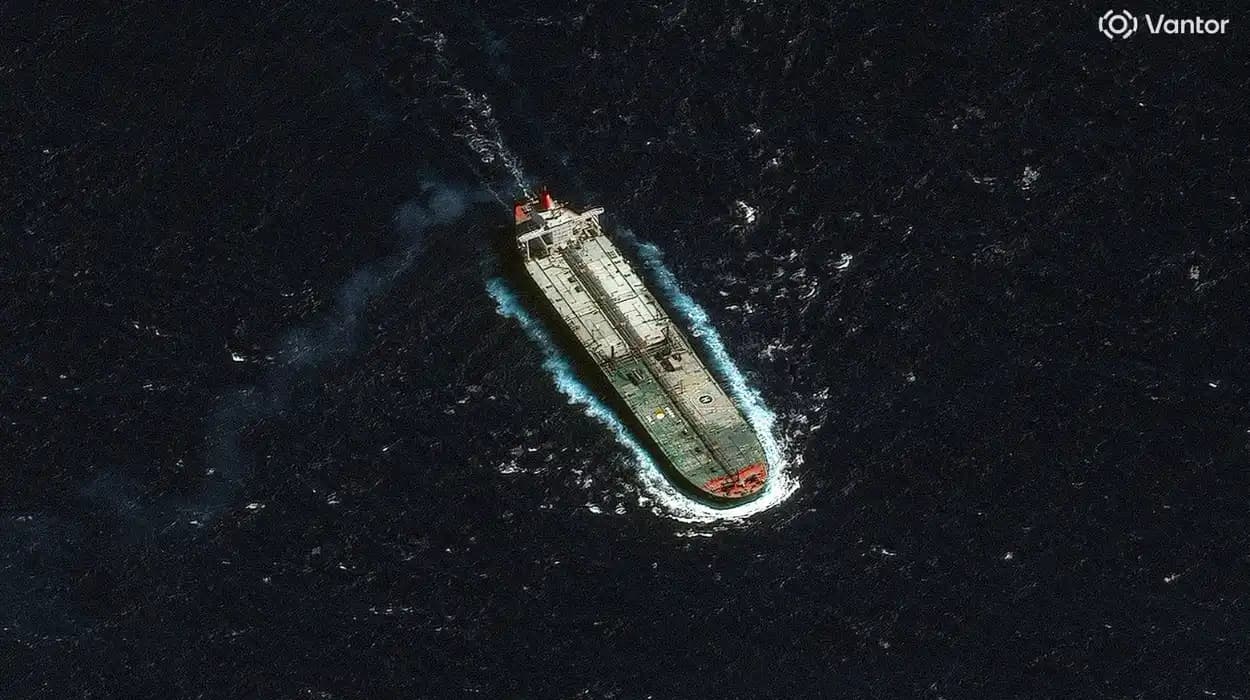
Cuban officials condemn the US seizure of the Skipper oil tanker near Venezuela, calling it piracy and a violation of international law.
The US decision
"negatively affects Cuba and intensifies the United States’ policy of maximum pressure and economic suffocation,"
the statement continued.
“This action is part of the US escalation aimed at hampering Venezuela’s legitimate right to freely use and trade its natural resources with other nations, including the supplies of hydrocarbons to Cuba,”
the Cuban foreign ministry statement said.
According to internal data from the Venezuelan state oil corporation PDVSA, the tanker was thought to be carrying up to two million barrels of heavy crude from Venezuela. The tanker was reportedly on its way to Galveston, Texas, according to the New York Times.
The publication stated that the Skipper's objective was the port of Matanzas in Cuba. However, two days after leaving, it transferred an estimated 50,000 barrels to another vessel, which proceeded eastward for Asia while the Skipper sailed northward toward Cuba.
China is estimated to receive between 663,000 and 746,000 barrels per day, or about 80% of Venezuela's oil exports. However, Cuba has long relied on Venezuelan oil exports in exchange for medical professionals, athletic instructors, and security guards who surround Nicolás Maduro, the president of Venezuela, and are regarded as devoted and capable of offering personal protection.
But according to the Times, the great majority of subsidized oil meant for Cuba has been resold to China for much-needed foreign exchange.
The Skipper's seizure's Venezuela-Cuba component coincides with Reuters' report that since the tanker was taken, Venezuelan oil exports had reportedly drastically decreased. Additionally, it coincides with the imposition of fresh restrictions by the US Treasury Department on ships and shipping firms who do business with Venezuela.
Additionally, it coincides with reports that the US has transferred additional military equipment to the Caribbean in the wake of Skipper's seizure and deadly attacks on suspected drug boats. Additional capabilities to Operation Southern Spear, a counter-drug operation that has turned into a mission to overthrow Maduro, according to the War Zone and other sources.
These include additional F-35s, search and rescue aircraft, rescue helicopters, refueling tankers, and EA-18G Growler electronic attack jets, which may be deployed to jam Venezuelan air defense systems supplied by Russia.
Reaper drones, Poseidon spy planes, F-35s, and almost a dozen warships, including the USS Gerald R. Ford, the largest aircraft carrier in the world, are among the important combat weapons already present in the area.
Similar to efforts to destroy the worldwide "shadow fleet" of an estimated 1,000 oil tankers said to be violating international energy restrictions, the US is attempting to stop Venezuela's oil shipments and put more pressure on Maduro, who is facing an indictment on US narco-terrorism accusations.
Thirty of the eighty tankers waiting to load Venezuelan barrels are subject to sanctions, according to tracking data that Reuters was able to get. This presents a target for the Trump administration's "America first" policy, which aims "to ensure that Western Hemisphere remains stable."
The US targeted three of Maduro's nephews for allegedly being involved in narcotics trafficking, in addition to imposing fresh penalties on oil firms and boats suspected of violating sanctions and
"propping up Maduro's corrupt and illegitimate regime in Venezuela."
Ramón Carretero, a Panamanian businessman who has been identified as a middleman between Caracas and Havana, was also sanctioned by the US Treasury for
"facilitating shipments of petroleum products on behalf of the Venezuelan government."
The US seizure of the Skipper has been denounced by Venezuela as
"blatant theft and an act of international piracy."
The minister of communications for Venezuela, Freddy Ñáñez, charged Washington with "piracy, kidnapping, theft of private property."
A warrant for the Skipper's seizure was released late on Friday by the US attorney's office for the District of Columbia, which had previously identified the ship as a member of an oil shipping network that supported the Islamic Revolutionary Guard Corps-Qods Force (IRGC-QF) and Hezbollah, two terrorist organizations.
“As the premiere United States attorney’s office leading efforts to intercept ghost vessels as well as sanctioned products, we remain committed to legally supporting [Trump administration] efforts to make the world a safer place,”
US attorney Jeanine Pirro said.
The FBI director, Kash Patel, said:
“The seizure of this vessel highlights our successful efforts to impose costs on the governments of Venezuela and Iran.”
Patel added that FBI counterintelligence
“will continue to enforce US sanctions and cut off our adversaries from financial markets and critical technology”.
The warrant permitted the seizure of
"all assets, foreign or domestic... of any individual, entity, or organization engaged in planning or perpetrating any federal crime of terrorism against the United States, citizens or residents of the United States, or their property, and all assets, foreign or domestic, affording any person a source of influence over any such entity or organization."
What legal grounds did the US cite for seizing Skipper?
The US cited the Skipper oil painting tanker's previous warrants designation by the Treasury Department in 2022 as the primary legal ground for its seizure. This rendered the vessel" blocked property" under US warrants law, enabling the Justice Department to secure a civil penalty leave executed by the Coast Guard.
The tanker, preliminarily known as Adisa, was sanctioned for its part in an lawless network smuggling Iranian and Venezuelan oil painting, allegedly funding terrorist groups like Hezbollah and Iran's IRGC- Quds Force. officers emphasized this domestic legal process, not wartime authority, as the sole defense.
The vessel's potentially stateless status of flying a Guyana flag without enrollment supported the high- swell action under US penalty bills. No reliance on UNCLOS violations or military conflict was invoked.