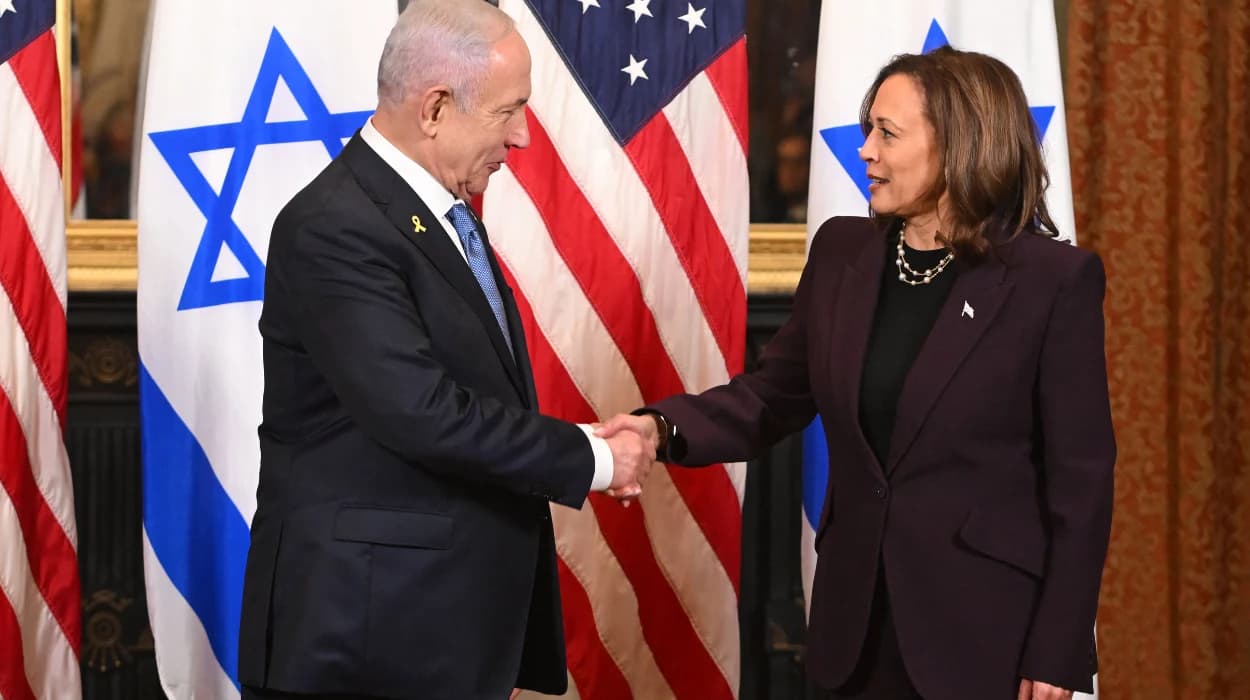
Vice President Kamala Harris’s stance on Israel reflects a longstanding tradition of strong U.S.-Israel relations grounded in shared democratic values and strategic partnership. Her position, alongside President Joe Biden’s administration, emphasizes unwavering support for Israel’s security, recognition of its democratic character, and commitment to a peaceful resolution of the Israeli-Palestinian conflict based on a two-state solution.
Kamala Harris’s Commitment to Israel: Foundations and Public Statements
Throughout her political career, including the 2020 Democratic primary and her tenure as Vice President, Kamala Harris has consistently articulated strong support for Israel as a key ally of the United States. She has described the relationship as one defined by shared values, democratic ideals, and deep interpersonal bonds between the peoples of both nations.
In public remarks, Harris affirmed that Israel is a “critical friend and ally” to the United States, emphasizing that the historical and contemporary ties bound by democracy, innovation, and security concerns are unbreakable. She underscored the importance of standing with Israel, not only on strategic grounds but also because of common cultural and political principles.
Her expressed support aligns with longstanding U.S. policy that prioritizes Israel’s right to exist as a Jewish, democratic state and ensures it has the capacity to defend itself in a volatile regional environment. This stance is a cornerstone of American foreign policy, reflecting bipartisan consensus.
Strategic Alliances and Shared Values
Kamala Harris’s support for Israel mirrors the broader U.S. recognition of Israel as a fundamental partner in an unstable region. The alliance encompasses military, technological, and intelligence cooperation, underpinned by a commitment to democratic governance and human rights.
The U.S.-Israel partnership includes cooperation on security projects such as the Iron Dome missile defense system, which helps protect civilian populations from hostile attacks. Such initiatives underscore the practical dimension of support that goes beyond rhetoric to tangible measures enhancing Israel’s security.
Shared democratic values form the foundation of this alliance. Both nations emphasize freedoms of speech, religion, and the rule of law, making the relationship resonate beyond strategic calculations to ideological solidarity. This connection fosters an enduring partnership that successive American administrations, including that of Biden and Harris, uphold.
The Biden-Harris Administration’s Policy Toward Israel
As Vice President under President Joe Biden, Kamala Harris actively supports the administration’s approach to Israel, which seeks to maintain Israel’s security, promote stability in the Middle East, and pursue a negotiated two-state solution to the Israeli-Palestinian conflict.
President Biden’s policy reaffirms decades of U.S. commitment, emphasizing that Israel must remain “an independent, democratic, Jewish state,” a principle Harris echoes. The administration highlights the necessity of Israel’s qualitative military edge, ensuring it retains superiority in defense capabilities.
Biden and Harris advocate for a two-state solution as the only viable path ensuring a secure and democratic Israel living peacefully beside a viable Palestinian state. This policy approach rests on respecting the rights and dignity of both Israelis and Palestinians, seeking an end to cycles of violence and fostering conditions for coexistence.
The administration also publicly opposes settlement expansion perceived as detrimental to peace efforts, while affirming Israel’s right to security and self-defense. Harris and Biden consistently criticize actions from both sides that undermine trust, such as violent attacks and one-sided moves at international forums.
Fighting Anti-Semitism and Ensuring Global Support for Israel
Kamala Harris has voiced strong opposition to anti-Semitism and efforts to delegitimize Israel internationally. She recognizes anti-Semitism as a persistent global threat that undermines security and democratic values.
The Biden-Harris administration actively combats manifestations of anti-Semitism, including acts of violence, hate speech, and organized campaigns aimed at isolating Israel diplomatically. The administration rejects calls for boycotts, divestments, and sanctions (BDS) against Israel, viewing such movements as counterproductive to peace and harmful to Jewish communities worldwide.
Harris highlights the moral responsibility to speak out against bigotry and intimidation, emphasizing that silence enables hate to grow. This commitment reinforces the administration’s efforts to preserve Israel’s standing in key international institutions and ensure it is treated like other sovereign nations.
Navigating Challenges: Israeli-Palestinian Conflict and Diplomatic Realities
While affirming firm support for Israel, Kamala Harris and the administration also recognize the complexity of the Israeli-Palestinian conflict and its centrality to regional stability. Achieving peace requires addressing grievances, ending violence, and rebuilding trust between Israelis and Palestinians.
Harris echoes calls for an end to terrorism, incitement, and inflammatory rhetoric, emphasizing that all parties must pursue constructive dialogue. The administration encourages Palestinians and Israelis to renew peace negotiations focused on a two-state outcome consistent with equal rights and security for both peoples.
The Biden-Harris administration balances support for Israel’s security with a vision of Palestinian dignity and self-determination. This dual commitment signals a comprehensive approach aiming to break cycles of hostility and lay the groundwork for lasting peace.
The Broader Context: US-Israel Relations and Global Diplomacy
Kamala Harris’s support for Israel fits within a broader framework of U.S. foreign policy that treats the U.S.-Israel relationship as essential to achieving security, democracy, and stability in the Middle East and beyond.
The alliance involves multifaceted cooperation on counterterrorism, intelligence sharing, technological innovation, and regional diplomatic efforts. It also involves supporting economic development and humanitarian assistance in the region to foster conditions conducive to peace.
The Biden-Harris administration continues to rally international partners to support Israel diplomatically and defend it against unfair criticism. This strategy helps maintain Israel’s global standing while advancing U.S. interests in balanced and sustainable regional engagement.
Public Perception and Political Discourse Surrounding Harris’s Position
Kamala Harris’s stance on Israel reflects deeply ingrained bipartisan norms in American politics but has drawn varied reactions across different constituencies. Many Jewish and pro-Israel groups welcome her commitment as a continuation of enduring U.S. support.
However, in a polarized political climate, some voices within the progressive wing of her party call for a more critical posture addressing human rights concerns regarding Palestinians. Harris’s approach aims to reconcile these views by supporting Israel’s security while advocating for peace and human dignity.
Her public messaging seeks to present a balanced, nuanced position consistent with both American values and practical diplomacy, indicative of ongoing efforts to bridge differing perspectives within U.S. politics.
Vice President Kamala Harris unequivocally supports Israel as a vital ally of the United States, grounded in shared democratic ideals, security interests, and historical ties. Her position endorses Israel’s right to exist as a secure, democratic Jewish state while advocating for a two-state solution that ensures peace and dignity for Palestinians.
Aligned with the Biden administration, Harris promotes transparency in diplomacy and opposition to anti-Semitism, reinforcing U.S. solidarity with Israel. At the same time, she acknowledges the complexities of the region’s challenges, supporting efforts to reduce tensions and foster a lasting, equitable peace.
This balanced stance underscores the enduring nature of U.S.-Israel relations in American foreign policy and highlights Harris’s role in upholding these commitments amidst evolving regional dynamics.