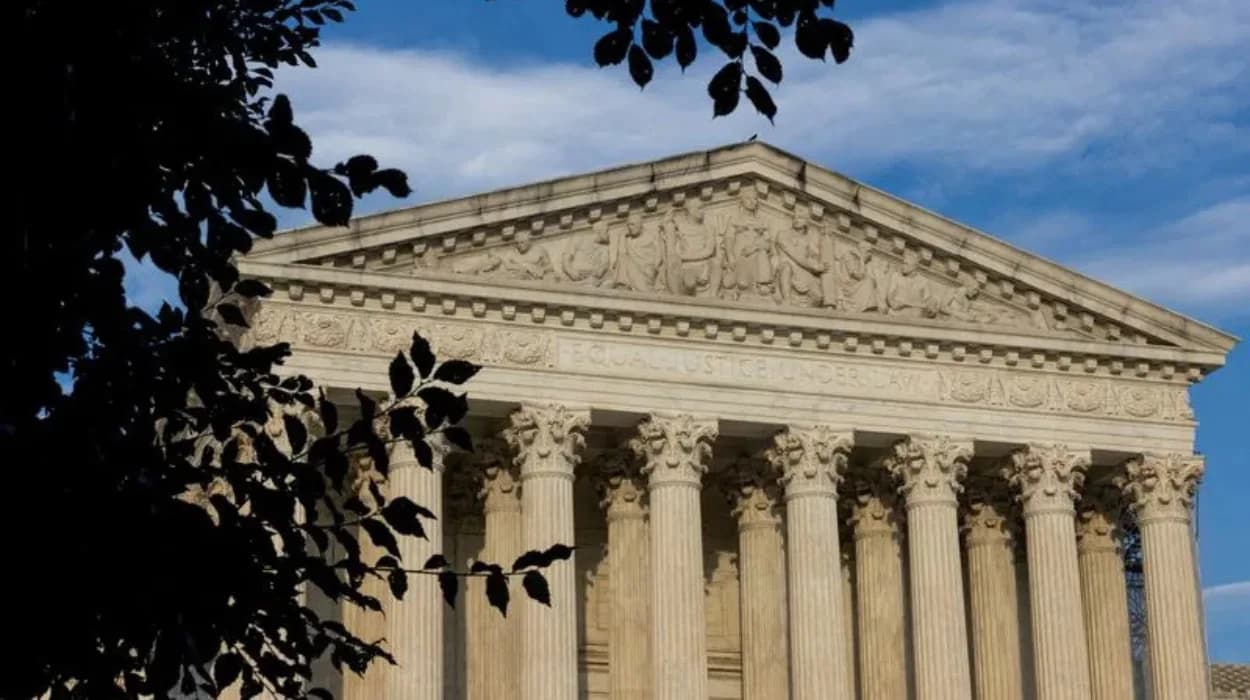
The U.S. Supreme Court backed Donald Trump’s decision to withhold $4B in foreign aid, reinforcing his “America First” agenda despite congressional approval.
The justices overruled an order issued by U.S. District Judge Amir Ali of Washington, which had instructed the administration to act immediately to spend the disputed assistance. In a lawsuit against the administration, relief organizations challenged Ali's judgment.
The main issue in the case is how much power a president has to cancel money that Congress has allotted for initiatives that conflict with his ideas.
In court filings, the government claimed that the funds it sought were "contrary to U.S. foreign policy," echoing Trump's attempt to reduce international aid as part of his "America First" platform. Additionally, Trump has taken steps to dissolve the primary U.S. foreign aid organization, the Agency for International Development.
September 30 marks the end of the fiscal year 2025 for the U.S. government. Congress allocated the $4 billion in aid spending at issue in the case for international aid, UN peacekeeping missions, and initiatives to advance democracy abroad.
Approximately $11 billion of the billions of dollars in foreign aid that Congress budgeted last year was scheduled to expire at the conclusion of the fiscal year.
Through a "pocket rescission," an uncommon tactic meant to avoid spending money that Congress had approved, the administration attempted to block the $4 billion in question in the case. The authority of the purse is granted to Congress under the U.S. Constitution.
On September 3, Ali decided that the government couldn't just decide not to give the money.
Justice Department lawyers in court papers told the Supreme Court that Ali's injunction raised "a grave and urgent threat to the separation of powers." Under the U.S. Constitution, the government's executive, legislative and judicial branches are assigned different powers.
"It would be self-defeating and senseless for the executive branch to obligate the very funds that it is asking Congress to rescind,"
lawyers for the Justice Department wrote.
On September 9, the U.S. Supreme Court halted Ali's order in the foreign aid case while it deliberated its next course of action.
This year, the administration has requested several times that the justices step in and permit the execution of Trump plans that have been thwarted by subordinate courts. Since Trump took office again in January, the Supreme Court, which has a conservative majority of 6-3, has ruled in favor of the administration in nearly all of the cases it has been asked to consider.
In a previous version of the foreign aid case, the court ruled 5–4 in March to prevent the administration from refusing to pay relief groups almost $2 billion for work they had already done for the government.
What legal basis did the administration cite for withholding the funds?
The administration contended its authority to utilize a "pocket rescission," a constitutional theory the president can withdraw or suspend money without obligating it before the end of the fiscal year. This theory has not been used for roughly 50 years and raises serious legal and practical concerns.
The administration argued that its withholding of funds would have not violated the ICA because it was not a cancellation of funds but a temporary suspension in order to review funding to make sure the funds were aligned with the president's policy objectives. They claimed the president has broad discretion to delay spending on projects for substantive policy reasons based on programmatic delays.
The administration claimed significant executive authority over foreign policy and national security spending specifically, and stated temporarily withholding funds in order to support the advancement of an "America First" agenda.